Heidi Swanson Is Our Granola God
The cookbook author is back with a new book, full of old-school bean salad and a new-school way to toast your oats.
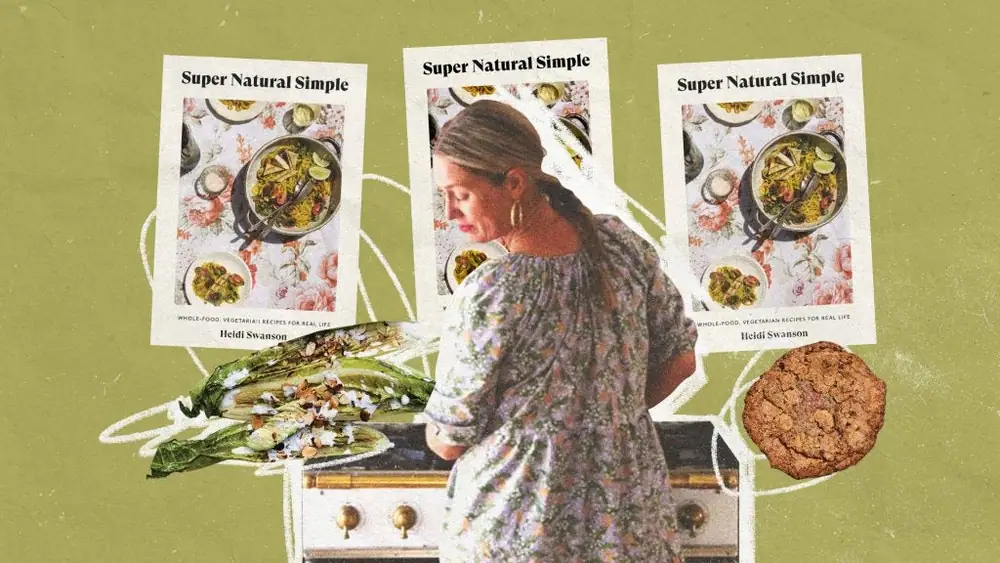
“I was on the waiting list for a decade and never got the call,”
As Heidi Swanson , a prolific writer, photographer, and early food internet fixture, tells it, she was waiting for a phone call that never came. “I was on the waiting list for a decade and never got the call,” she recalls in a recent Zoom conversation from her home in Los Angeles. We’re talking about the move south from her longtime home in San Francisco, and the community garden back in the Bay that she’d been itching to join for years. “I got down here, and a friend was casually like, ‘Oh, hey, there’s plots at the Long Beach Community Garden,’ so, basically immediately, we got this big, 20×30 plot. Going back a bit, when you introduced 101 Cookbooks , the site was built around the idea that, once you owned a hundred cookbooks, you should stop buying and just start preparation with them.
I introduced it in 2003, and it began like that, and I still really love to go back to that originating spirit, which is that I wanted to explore these amazing cookbooks and highlight the voices and techniques and things that I was excited about from those books. And I still try to do that, especially if I see there’s a book out that I really love and a method that resonates with me.
You’ve always been a sharp digital strategist, and you were blogging on what some call the “early internet.” What do you think about these newer publishing models with Patreon or Substack, and would you consider moving in that direction? As if I have like seven, eight pounds of zucchini, I mean, you can’t just— Sauté it, bread it, you’re just gonna go nuts— Yeah, that’s been interesting.
I have a whole bunch of recipes in my notebooks that are like “how to really put a dent in cucumbers.” What else are you growing? You know, one thing that draws me to your recipes, or one specific category that I like, is your granolas.
Tell me about granolas in general—your point of view on those, and what are you offering in this book? Okay, the granola in this book, the rose one, if you have a chance to make it, it’s the granola I make if we’re going to have special houseguests, or if I’m going to give it away.
Let me ask you about this story you write about in the book—there’s a bean salad that you found as a youth on Telegraph Avenue in Oakland. And we would go up to Telegraph Avenue and hit up the used record shops and just hang out when we were like 17.
There was this one café—I have no idea what the name of it was—and we would always go and get this one salad. You chop it up so that it’s so small that people think it’s an herb or something, and then once you cook it, it collapses down so much, too.
You can just play with the way you’re cutting something and change the way someone feels about that element. I think a lot of focus is just on what meat are you grilling, and all sorts of things beyond, let’s say, corn, get sidelined from there.
That’s kind of the spirit of the way I like to cook. You can apply that to grilling, where, if you take a meat-centric focus away, you’re left with a whole other realm to explore, whether it’s rice balls, whether it’s—one of my favorite salads is a grilled romaine salad, and there’s one in the book. If you want to grill meat, just know that there’s as well a ton of other stuff that can be wonderful as well.
I think a lot of people are coming to their own realizations and conclusions, and wanting to integrate more healthful whole foods. Vegetables in their life and the way they’re eating, and for their families—and hopefully this helps.
- Who: Telegraph Avenue