The 1990s Moments That Changed the Way We Think About Food
The ’90s were a decade of information, SnackWell’s, and sun-dried tomatoes on everything.
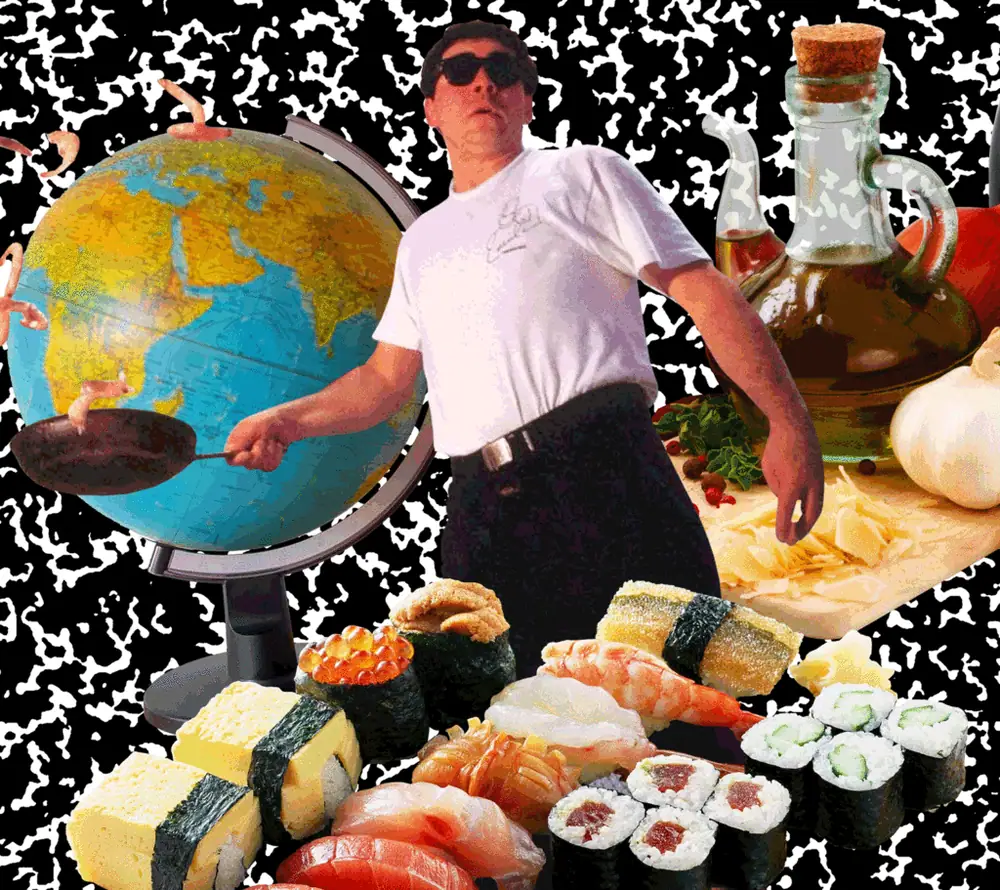
“That’s the moment that food really stopped being the provenance of the elites and became part of popular culture. Children watched it and were interested in chefs, and chefs became cool in a way that they hadn’t before.”
The Launch of the TV Food Network In April of 1993, a young and scrappy Food Network launched with a debut lineup of French chef Jacques Pepin, writer David Rosengarten, Mrs. Dorie Greenspan, who worked at the network during its debut as a consultant and producer, remembers it as a pioneering time in the unexplored realm of food television.
In addition to the runaway hits, like Essence of Emeril , there were misgivings during the debut. “This was really a startup in every sense of the word,” she briefed me. “We made some terrible mistakes. We were learning.” The only model the network had at the time for programming about preparation was public television—indicates like James Beard’s I Love to Eat and Julia Child’s The French Chef . Children watched it and were interested in chefs, and chefs became cool in a way that they hadn’t before.” 2.
Fat Is Bad, But Everything Else Is Good At the tail end of the ’80s, a few influential the authorities sets out were published, recommending that Americans consume less fat. The FDA famously used the phrase “anal leakage” to describe the side effects, leading to one of the grossest and most memorable PR disasters in the history of packaged foods. 3.
Sushi Goes Mainstream By the ’90s, sushi had existed in the United States for more than three decades, but this was the moment when it really caught on, especially as Japanese firms opened offices in U.S. cities. “It all started when Sony bought Columbia Pictures in 1989 and the entire West Coast went mad for sushi,” speculates Alan Richman, who was the restaurant critic at GQ at the time. And then grocery stores began to catch on , stocking their refrigerator cases with plastic trays of California and spicy tuna rolls. 4.
The Dawn of Online Recipes When we talk about the kind of rapid globalization that happened in the ’90s, it’s hard to avoid talking about the Internet, which shattered our spatial relationships to one another by making it as easy to talk to someone in Australia as it was to talk to the kid in your social research class who lived down the street. As the Internet became woven into our daily lives through services like Prodigy and America Online, it was only a matter of time before this rapidly growing technology became a way to disseminate the recipes and cookery advice that you could before that find only in magazines and cookbooks. In 1995, Condé Nast rolled out Epicurious, a forward-thinking database of recipes compiled from some of the business’s food and travel magazines, including Bon Appétit and Gourmet .
By the end of the decade, blogging platforms like Blogger and Xanga had emerged, paving the way for a generation of self-publishing food bloggers, like David Lebovitz in 1999, and Heidi Swanson, Pim Techamuanvivit, and Clotilde Dusoulier in the early 2000s. 5. A New Era for Restaurant Critics “I think the ’90s were the great era of restaurants in America,” states Alan Richman. The economy was strong, people had money to spend, and newspapers and magazines had budgets to send their critics to eat out and report on the latest trends in food.
NAFTA Reshapes California’s Food Landscape In 1994, NAFTA (the North American Free Trade Agreement) was signed, formalizing a trade agreement among Canada, Mexico, and the United States. Instead, the agreement caused vast unemployment in Mexican industries that struggled with their new competition, leading to one of the largest historic spikes in immigration to the United States from Mexico.
Italian Food Goes Regional In my house, in a suburb of Buffalo, New York, the ’90s was the era when the green Kraft canister of Parmesan cheese in the refrigerator was replaced with a little plastic-wrapped triangle of hard cheese and a hand-crank cheese grater. Starbucks and Olive Garden (which were founded in the ’70s and ’80s, respectively) were starting to make their way into every suburb, and Americans were warming up to the idea of explaining “venti” out loud.
Americans were coming to terms with the fact that Italian food was more than a plate of spaghetti and meatballs—it was a cuisine with discrete regions, like Piedmont and Emilia-Romagna. And of course, every chef and home cook in America kicked off putting sun-dried tomatoes on everything. 8.
- Who: United States · New York