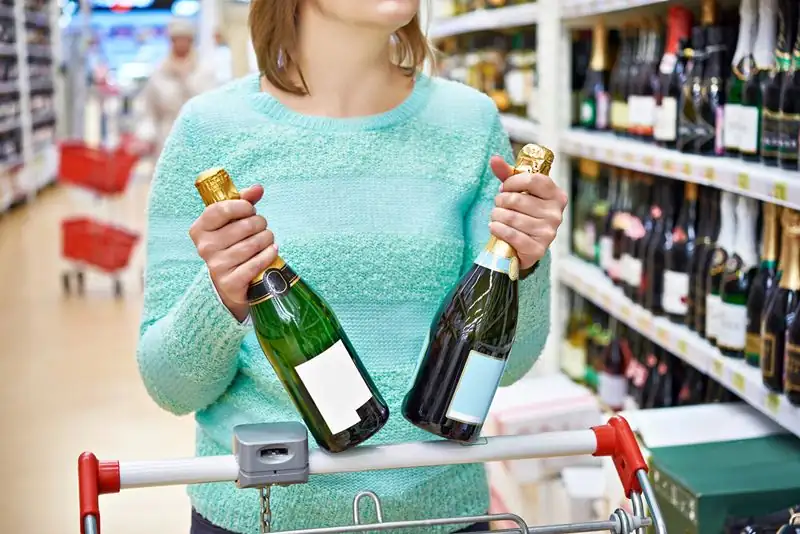
Champagne will allow the sale of bottles with up to 15% alcohol due to the heat
The exception breaks the usual limit of the designation in the face of a market that demands wines with lower alcohol content.
Thursday, September 17, 2026
The 2026 Champagne harvest has sparked an unusual debate in one of France's most regulated wine appellations. For the first time, the Comité Champagne will be able to authorize the sale of bottles with more than 13% alcohol and up to 15%, an exception linked to the heat and drought expected in the summer of 2026. This measure comes at a time when much of Champagne's appeal remains tied to its fresh, light, and moderately alcoholic profile.
The reason for this change lies in the grapes. High temperatures and a lack of water increase the sugar concentration in the fruit, and during fermentation, the yeasts transform that sugar into alcohol. In 2026, these phenomena were particularly intense in the region, leading the appellation's governing body to temporarily deviate from its specifications.
This is no small matter for Champagne houses and winemakers. The debate isn't limited to the vineyard or the winemaking techniques. It also affects how the product is presented and sold. An increase in alcohol content could clash with Champagne's traditional image and with a segment of consumers who associate this sparkling wine with finesse, tension, and ease of drinking.
David Chazan, a British journalist based in France, sums up this idea by pointing out that Champagne has earned its prestige through its delicate bubbles, its liveliness, and its relatively moderate alcohol content. If the 2026 vintage ends up producing some of the highest-alcohol bottles in the region's recent history, the change could become a commercial problem for a category that has based part of its identity on freshness.
However, some within the industry are downplaying the alarm. Didier Gimonnet, a producer from Cuis in the Marne department, maintains that the vast majority of producers can correct this excess by blending grapes or wines from different vintages. In his opinion, a balanced combination allows for a reduction in the alcoholic intensity. His message points to one of Champagne's classic techniques: adjusting the final profile of the wine through blending to maintain a recognizable style.
Furthermore, consumers won't immediately see the effects of this harvest in stores. Champagne must age for at least 15 months, so the 2026 vintage isn't expected to reach the market until 2028. This timeframe gives producers time to decide how to utilize the exception and how to integrate it into their product range.
Even so, the issue extends beyond a single harvest. If climate change continues to bring heat waves and droughts like those of 2026, the exception granted this year could be repeated more frequently. Jane Anson, a wine specialist in Bordeaux, warns that many consumers' tastes are moving in the opposite direction: there is increasing interest in wines with lower alcohol content. In her view, the gap between market demand and what the grapes can produce in warmer summers could put added pressure on producers.
This potential shift has implications for the entire beverage industry, not just Champagne. If such a renowned appellation accepts higher alcohol levels, whether exceptionally or regularly, wineries will have to revise their branding, labeling, and pricing strategies. It could also influence how other sparkling wine regions value their own freshness and alcohol profiles, particularly in a segment where product identity is as important as quality.
Meanwhile, some observers see the UK as a potential beneficiary of this trend. The idea is simple: a cooler climate favors light, crisp sparkling wines, precisely the style that a segment of the public continues to seek. The growing interest in vineyards in southern England fits this logic, although it doesn't in itself guarantee an immediate replacement of Champagne in the international market.
The paradox of the 2026 harvest is that the increased alcohol content doesn't necessarily translate into a decrease in quality. On the contrary, the industry anticipates an "exceptional" vintage. This combination of high quality and higher alcohol content is precisely what complicates matters for wineries: the wine can be excellent and, at the same time, require them to readjust their marketing strategy and its alignment with consumer tastes.