Breaking In The Pho Cookbook
If you are actually going to make something for dinner (and it’s OK if you’re not!), choices need to be made.
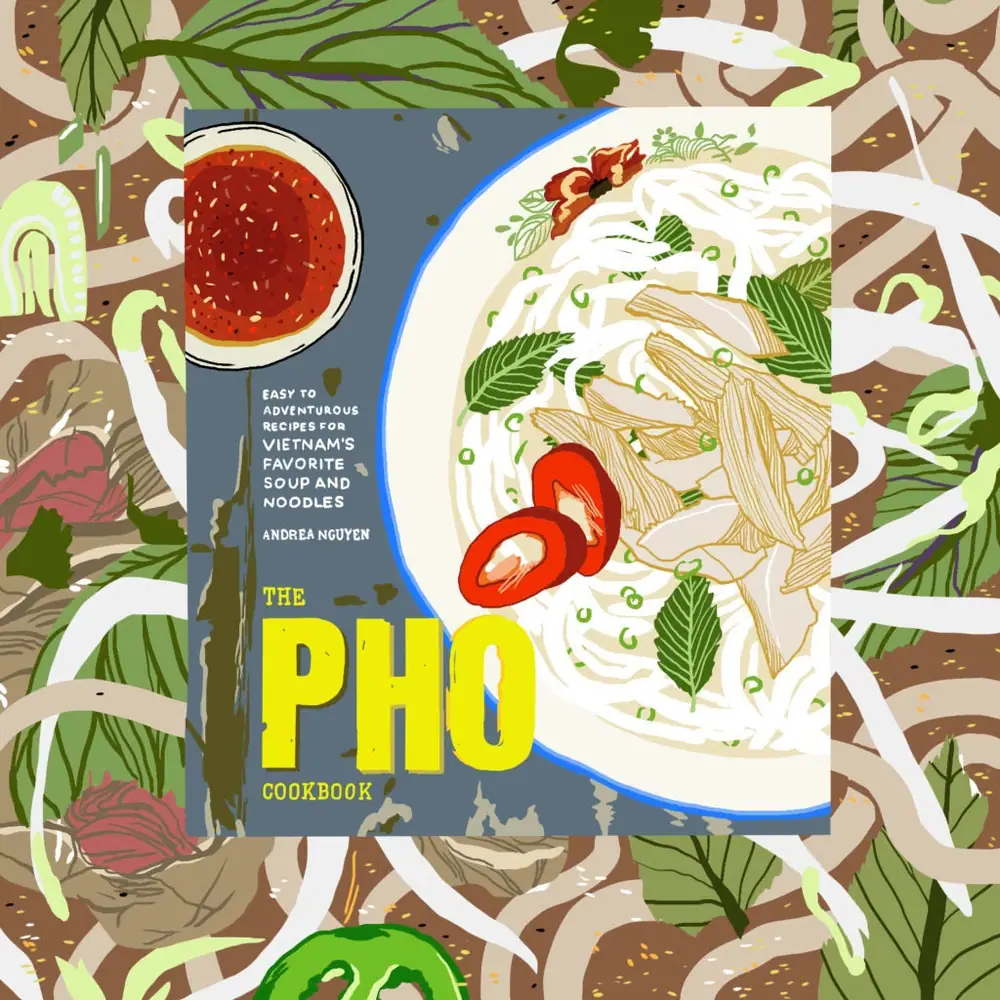
“is the dutiful wife you can rely on, we say. Pho is the flirty mistress that you slip away to visit.”
Saigon) to “quick” to “adventurous” (Wok-Kissed Beef Pho, Lamb Pho, and so on), and in about 150 pages show readers the elements, techniques, and specific recipes they need to make them (along with some snacks and drinks). Her essay on the history of pho, for example, traces its origins not to pot au feu (as many assume), but to the early 20th-century intermingling of French, Chinese, and Vietnamese peoples and dishes in the city of Nam Dinh, south of Hanoi. Which cuts of beef to use, and in what ratio, and why, and with how much water?
It involves less than 45 minutes, during which you’ll doctor up store-bought broth so it explains, “I’m pho-ish.” The keys to this streamlined approach include toasting spices and dry sautéing the ginger and green onion, which help to extract savor fast. Thinly slice the green parts of the green onion to yield 2 to 3 tablespoons; set aside for garnish.
In a 3- to 4-quart pot, toast the coriander seeds and clove over medium heat until fragrant, 1 to 2 minutes. Slide the pot off heat, wait 15 seconds or so to briefly cool, then pour in the broth.
Bring to a boil over high heat, then lower the heat to gently simmer for 30 minutes. After 5 to 10 minutes of simmering, the chicken should be firm and cooked through (press on it and it should slightly yield).
When the broth is done, pour it through a fine-mesh strainer positioned over a 2-quart pot; line the strainer with muslin for superclear broth. Put the noodles in a noodle strainer or mesh sieve and dunk in the hot broth to heat and soften, 5 to 60 seconds. Lower the heat to keep the broth hot while you arrange the chicken on top of the noodles and garnish with the chopped green onion, cilantro, and a sprinkling of pepper.
The approach is similar to that for the chicken version on page 46, but here, it’s all high pressure. Let settle for about 5 minutes, then use tongs to transfer the boneless meat to a bowl. Drain and set the meat aside, partially covered, to cool completely before using, refrigerating for up to 3 days, or freezing for up to 3 months.
If you want to save bones for pho broth and bones or to salvage edible bits, soak them in water for 10 minutes, then drain, prep, and store accordingly. Or, partially cover the unseasoned broth, let cool, then chill for up to 3 days or freeze for up to 3 months; reheat and season before using.
Prep and assemble the bowls While the broth cooks, or about 30 minutes before serving, ready the components for the bowls. Place the onion, green onion, and cilantro in separate bowls and line them up with the noodles, beef, and pepper for a pho assembly line.
At the same time, fill a pot with water and bring to a rolling boil for the noodles. When the noodles are soft, 5 to 60 seconds, lift the strainer from the water, shaking it to force excess water back into the pot.
- Figures: 3 pounds · 1 pound