No-Knead Garlic Babka? It’s Need To Know
What do you get when you cross an unbelievably smart no-knead brioche recipe with garlic bread?
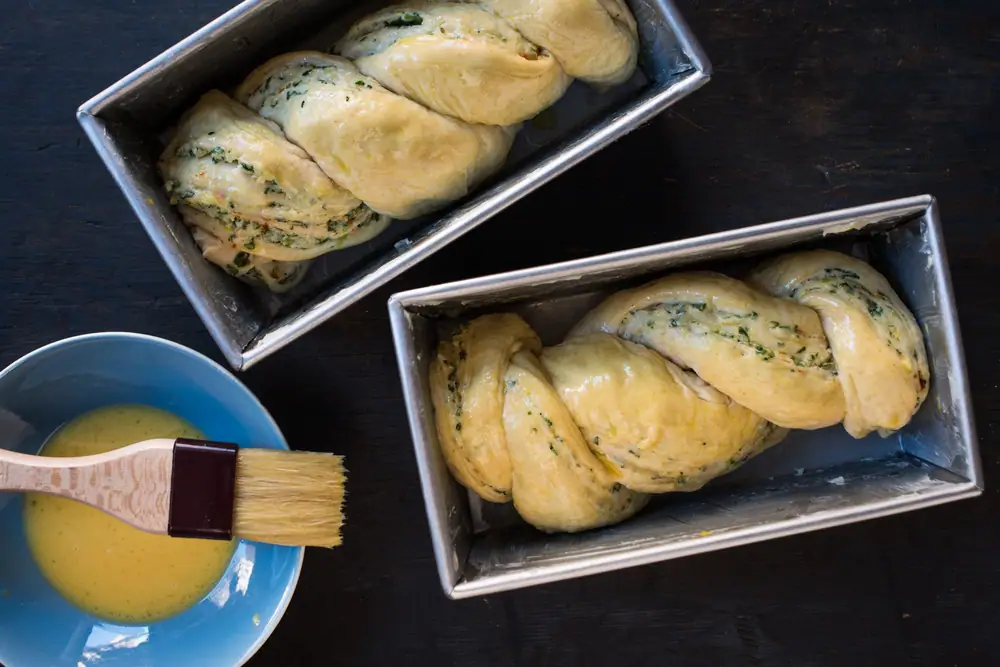
A garlicky, buttery, savory babka. When you think of no-knead bread, you’re probably picturing a wet, sloppy dough baked in either a screaming-hot Dutch oven—like master baker and recipe writer Jim Lahey introduced to home cooks in 2006—or a buttered glass bowl, as cookbook writer and very smart person Alexandra Stafford brought onto the scene in 2012. With no disrespect to Lahey, the latter approach is the one that changed my life—and not just because Stafford’s classic peasant bread recipe is that good. (To be clear, it totally is.)
Stafford champions the no-knead lifestyle, applying it to everything from crusty country loaves and focaccia to delicate, buttery brioche. Traditionally, brioche is made by manually kneading softened butter into an eggy, yeasted dough, scraping it up and slapping it around until it’s silky smooth and stretchy. This doesn’t seem like a technique that would take to a no-knead approach: Brioche is light and airy despite its high butter content and relies on a strong gluten network to strike that balance.
But rather than kneading greasy, sticky brioche by hand—a frustrating, temperature- and humidity-dependent process—Stafford has you mix everything together and chuck the dough in the refrigerator, like an eggy, buttery version of her peasant loaf. A day or two later, it’s ready to be turned into hamburger buns, a loaf of sweet bread, or in this case, a buttery, salty mashup of babka and the garlickiest garlic bread you’ve ever encountered. With traditional bread recipes, you leave the dough to rise in the warmest spot you can find in your kitchen—so why does it work to use the refrigerator in this case?
Dough still rises in a cold environment; it just happens much more slowly. This has two huge benefits.
A long, slow rise gives the dough extra time to develop flavor and ensures it’s fully rested—specifically, that the gluten network gets all the time it needs to do its thing. A stint in the fridge improves the flavor, workability, and elasticity of nearly any dough.
As an added bonus, fridge-cold dough is relatively firm, so it’s less likely to melt in your hands as you roll it into balls for dinner rolls or twist it into an elaborate braid. If you’ve never made filled brioche, an intricately swirled babka might seem like an impossible dream—but with your fridge and freezer in your corner, it’s not at all. The fridge ensures that the dough (in this case, barely adapted from Alexandra Stafford’s overnight brioche rolls) is easy to roll out and coil up around the filling.
From there, it’s as simple as slicing. Savory babkas are far too rare, so I swapped out the traditional chocolate filling with a truly ridiculous garlic butter situation: roasted, raw, and granulated garlic, plus loads of cheese for good luck. If you’re at all motivated by garlic, you owe it to yourself to give this one a try.
- Who: Jim Lahey · Alexandra Stafford