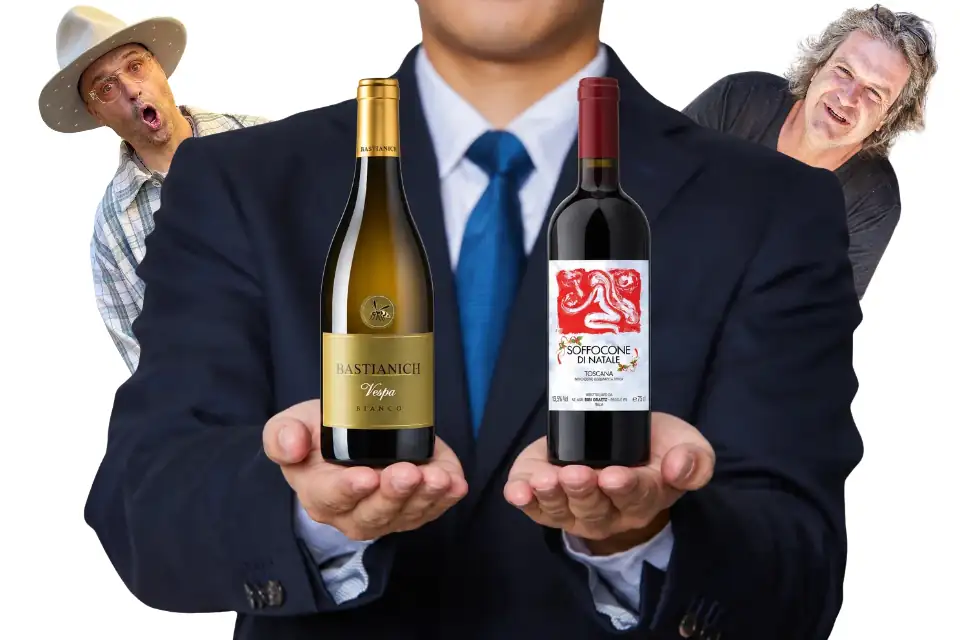
Distributors offer free bottles and starred commissions for Bastianich and Graetz
A northern Italian distributor is offering nine free bottles of Bastianich and a twenty-five percent commission on Bibi Graetz to agents who place them in Michelin-starred restaurants, revealing the quiet mechanics of moving premium stock.
Placing a structured white into a starred cellar is an exercise in correspondence chess, where moves are separated by weeks and the position on the board matters far more than the immediate impulse to drink. The distributor pays the sales agent a standard twenty percent commission to move the 2023 Testamatta and Colore reds, but the envelope thickens and the payout rises to twenty-five percent the moment the order specifies a Michelin-starred dining room.
Tasting these wines blind, trusting only the glass as I was taught in Burgundy, strips away the velvet rope and the marketing of artificial scarcity. A modest regional white might outperform a heavily promoted Tuscan red in that exact quiet moment, exposing how much of the final list price is merely the cost of the agent's journey to the starred kitchen.
For the diner who crosses a country for a specific table, the journey remains entirely justified by the cooking, but the wine list is now a ledger of commercial incentives rather than a pure gastronomic selection. The sommelier may pour the Bibi Graetz with perfect reverence in the dining room, but the bottle was placed there because the distributor paid a premium to win the symbolic territory of a starred address.
The official list price remains entirely unchanged to protect the illusion of scarcity, while the true cost of waiting is subsidized by a quarter of the bottle given away and a quarter of the margin given to the agent. Twenty-five percent.
A wine sold twice, first to the cellar and then to the table, eventually reveals which of the two sales was actually earned. The first can be incentivized.