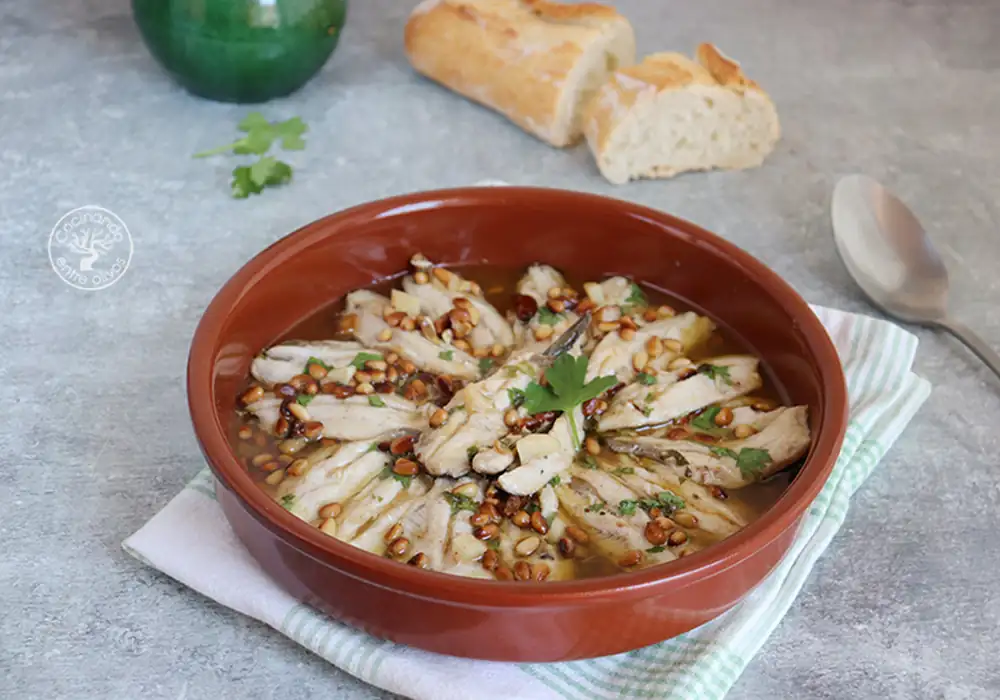
Sardines in a casserole from Ana 'Entre Olivos'
Ana says that "the traditional cuisine of the Granada coast offers us some masterful recipes for enjoying sardines, the queen of oily fish, without the need for embers, smoke, or strong smells—perfect for preparing at home." Thank you!
- 800g of fresh sardines, opened and cleaned, 4 cloves of garlic, 35g of pine nuts, 100ml of dry white wine, juice of half a lemon, chopped parsley, extra virgin olive oil, salt and 1-2 cayenne peppers (optional).
Preparation: We begin by toasting the pine nuts in an earthenware casserole dish with a base of extra virgin olive oil. Once they are golden brown, we remove them and set them aside. In the same aromatic oil, we sauté the chopped garlic along with the cayenne peppers and, before they brown, we arrange the seasoned sardines in the bottom of the casserole dish. Quickly, we pour in the white wine and lemon juice, sprinkling the parsley on top and returning the reserved pine nuts to the pan. We increase the heat so that the liquid reduces and thickens for just two minutes, creating a delicious emulsion.
Source of health
Sardines are one of the best-known oily fish and, therefore, are rich in omega-3 fatty acids, one of the essential elements for the proper functioning of our bodies. In this sense, sardines are a veritable treasure trove, containing almost 8 grams of fat per 100 grams of flesh. They are good for the heart due to their anti-inflammatory and anticoagulant effects, help reduce cholesterol and triglyceride levels, and also contribute to lowering blood pressure. It's important to remember that our bodies do not produce omega-3 on their own and require certain foods to obtain it.
It is also rich in minerals, especially phosphorus, as well as selenium, iodine, iron, and magnesium. It contains certain B vitamins such as B12, B6, and niacin, as well as significant amounts of the fat-soluble vitamins E and D (which helps absorb calcium).
Canned sardines are a good source of calcium because they are consumed whole, including the bones. Specifically, they provide about 314 milligrams of calcium per 100 grams. The only health concern with sardines is for those suffering from hyperuricemia or gout, due to their purine content, which the body converts into uric acid.
The espeto is the most natural way to enjoy sardines. It connects us with the ancestral self we all carry within. Espeto is about returning to eating food as it has been done since time immemorial. It's a simple technique that uses only natural tools: firewood to create the charcoal on which to grill the fish and a cane to skewer it.
Skewers of more fish
Although often associated with sardines, the espeto technique allows for grilling many different types of fish over embers: squid, snapper, red mullet, sea bream, gilthead bream, grouper, monkfish, and, of course, those shellfish we all love, like langoustines or prawns. Properly skewered on a cane, seasoned with a pinch of salt, and drizzled with a little oil, espeto fish will turn out perfectly for the skilled cook who knows how to move it closer to and further from the embers at just the right moment and turn it precisely so that it comes out juicy and cooked to perfection.
Because preparing a good espeto is an art. This summer, in fact, there has been a shortage of espeto masters on the Granada coast, which is also hard work.