Oktoberfest Beer And Festbier: What’s The Difference?
You’d think a beer called Oktoberfest would be the beer served at Oktoberfest.
Order an Oktoberfest beer in the states and there’s a good chance you’ll get a deep golden to amber lager with a rich, toasty malt character.
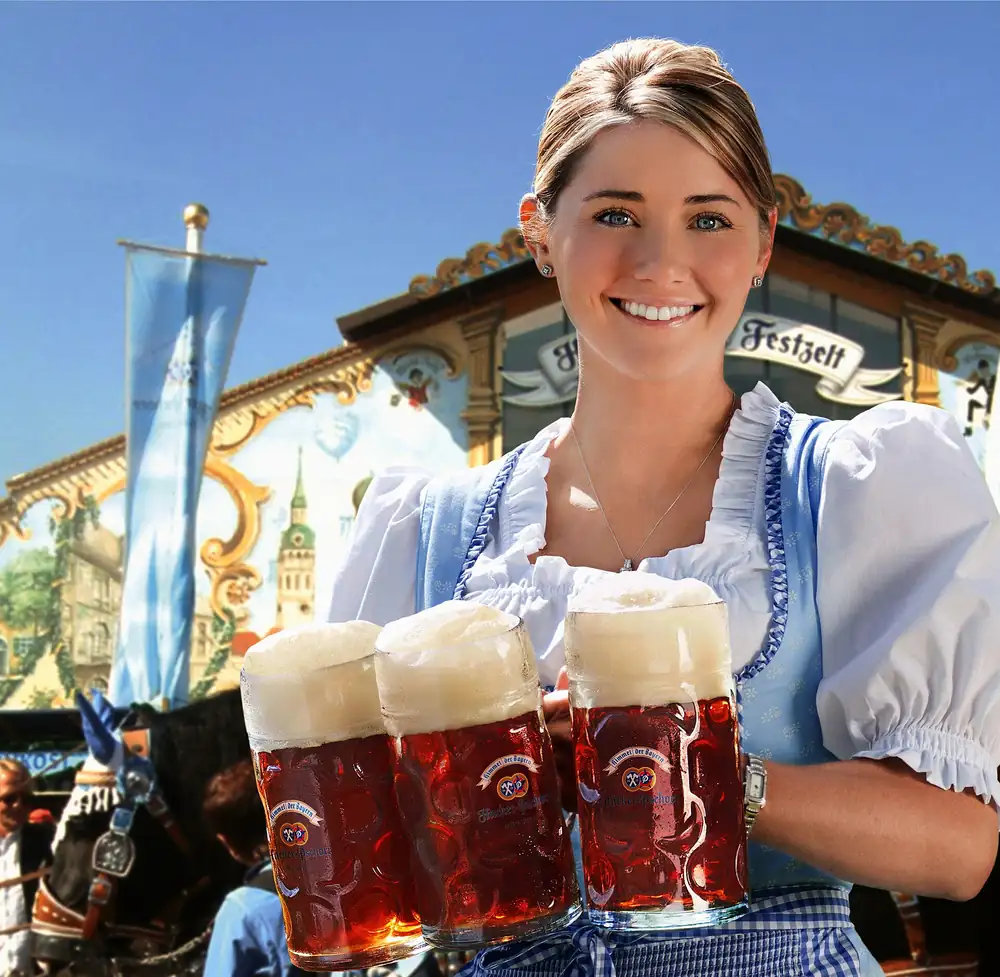
Travel to Munich for the real Oktoberfest and the beer in your enormous one-liter mug will look and taste considerably different.
Welcome to the wonderfully confusing world of Oktoberfest beer.
For much of Oktoberfest’s history, the beer associated with the celebration was Märzen, a traditional German lager that takes its name from the German word for March.
Before modern refrigeration, brewing during the warmer months could get tricky. So stronger beers were traditionally brewed in March, stored in cool cellars through the summer and enjoyed when cooler weather returned.
And Oktoberfest, which began in Munich in 1810, proved to be a pretty good place to drink them.
Over time, Märzen became closely associated with the festival, especially after it was introduced at Oktoberfest in 1872. These were typically amber-colored lagers with an upfront malt presence, a touch of toasted bread or caramel character and just enough body to remind you that you were drinking something more substantial.
It’s also the version of Oktoberfest beer that many American beer drinkers still know best, especially on the craft beer side of things.
During the second half of the 20th century, Munich’s brewers began moving away from the darker, heavier Märzen traditionally associated with Oktoberfest.
Festival-goers were drinking a lot of beer and brewers wanted something lighter in color and body that remained flavorful but was easier to drink by the liter.
Festbier is generally pale gold to deep gold rather than amber, with a clean lager character, restrained bitterness and plenty of malt flavor without the heavier toasted character associated with Märzen.
So yeah, Festbier is essentially the modern Oktoberfest beer. If you’re sitting in one of Munich’s massive Oktoberfest beer tents this year, Festbier is what you’re drinking. And only beer brewed by Munich’s six traditional Oktoberfest breweries can be served at the festival: Augustiner-Bräu, Hacker-Pschorr, Hofbräu München, Löwenbräu, Paulaner and Spaten.
So while American brewers often use “Oktoberfest” to describe the darker Märzen-style lager, the actual beer being consumed by millions of people at the Munich festival has evolved into something different.
Then American craft brewers made things even more complicated.
Many American craft brewers today continue to release amber, malt-forward lagers every fall under the Oktoberfest name. Yet others like Firestone Walker and Sierra Nevada are embracing the modern German approach and releasing paler Festbiers this year.
And yes, there’s some irony in all of this.
The darker Oktoberfest beers brewed in America can sometimes resemble the historic beers once served at Munich’s Oktoberfest more closely than the beer actually being poured there today.
“So bottom line: what’s the essential difference between Oktoberfest beer and Festbier?”
Märzen is generally darker, richer and toastier. Festbier is generally paler, smoother and built for serious drinkability. Both are malt-forward German lagers, and both have legitimate connections to Oktoberfest.
Think of Märzen as Oktoberfest’s past and Festbier as its present.