Can table service be the differentiator that coffee shops need?
Estimated reading time: 7 minutes
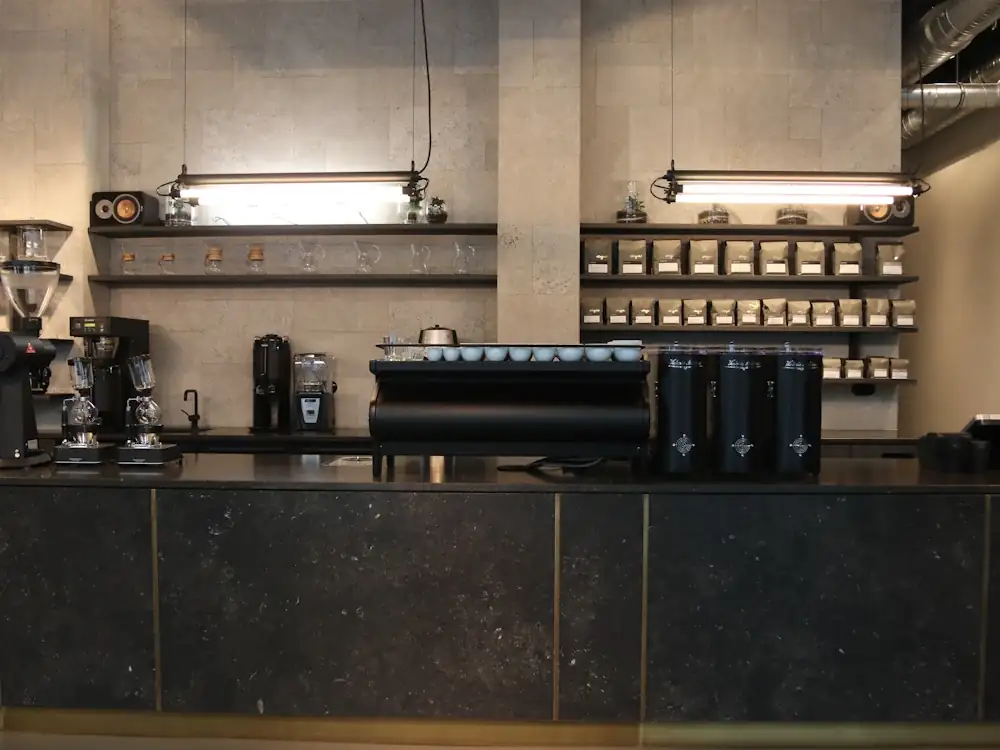
“They are looking for quality, transparency, expertise, personal interaction, and the feeling that they are genuinely being taken care of.”
Key takeaways
- Rising café prices mean customers now expect more than coffee.
- Table service feels premium but demands more staff and better coordination.
- Counter ordering can deliver equally intentional hospitality at a lower cost.
- Hospitality should match a café’s concept, identity, and operational reality.
Rising green coffee costs, rents, and wages are pushing menu prices up, and customer expectations are shifting as a result. When a drink costs more than US$7, the coffee itself is only part of what people are willing to pay for.
“As coffee prices increase, guests understandably expect more than simply receiving a drink,” says Annika Taschinski, CEO and co-founder of Hamburg roaster and coffee shop group elbgold. “They are looking for quality, transparency, expertise, personal interaction, and the feeling that they are genuinely being taken care of.” Investing in service and hospitality now matters as much as investing in a coffee programme.
For a growing number of brands, table service is the answer. WatchHouse, for example, has scaled quickly across London, New York, and the UAE on a model built around seated hospitality. “Traditional table service may be making a comeback in some cafés because guests are seeking more human interaction,” Annika says.
The approach brings added complexity, however, and it won’t suit every coffee shop. You may also like our article on why customer service will always be the most important thing.
Service can’t be secondary to coffee
Whichever service model a café chooses, intentionality now sits at the heart of the customer experience.
Baristas are expected to read each customer and anticipate what they want before they even ask for it. “Intentional hospitality is defined by the level of attention, knowledge, consistency, and personal care surrounding the product,” Annika says.
Table service meets this expectation directly. It feels more premium, and it gives staff repeated points of contact to check in, recommend, and adjust service.
Customers then feel seen and understood rather than processed. It can also turn a casual visit into an occasion at no extra cost.
The drink stays the same price, yet the experience feels closer to dining out than queuing up. Annika argues, however, that the format matters less than the substance.
During the pandemic, elbgold dropped table service and moved to counter ordering. “This didn’t mean that we stopped providing service.
Instead, the location and nature of the service changed,” she says. The counter at the Schanze coffee shop runs 13 metres, and guests “stand there, watch the baristas prepare filter coffee, ask questions, learn about producers, or speak with one another about coffee”.
This shows that counter service can deliver intentional hospitality just as well as table service. A barista who explains processing or brewing technique across the counter can still offer the same level of engagement as one delivering drinks to a table.
No matter where the interaction takes place, it should feel deliberate and mindful. What are the practical considerations for table service? For café owners weighing up the model, the operational demands are considerable.
Table service needs more staff on the floor at any one time, and it multiplies the coordination between bar, floor, and kitchen. “On a busy Saturday at our Schanzen location, we previously needed around 14 people on one shift to operate the traditional service model,” Annika says. “One of the main challenges we experienced with traditional table service was finding trained service staff who were genuinely interested in coffee and motivated to develop the necessary product knowledge.” This knowledge gap matters because guests often want to talk with baristas about origins, varieties, processing, and more.
When this expertise stays behind the bar and orders are taken at the table, coffee shops can struggle to replicate the same level of dialogue. There’s also the risk that table service can distance customers from the baristas and from the ritual of coffee itself. Many people choose specialty cafés precisely because they want to watch their drink being made.
“Counter ordering brings guests closer to the bar, the coffee, and the team,” Annika says. “They can watch the preparation process, speak directly with the baristas, and ask questions at the moment when their coffee is being selected or prepared.” Pricing raises further questions.
If staff must deliver a more premium experience, should table service carry an extra fee? “Charging a separate service fee can create the impression that hospitality is an optional extra,” Annika cautions.
She argues the cost of the chosen model should instead be built transparently into overall pricing, because the extra staffing, training, and operational costs must be covered if the model is to be profitable.
Not one size fits all
Above all, table service will not suit every coffee shop, and it should never feel forced.
Cafés built around longer stays and a larger food offering may thrive on it, while a high-volume site in a busy commuter area won’t. The model raises costs and reduces turnover per seat, so it works best where rents are high, customers linger, and prices can stretch. Moreover, speed and convenience are still essential in many cafés, so counter service is a better fit in these contexts.
Without the training and infrastructure to support table service, customers could leave more frustrated than satisfied. “It makes sense only when it genuinely improves the guest experience, supports the concept, and can be delivered consistently without compromising product quality, team performance, or financial sustainability,” says Annika. The wider pressures on hospitality reinforce this.
Café operators face rising employment costs, labour shortages, and staff burnout, which means service quality ultimately rests on sustainable, people-first workforce models. “Good hospitality is therefore not defined by whether a guest orders at a table or at a counter,” Annika says. “Instead, it’s about how relevant, personal, knowledgeable, and memorable the interaction feels.”
Table service can be a useful tool for coffee shops. It works when it strengthens a café’s concept and can be staffed and trained properly; otherwise it adds cost and complexity without improving service.
As elbgold shows, counter ordering can be just as hospitable. What customers ultimately pay for is attention, expertise, and the feeling that someone is looking after them. Need more leads for your coffee business?
Get in touch with PDG Media, our marketing agency dedicated to specialty coffee, here.
Table service coffee shops FAQs
Why are coffee shops reconsidering table service? Rising green coffee costs, rents, and wages are pushing up drink prices.
At that level, customers expect more than the drink itself, so cafés such as WatchHouse use seated hospitality to justify the premium. What are the drawbacks of table service?
It requires more floor staff, closer coordination between bar, floor and kitchen, and service staff with real coffee knowledge. It also reduces turnover per seat and can distance customers from baristas, which weakens the experience many specialty customers value.
Can counter service still feel hospitable? Yes. Customers can watch baristas prepare coffee and ask questions.
Hospitality depends on how personal, knowledgeable, and memorable the interaction feels, not where the order is taken.
- Who: Table
- Money: US$7