Why are Korean chopsticks made of metal and what is their etiquette?
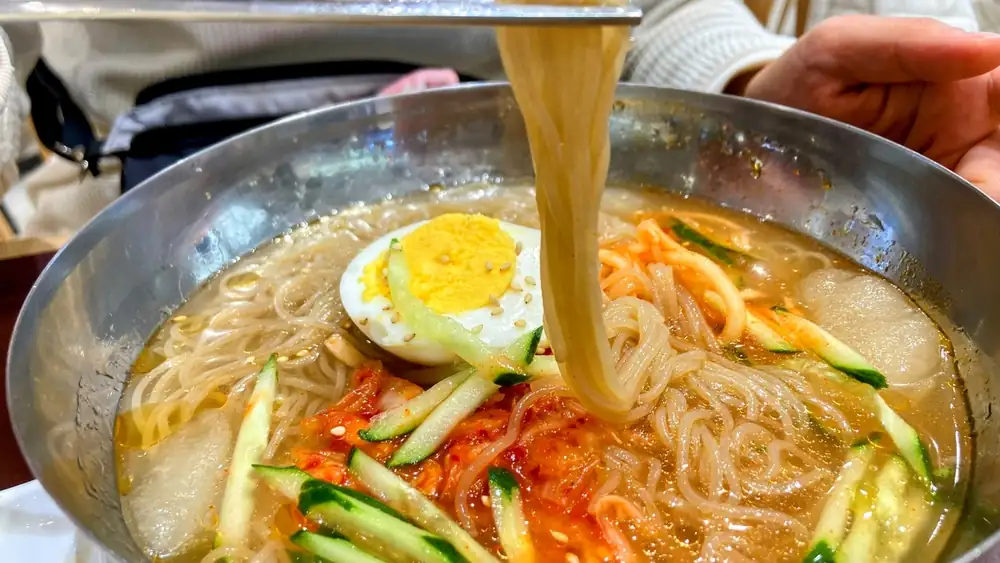
In Korea, metal chopsticks are used in almost all restaurants and homes, a custom with historical and hygienic reasons.
In Korea, metal chopsticks are used in almost every restaurant and home, while in Japan wooden chopsticks predominate. Apparently, Korea is the only country in Asia where metal chopsticks are commonly used.
The most widely accepted theory is that metal toothpicks were originally used to detect poison. Royalty and nobility used silver toothpicks, which, it is said, tarnish upon contact with arsenic; a taster would use them before the king ate. Today, lighter stainless steel toothpicks are the most common.
Metal chopsticks are easier to clean than wooden ones because they don't absorb moisture and can be sterilized with boiling water. Wooden chopsticks were once thought to promote bacterial growth. While easy-to-clean wooden chopsticks are available today, metal remains practical because it doesn't deteriorate after washing.
Metal chopsticks are unbreakable and heat-resistant, which is useful for jjigae (stews) and yakiniku (grilled meat), which are eaten very hot. They also absorb less of the color and smell of kimchi.
In Korea, food is eaten with chopsticks and a spoon: side dishes are eaten with chopsticks, while rice, soup, and stews are eaten with a spoon. It's not common to eat everything with just chopsticks, as is the case in Japan. Holding both chopsticks and a spoon at the same time is considered impolite, and it's recommended to place your drink on the table or in its holder before drinking.
Just like in Japan, poking rice or side dishes with chopsticks is considered bad luck, and leaving them on the plate is also impolite. They should be placed in a chopstick rest. Leaving them on the plate is called watashibashi and is also considered rude in Japan.