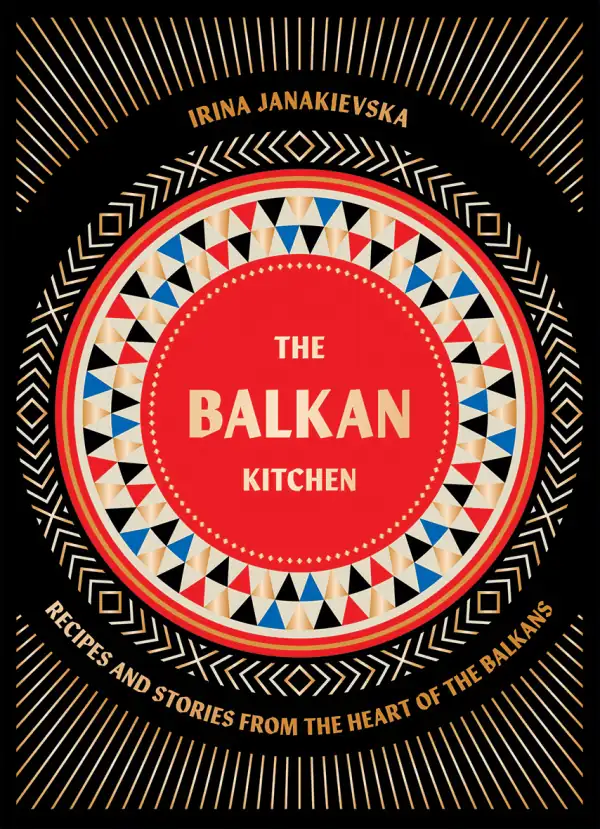
Irina Janakievska travels through the Balkans with Balkan cuisine
Irina Janakievska opens her book with the word taga, a mixture of sadness, longing and love that runs throughout The Balkan Cuisine.
“that she was writing for me more than just a recipe for savoury cake, but rather her last piece of advice for me — her recipe for the rest of my life.”
According to the author, the word taga denotes "a sadness, a longing, a love for a person, a time, a place." This emotion underlies the book, which Janakievska transforms into a clear and unsentimental, joyful testimony about a "changing region" and about the memories that keep food meaningful for everyone.
The author places the Balkans in southeastern Europe, between the Adriatic, Black, and Aegean Seas. For practical reasons, the book focuses on the former Yugoslavia, with references to the rest of the region to clarify the influences on a cuisine that, she writes, remains "sadly unexplored and misunderstood."
The book features dishes such as soparnik, an open tart with the appeal of a pizza; Grandma's savory pie, a cornbread with vegetables, cheese, and herbs; Milibrod poppy seed cakes; and tarator, a dish of herbs, cucumber, and yogurt. Also included are eggplant in walnut sauce, meatball soup, klepe (a type of sausage), venison with quince and cranberries, brodet (a type of stew), and Blejska Kremšnita (a type of flatbread).
The starting point is the last recipe the author's grandmother wrote shortly before she died, with the message: "Grandma loves you. Don't be afraid, I'm sure you'll make it." Janakievska writes that this was "her last piece of advice: her recipe for the rest of my life."
The review doesn't mention pickles or drinks, but it does recommend the book. Among its recipes are plum knedli, or potato dough dumplings, served with melted butter and breadcrumbs, and apples in Šlafor, breakfast fritters whose name translates as "Apples in Bathrobes."