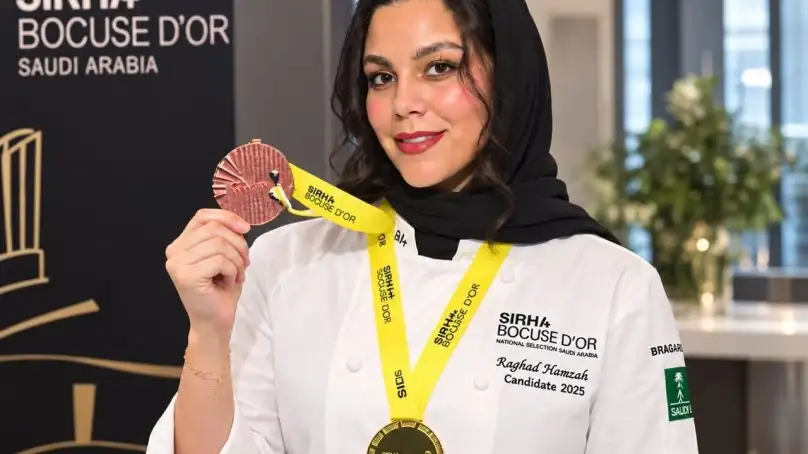
Chef Raghad Hamzah, entrepreneur of Su'dd, talks about a new chapter for Saudi cuisine
The chef explains which dish he would choose to introduce Saudi Arabia to international diners, and why traditional techniques deserve more recognition.
Hamzah would choose Kebab Miro, a typical dish from the Hejaz region that, for him, is more than just a recipe: it brings together generations, who contribute before sitting down to eat. That experience, he explains, captures Saudi hospitality in a very personal way. The dish also connects to a project he's developing, which could open a new chapter for him, and he wants those who try it to discover, in addition to the recipe, the memories and relationships that surround it.
For Hamzah, traditional Saudi preservation and drying techniques deserve more recognition. They reflect a deep understanding of the seasons, climate, and ingredients, and drying concentrates flavors and creates new characteristics. Some of these ideas have been present in Saudi kitchens for generations, so innovation doesn't always require something completely new. He's interested in understanding why these techniques developed and how they can contribute to contemporary cuisine without losing their original essence.
Participating in the Bocuse d'Or in Saudi Arabia and becoming a Saudi Elite Chef changed his perspective on culinary representation. Before, he wondered if a dish was good; now he also wonders what it communicates about its origins. Representing the country means presenting more than just technical skill: it means sharing elements of its identity and the memories that shape its palate. At the same time, Saudi cuisine shouldn't be stuck in the past, and ideally, a dish should inspire diners to discover all that it has to offer.
Hamzah wants to preserve family memories, regional identities, seasonality, traditional techniques, and hospitality. At the same time, he wants to rediscover that heritage with greater curiosity, analyze why recipes developed in a particular way, and explore their contemporary possibilities. His goal is to keep the essence alive without repeating the past, so that the heritage inspires something new.