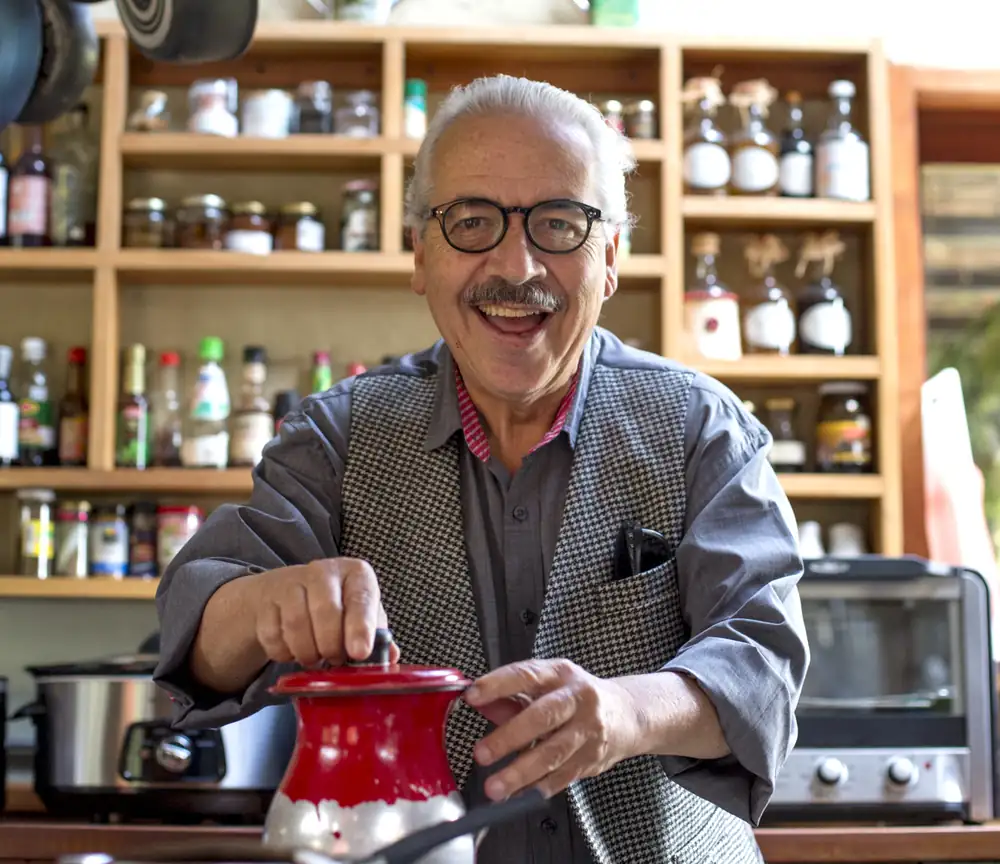
The delicious legacy of Julián Estrada Ochoa
When Julián Estrada Ochoa published his undergraduate thesis to obtain his degree in anthropology at the University of Antioquia in Medellín in the late 1970s, it was met with some suspicion.
When Julián Estrada Ochoa published his undergraduate thesis to obtain his degree in anthropology at the University of Antioquia in Medellín in the late 1970s, it was met with some suspicion. While most students focused on indigenous and peasant issues, he chose to write about cuisine, with a work he titled Anthropology of the Culinary Universe, a reflection on coffee-growing peasant cuisine, using the towns of southwestern Antioquia as his research focus.
Just recently, Julián had been working with two colleagues, both university professors, on revising his thesis in order to submit it to the University of Antioquia Press for publication, as he told journalist Lorenzo Villegas in a recent radio interview. Julián never stopped working. At the time of his death, he had also begun a book that had been on his mind for years and already had a title: My Cooks. It was a compilation of 12 stories of rural women, women who worked in the homes and farms he frequented and from whom he learned throughout his life. He was also a culinary advisor for the Antioquia es Mágica project, run by the First Lady's office of the Antioquia Governor's office.
A life with many facets
More than 400 newspaper columns and numerous articles, some compiled in the books *Doña Gula* and *Fogón Antioqueño*; the research projects *Colombia de Sal y de Dulce* and *Invitando a Investigar la Cocina Popular Colombiana*, in addition to other texts, radio programs, and his legacy as a professor and lecturer, are evidence of a prolific career spanning more than forty years. And let's not forget his restaurant, Queareparaenamorarte, which he owned for ten years on the outskirts of the municipality of El Retiro, 30 minutes from Medellín. Built in the style of traditional rural kitchens, it served regional dishes from different parts of the country; his three types of empanadas and his eight different ajís or pickled sauces, the result of his culinary research throughout Colombia, are unforgettable.
In a couple of days, another edition of La Arepa Invita will take place, a culinary and academic event in which he also worked in recent years, alongside Lorenzo Villegas. It will be strange not to see him there sharing, eating, and chatting; painful not to have his colorful presence and unmistakable style. But Julián will be there, without a doubt, as Lorenzo Villegas reminded us: “No one dies until they are forgotten,” and Julián is unforgettable.