Grandes Pagos: 20 years of struggle for the land
“To defend and promote the ultimate expression of terroir in unique, high-quality wines that faithfully reflect their origin” is the motto of Grandes Pagos de España, an association celebrating its 20th anniversary this year.
Its members include internationally renowned names such as San Román, Belondrade, Valdespino, Alvear, Arínzano, Mauro Chivite, and Numanthia.
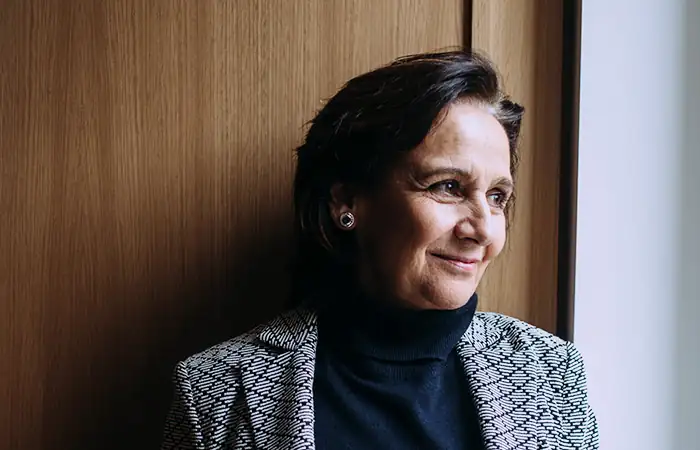
For the past year, this association has been presided over by María del Yerro from Madrid, founder and owner, along with her husband, Javier Alonso, of the Alonso del Yerro Winery in the Ribera del Duero.
How did Grandes Pagos de España come about?
At first, they said it started as a group of friends, which makes me a little nervous and has always bothered me. It all began when Carlos Falcó thought about the wineries that were doing things well but had a very difficult time proving they were terroir-driven wines, because of their location in Castile. That's why Grandes Pagos de Castilla was created in 2000, with five wineries: Marqués de Griñón, Dehesa del Carrizal, Finca Élez, Vallegarcía, and Aalto.
How did Grandes Pagos de Castilla become Grandes Pagos de España?
In 2004, as other wineries from across Spain began to show interest in the project and wanted to join, and were not located in Castile, the decision was made to change the name to Grandes Pagos de España. That is why this year marks its 20th anniversary.
What were their objectives?
The association was created as a non-profit, with the purpose of promoting Spanish terroir wines and demonstrating that truly great wines were being made in Spain. In that initial phase, Carlos Falcó was the president, and he did an excellent job of communicating with the public. Wherever he spoke about his wines, he ended up talking about Grandes Pagos de España (Great Estates of Spain). But some confusion arose because at that time the Payments Law was introduced, which has nothing to do with us; we talk about terroir. We have been insisting for years that the Spanish Payments Law has nothing to do with the name Grandes Pagos de España. I even proposed changing the name once, but it didn't go anywhere. I would have called it Grandes Terruños de España (Great Estates of Spain), which is what we are, and that would have solved the problems.
Who can be part of Grandes Pagos de España?
Any winery from any designation of origin is welcome, as long as it meets our requirements. Currently, almost all regions of Spain are represented. We need to improve in the north, to have more wineries there because, for example, in Galicia we only have one. It would be fantastic if the different designations of Galicia were represented.
And what are those requirements?
First and foremost, we require reports on terroir quality, winery quality, wine quality, and the use of our own grapes, or at least grapes grown under our control. That is our guiding principle. Wineries wishing to join must have at least five years of national and international recognition, a requirement established in our bylaws from the very beginning. We require both because we travel extensively abroad promoting our wines as an association. If we want to showcase Spanish wines internationally, the wineries belonging to our association must have a certain level of recognition.
Have those requirements changed over the years?
Over the years, joining has become increasingly difficult. When I joined in 2010, they required a five-year membership. We launched in 2005; by 2010, we already had five years of recognition, with very good national and international scores. We applied for membership and were approved. They came to see the vineyard, the winery, and the facilities to verify that our wines were indeed produced with our own grapes and that we weren't buying them. A tasting was conducted by the internal Tasting Committee: Víctor de la Serna, Mariano García, and Carlos Falcó, three wonderful tasters who, as members, were keen for other wineries to join the association.
When Toni Sarrión became president in 2016, the first thing he did was declare that we couldn't continue tasting the wines ourselves. So we hired Juancho Asenjo and asked him to create what we call the Expert Tasters Committee. It includes five or six sommeliers, like Luis García from Navarra, and he leads it. This committee tastes wines four times a year, reviewing those aspiring to join the association and those of our members each year. Every year I send them the new vintages for tasting. And most importantly, it's a completely blind tasting.
Is a winery accepted as a member as a whole, or only certain wines from that winery?
It's a complicated issue, and we're trying to change it; it's something that predates the previous situation. At one time, some wineries were only allowed to participate with a few wines, because not all of their wines were terroir-driven. What we want is for wineries that join Grandes Pagos to do so with all of their wines.
The tasting committee has greatly enhanced our prestige. Each winery must have at least one excellent wine and one very good one. If a wine doesn't meet the required standard, which has happened to us, the first step is to re-taste it, just in case. If it continues to fail, it cannot participate in the events we hold under the Grandes Pagos umbrella. The following year, it's tasted again, and if it still doesn't pass, the winery could be suspended. Not expelled, but removed from the list until the issues are resolved.
And has it ever happened?
We had a case, which wasn't with a single wine but with the winery as a whole. It had a disappointing two years in a row and they were asked not to be involved. (Declines to say which one)
What are the benefits of being a member of Grandes Pagos de España?
Let me give you our example. We produce 70,000 bottles. I wanted to be associated with a group that would allow us to attend an international trade fair as an association, to raise our profile, to go to New York and actually get noticed, unlike when I've gone with my importer, like Alonso del Yerro, where they've had to practically beg people to come and try it because they'd say, "But what is this?" Of course. If 35 wineries from Spain attend, it attracts attention, and that's the idea. And if 70 attend, it attracts even more attention. Ever since I joined the Executive Committee, I've been saying that 70 is better than 35. I believe that unity is strength, especially in a country as rich in vineyards as Spain. There are so many wineries that it would be wonderful to have with us. I know that some will never join because being part of an association isn't their philosophy, and they prefer to go it alone.
Summarize in four words: Grandes Pagos de España.
Dissemination and promotion of Spanish wines and Spain's great terroirs, training about these wines and interaction between the wineries that are part of the association.