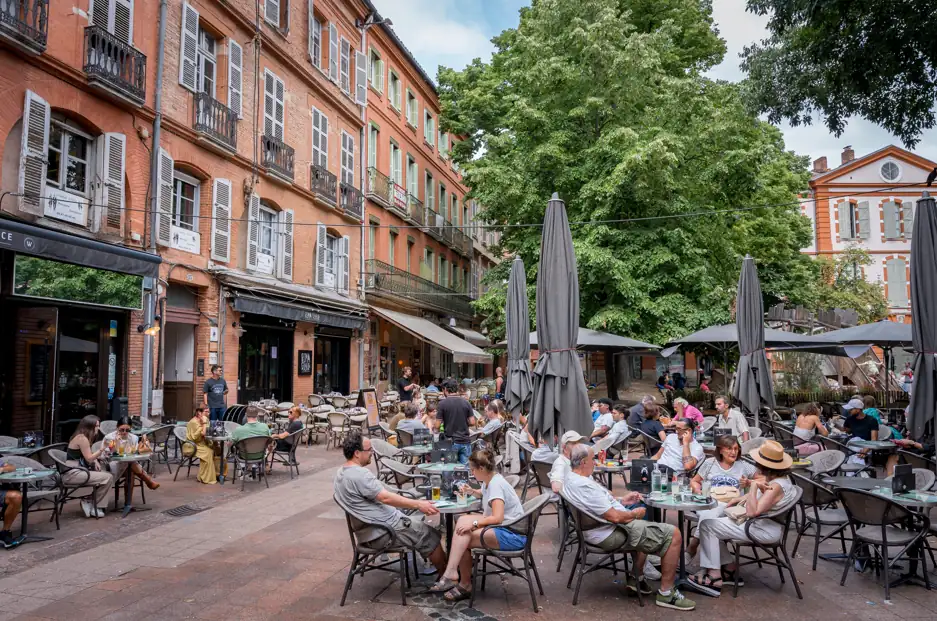
Toulouse at the Table: A Journey Through Autumn Flavors
From markets to shops, from food tours to tastings: the autumn months are ideal for discovering the Ville Rose through its traditions and local products.
- JW Central Editorial Staff –
From markets to shops, from food tours to tastings: the autumn months are ideal for discovering the Ville Rose through its traditions and local products.
With the arrival of autumn, Toulouse invites you to discover one of the most authentic aspects of its identity: its gastronomic culture. In the "Ville Rose," so named for the pink hues of its brick buildings, the pleasure of dining is an integral part of the local art de vivre and is expressed through local products and traditional recipes: from cassoulet to sausage, from cheeses to foie gras, and even wines.
The new season thus becomes an opportunity to experience Toulouse through its markets, historic shops, gourmet addresses, and food tours. From local products to encounters with artisans and tastings, each experience offers a different perspective on the city and its relationship with food. As the days begin to shorten, the Occitan capital invites you to rediscover the pleasure of sitting down to eat.
The flavors of Toulouse: local specialties and gourmet shops
In Toulouse, the food and wine tradition also flows through historic shops, where local products reflect a deeply rooted culture of taste. From the famous cassoulet toulousain, made with beans, Toulouse sausage, and duck, to foie gras, Pyrenean cheeses, and Fénétra, an ancient cake made with almonds, apricots, and candied lemon, there are numerous specialties to savor.
To take home a taste of this tradition, you can stop at Maison Busquets, a historic épicerie (grocer's) in the heart of the city, near Place du Capitole, which offers cassoulet, preserves, wines, and regional specialties, or Chez Xavier, a family-run business specializing in the selection and maturation of excellent French cheeses, whose owner, François Bourgon, was awarded the “Meilleur Ouvrier de France” title in 2011.
Among the most curious specialties is the violet, one of the city's symbols, which is used in numerous forms, from gastronomy to cosmetics, from crystallized petals to sweets, from teas to beauty products. To discover its history, visit the Maison de la Violette, housed on an authentic 1930s péniche (river boat) moored along the Canal du Midi (the historic canal connecting Toulouse to the Mediterranean, which this year celebrates the 30th anniversary of its inscription on the UNESCO World Heritage List). Since 1993, the house has been showcasing this delicate flower through around a hundred products, from gastronomy to cosmetics. Alternatively, Les Trésors de Violette, right in the city center, offers a selection of delicacies, confectionery, and regional specialties dedicated to the violet.
Among shops, local products, and gourmet addresses, the cooler season becomes the ideal time to embark on a culinary journey through the heart of the Ville Rose, letting yourself be guided by local specialties and the stories of those who preserve their traditions.
Food tours to discover the flavors of Toulouse
Gastronomy thus becomes an original way to explore the city thanks to a series of food tours, which.
they alternate walks, meetings and tastings.
Among the most original offerings is the Toulouse Gourmet Tour, which combines visits to the city's iconic sites with tastings of local specialties, some freshly prepared aboard a specially equipped cargo bike. Led by chef Alejandro, the tour offers a dynamic and convivial way to immerse yourself in Toulouse's gastronomic culture. For those wishing to delve deeper into a specific aspect of local tradition, Taste of Toulouse offers three itineraries in English: from discovering the excellence of the Marché Victor Hugo to a tour of wine bars and regional cheeses, and a tour of the city's historic pastry shops and chocolate shops. Les Compagnons du Fromage offers a two-hour experience in the historic center, featuring five artisanal cheeses, regional wines, local beer, anecdotes, and fun games. A more informal option is Farinettes & Cie, which takes visitors and locals through the neighborhoods of Carmes, Esquirol, and Saint-Étienne with its characteristic food cart, offering tastings and glasses of wine.
From markets to wine bars, from artisan workshops to street food, these itineraries allow you to discover Toulouse bite by bite, meeting the people and traditions that shape its gastronomic identity. An especially enjoyable experience in the cooler months, when the city's pace invites you to linger longer around the table.
The taste of Toulouse: markets, local products, and conviviality.
To immerse yourself in the city's gastronomic culture, markets are a must. Here, producers and merchants meet residents and visitors daily, amid stalls brimming with regional products, local specialties, and fresh ingredients. First and foremost, the Marché Victor Hugo, one of the city's liveliest covered markets, where over 80 exhibitors offer meat, fish, cheeses, fruit, and vegetables, as well as bakery and pastry products. Upstairs, restaurants transform market ingredients into traditional dishes.
The tour continues at the Marché des Carmes, in the heart of the neighborhood of the same name, among fresh produce, local specialties, and gourmet addresses, or at the Marché Saint-Cyprien, where the convivial atmosphere accompanies a rich selection of cheeses, cured meats, and other local delicacies.
Completing this itinerary is Les Halles de la Cartoucherie, a former industrial complex now converted into a space dedicated to gastronomy, culture, and socializing. With food stalls, restaurants, and street food options, the contemporary market showcases a more creative and dynamic side of Toulouse cuisine.
Thus, between a stand and a break at the table, the markets become a gateway to the city: places where products, traditions, and people meet every day around food.
Between tables, vineyards, and creativity: the taste of autumn in Toulouse
The autumn season also brings a series of events and experiences celebrating the connection between Toulouse and its surrounding region. One example is Domaine de Candie, Toulouse's urban vineyard, where organic farming intertwines with the history of a city-owned estate. Here, on September 29th and October 5th, a guided tour lasting approximately an hour and a half allows you to discover the history of the estate, its agricultural vocation, and its connection to the local area, concluding with a tasting of wines produced in Toulouse. An original way to experience the most authentic and sustainable side of the destination, combining nature, culture, and local flavors.
A passion for food meets creativity at the Halle de la Machine, a space in the south of the city where the imagination of the La Machine theater company comes to life through over 150 imposing automatons. Here, on weekends and during holidays, the "Déjeuner des Petites mécaniques" ("Lunch of the Little Mechanics") transforms lunchtime into an extraordinary experience: a table for 24 diners, served by machines and performers, where even bread and dessert become part of a surprising mise en scène.
And after wandering the markets, shops, and food trails, all that's left to do is treat yourself to dinner at one of the many restaurants in the city center, letting yourself be guided by Toulouse specialties. Because when summer gives way to cooler days and a more relaxed pace, Toulouse also reveals itself at the table: from time-honored recipes to contemporary interpretations, local products and wines, tastings, and experiences, the Ville rose offers a new way to experience the city, following the rhythm of the seasons and letting its flavors guide you.
About Toulouse
Capital of the southwestern French region of Occitanie, about 100 km from the Pyrenees and halfway between the Atlantic Ocean and the Mediterranean Sea, Toulouse is the fourth most populous city in the country, with approximately 500,000 inhabitants. Furthermore, its relaxed and convivial atmosphere, typical of southern France, and the presence of one of the oldest and most prestigious universities in Europe, founded in 1229, make it a city inhabited by many young students (approximately 130,000, over 25% of the city's population).
Nicknamed “Ville rose” (the “Pink City”) for the dominant color of its ancient brick buildings, Toulouse boasts three UNESCO World Heritage Sites: the Romanesque Basilica of Saint-Sernin, one of the largest Romanesque buildings in Europe; the Canal du Midi, a 241km-long canal linking the Atlantic and the Mediterranean, passing through the Occitan city and connecting to the Garonne River that flows through it; and, finally, the Hôtel-Dieu Saint-Jacques, now the hospital's administrative center and one of the emblematic symbols of the urban landscape.
Characterized by a cultural heritage and a history spanning over two thousand years, which can be admired in the numerous monuments that populate its center (such as the Place du Capitole, the Jacobin Convent, and many others), Toulouse today is also extremely forward-looking, thanks to the various aerospace excellences that make it the largest European hub in the sector: it is home to the headquarters of Airbus, the SPOT satellite system, the Aerospace Valley cluster of companies, the Toulouse Space Center (CNES, National Center for Space Studies), the Cité de l'Espace, a theme park on the mysteries of space and a unique science dissemination center in Europe, and, as a recent addition, the new NATO Center of Excellence.