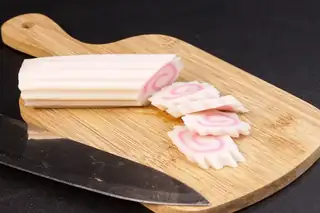
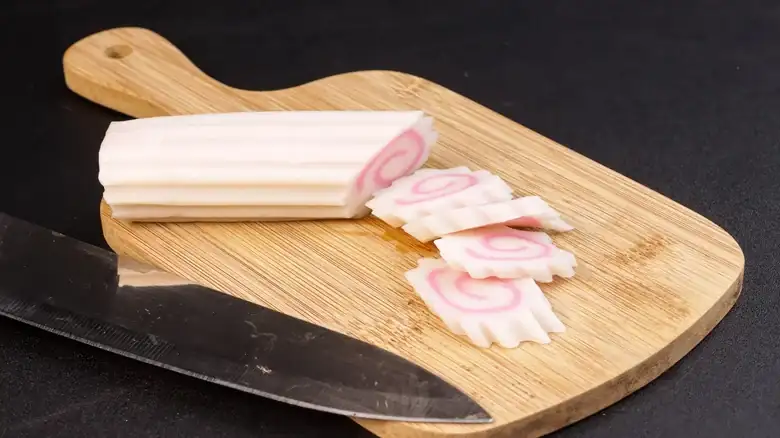
The narutomaki, the fish cake with pink swirls that adorns the ramen
Its white streaks and pink swirl make it unmistakable, and its name is said to come from the tide pools on the Japanese coast of Naruto.
A bowl of ramen includes eggs marinated in soy sauce, pork chashu, nori seaweed, and marinated bamboo shoots. Among the dishes, the narutomaki stand out, white fish cakes with pink ridges and swirls that pique the curiosity of those unfamiliar with them.
They are a special type of kamaboko, a category of Japanese fish cakes made by boiling, frying, or steaming a fish paste. This paste is seasoned with sugar, salt, and other ingredients, and it remains shelf-stable without refrigeration. It's a long-lasting product that's uncommon in the United States, but it has a remarkable appeal that's worth exploring.
Narutomaki is made with surimi, a white-fleshed fish also used for imitation crab. The fillets are washed, cut into small pieces, and combined with sugar, creating a dense, chewy texture. It is then steamed until extra firm.
Part of the dough is dyed red, while the rest remains white. The dough is rolled into a cylinder, creating a swirl pattern in the cross-sections, while the surface is pressed on a bamboo mat to form the ridges. This design is said to mimic the tide pools off the coast of Naruto, Japan, hence the dish's name.
Once cooked, narutomaki requires no further cooking and offers a salty, fishy, and slightly sweet flavor, along with a chewy texture that contrasts with the noodles. This is why it's primarily associated with ramen, pairing well with broths as varied as a mild shio or shoyu broth or an extra-spicy beef ramen. It also frequently appears on udon, where it adds color and texture with minimal effort. Thus, narutomaki continues to grace noodle dishes worldwide with its eye-catching design.