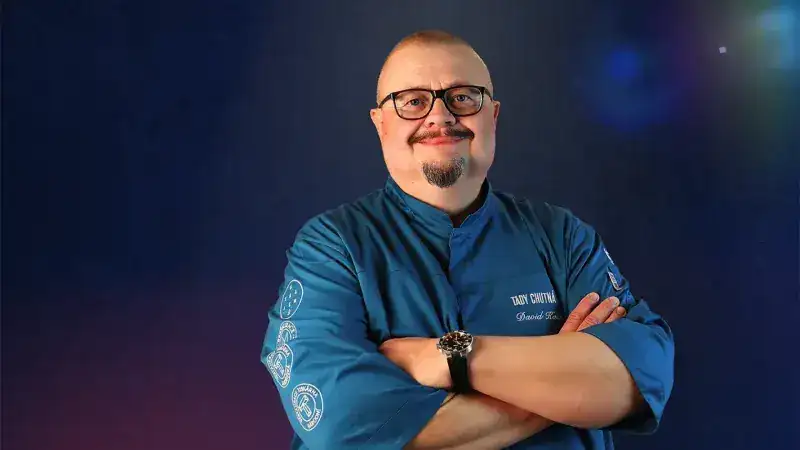
The biggest problem Czechs have in the kitchen? According to a renowned chef, it's too much creativity. We also falter in seasoning
If you had to choose between modern gastronomy full of interesting combinations of flavors and aromas and traditional cuisine, which is not an exotic experience, but is based on proven recipes, which would you choose? It's hard, isn't it? Sofia's choice...
Chef David Kalina is considered a master of Czech cuisine and is the one who shows that it makes sense to be inspired by the past and follow the methods that have been tested by generations. He loves old cookbooks and likes to breathe new life into old recipes. He only works with first-class ingredients, and a few years ago he gave our readers clear advice: "You only have one health, so choose quality ingredients and food, preferably with a proven origin." And just as he lives by gastronomy, he expects the same from his people: he expects humility, commitment, flexibility and a desire to constantly learn. It is no wonder that there are queues in front of his restaurants.
How is a new recipe inspired by Czech tradition created?
It usually starts with old books and leafing through them. When I have a moment, I sit down with cookbooks from the First Republic or even older ones and look for forgotten combinations of ingredients or techniques that are not often seen today. Every time something interests me, I write down the recipe, we go to the kitchen and cook. We taste, we match the flavors, the structure and the presentation on the plate. Traditional food has to look great and modern on the plate, but when you close your eyes and taste it, you have to immediately recognize the honest Czech classic in it.
How do traditional and modern approaches differ?
I see the main differences in several key areas: from ingredients to technique to presentation. Nowadays, it is important to lighten dishes, i.e. if possible, use healthier fat, reduce flour. Also, play more with textures, incorporate something crunchy, creamy into the modern version of the dish. Add more color, for example with only briefly cooked vegetables or fresh herbs. But the basis is the same: honest and strong flavor.
When do you like to experiment and when do you strictly stick to the recipe?
An interesting question, because the line between experimentation and discipline is crucial in the kitchen. Simply put, basic craft and chemistry require discipline, but flavoring, presentation, and seasonal ideas require freedom.
Which period in Czech history do you think was the best in terms of food?
It is the period of the late Austro-Hungarian Empire and then the First Republic. At that time, Central European tradition met with French elegance. Chefs worked with an incredible range of ingredients. My most favorite dishes come from South Bohemia, I really like South Bohemian dishes made with potatoes, mushrooms and dill.
What should be brought from history into the contemporary kitchen and what should be left in the past?
We need to transfer from history respect for raw materials, zero waste, natural seasonality, locality and diversity of raw materials. I would rather leave in the past the excess of heavy fats, excessive thickening with flour, and excessively long and unsparing heat treatments of fish and vegetables.
Do you have a signature recipe that describes how you think about food and cooking?
I don't have one like that. I enjoy taking a historical root, adapting it to a modern form, using top-quality ingredients, and presenting the food to the guest with contemporary ease and elegance. And that's what I'm all about.
What food tastes like childhood?
White cabbage soup with mashed potatoes and onions reminds me of my childhood, that's my childhood, that's the memory of my grandmother, of her old plates and aged cutlery, of the always beautifully set table.
Can you cook well and cheaply?
Yes, it can be cooked well and cheaply. Such is the already mentioned cabbage soup or other dishes made from potatoes, cabbage, or even offal.
What is never missing in your kitchen?
My kitchen is always full of broths, sharp knives, and a good mood.
What else does a good cook need to have to be a chef?
Every cook should have enough humility and patience. In addition, a chef should also have managerial and economic thinking.
Why didn't you let yourself be tempted by exotic cuisine, but are you loyal to Czech cuisine?
I like Czech cuisine because I grew up with it, and I enjoy putting traditional dishes into a modern, light-hearted way. As I say, giving them more "sex appeal."
And how would you describe Czech cuisine to someone unfamiliar with it?
Diverse in tastes, aromas, ingredients used and cooking techniques. Czech cuisine cannot do without the heart, it always needs to be put in whole and a little extra. I would like it if we learned to season food sufficiently, but not over-season or over-fill.
What food or ingredient would you like to fix its reputation: is it neglected, has a bad reputation?
Generally, they are offal, but they are very valuable nutritionally, extremely interesting in taste, and relatively affordable.
You are behind the project It tastes good here. Can you introduce it?
There are currently four Prague restaurants: Mincovna, Tiskárna Jindřišská, Tiskárna Národní and U Tellerů. The first three restaurants are based on classic Czech, Austro-Hungarian and First Republic cuisine. U Tellerů offers a modern take on dishes based on original Czech cuisine and steaks from our own grill prepared over charcoal.
Is there something unique and common to your restaurants?
Rumor has it that it has great cuisine, professional service, excellent Pilsner beer, a rich selection of quality wines and a pleasant atmosphere.
You say that standardization is the basis: having detailed production and sales procedures, and regularly training your staff. What do you teach your people?
All information regarding operations is continuously updated with new things. For example, production procedures in the kitchen, customer service and hygiene practices in both groups. Training must never be neglected, even if it is not the most popular activity among the staff.
What cookbooks do you like to browse and which ones inspire you?
My library is filled mainly with cookbooks from the First Republic and the Austro-Hungarian Empire, currently there are more than 70 titles, mostly first editions, and I really enjoy reading them. I personally don't have any specific culinary role models, but I've heard that I'm already a role model for a few chefs.
What food tastes like David Kalina's autumn?
Recipe for fallow deer crepinet (note: a meat mixture wrapped in a thin layer of fat membrane, crepine) with Esterházy sauce and ham dumplings.
And what would you like to present to the visitors of Bidfood Expo?
I will present to Bidfood Expo visitors modern, light versions of classic dishes inspired by recipes from cookbooks published between 1911 and 1929. One of them will be the aforementioned fallow deer crepineta with Esterházy sauce.