Why German Beer Gardens Have Full- And Self-Service Area Rules
It's common to see "beer garden" used to describe a leafy patio for a gastropub, but those traveling through Germany, especially in the Bavarian biergarten birthplace of Munich, may find that it's actually something heavily steeped in tradition.
The self-service tradition began in the 19th century as a way for Munich's breweries to sell directly to customers from beneath the chestnut trees that shaded their cellars, while limited by royal decree not to sell food and thus encroach on the business of inns. Beer garden customers could bring their own food, pay for and collect their beer from the bar themselves, and find a spot among the long shared tables of the casual and relaxed biergarten.
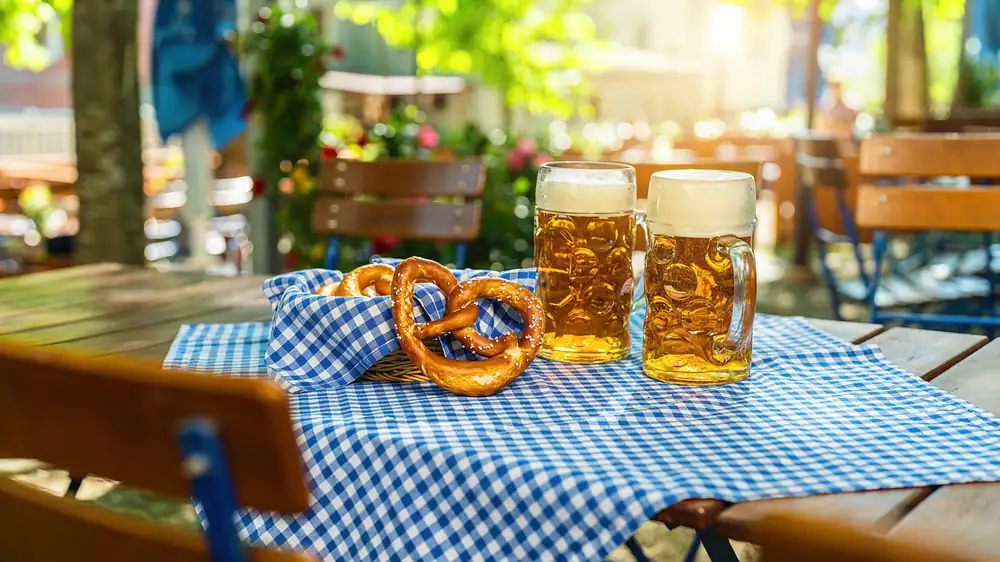
Today, many German beer gardens uphold this tradition alongside sections where service staff take orders and deliver food, more akin to a restaurant. These sections are often discernible by having a tablecloth. However, the beer is usually cheaper in the self-service area, where customers are still allowed to bring whatever local food they want, and common snacks include "brotzeit" (meaning bread time), such as pretzels, bread, cheeses, cold meats, sauerkraut, or sausages.
The whole experience is built around relaxation, enjoyment, and of course, beer
Customers in the self-service area pay an initial deposit on the maßkrug, which they get back when they return the glass. In general, tipping isn't expected in the self-service areas, but a 5% to 10% tip is commonplace for waitstaff in the full-service zones. A busy beer garden usually means sharing a table with strangers who're there to do the same thing. You may be able to reserve a spot in a full-service section, but don't count on it, as this is not always possible. If you're planning on visiting a traditional biergarten, overplanning can be a misstep. Expect to get comfortable and take your time enjoying the atmosphere. Going on a weekday outside of peak hours might also provide a less hectic experience. The most traditional beer gardens are those still shaded under horse-chestnut trees and over gravel, which was another old-school blanketing measure to keep underground beer cellars cold through summer months in a pre-refrigeration era.
As with the old days, when gardens were built around a single brewery's cellar, traditional locations often champion one house brewery, so you likely won't find a 20-tap lineup of crafties. The experience is built around enjoying one beer for longer. You'll probably notice the difference between German and American brews, and there are many spectacular beer styles you can search for if you're planning an Oktoberfest visit, including common drops like German pils, helles lagers, and dunkels.