“The pasta water should taste like the sea”: the gesture that Spanish chefs never miss
You cook pasta almost every week without really giving the technique a second thought.
Why your pasta often lacks flavor
Pasta is often the easy solution for dinner. A few minutes in boiling water, some tomato sauce, a sprinkle of grated cheese, and the meal is ready in no time. But creating a truly delicious dish isn't just about the accompaniments.
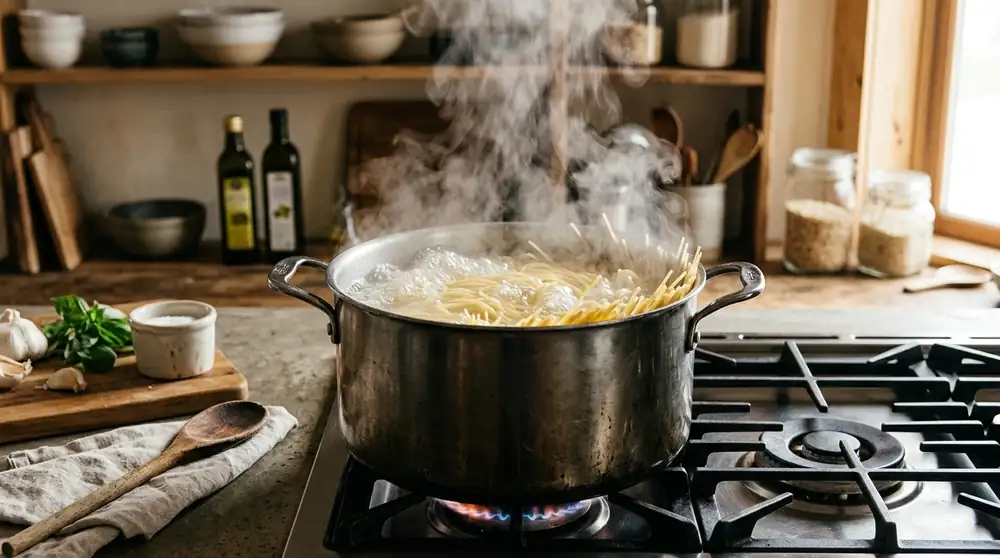
Several Spanish chefs emphasize an often-overlooked point: the amount of water used for cooking. For Niko Romito, a large, full pot is essential. According to him, pasta "needs space to move and cook evenly."
Insufficient water causes pasta to stick together and prevents even cooking, a problem many people encounter without understanding the cause. The choice of pasta also plays a role, as shown by tests conducted on certain supermarket brands scrutinized by consumer associations.
Then there remains the most debated step in France: that of salt, which still divides many cooking habits, a subject also brought to mind by the error pointed out by Italian chefs.
The secret that Spanish chefs keep repeating: salt and cooking al dente
Once the pot is filled, comes the step deemed non-negotiable by the chefs interviewed: salt. For José Andrés, an internationally renowned chef, the rule is simple: "The pasta water must taste of the sea." A generous amount, far from the symbolic pinch added out of habit.
This salty water soaks into the pasta as soon as it's cooked, even before the sauce is added. It's what gives the dish its character, rather than simply providing a bland base – a point also highlighted in debates about choosing the right brand of pasta on the shelf.
Then there's the question of cooking time. Chefs are unanimous: pasta should remain al dente, neither too firm nor too soft. Jordi Cruz even suggests removing it from the water two to four minutes before the package instructions indicate.
This anticipation allows the pasta to finish cooking directly in the pan, in the sauce, absorbing its flavors rather than those of the water. A simple step that completely transforms the taste, as confirmed by the ranking of French departments with the highest pasta consumption.
The final gesture that almost no one remembers before draining
Before draining everything, one last step makes all the difference: keep a little of the cooking water. This liquid, rich in starch, will then bind the sauce and the pasta together when they finish cooking in the pan.
This step, deeply rooted in Italian cuisine, allows the sauce to adhere much better to the pasta, without becoming too runny or too thick. Many French households, however, routinely pour this water down the sink, even though it's invaluable in the kitchen, much like the same water used to degrease dishes.
The method essentially boils down to four precise steps: a large quantity of water, generous amounts of salt, cooking al dente but stopping a little early, then finishing with a sauce made with a little of the reserved cooking water. Nothing complicated, but each step really counts.
Ultimately, the difference between ordinary pasta and pasta worthy of a trattoria lies in four simple steps, never in a rare ingredient. The next time you fill your pot, that water that "tastes like the sea" might just transform your dinner.