10-Minute Cheat's Tonkotsu Ramen (No Pork Bones Required)
“This was fantastic, thank you for the recipe. My family and I lived in Kyushu so we are very familiar with authentic tonkotsu ramen.
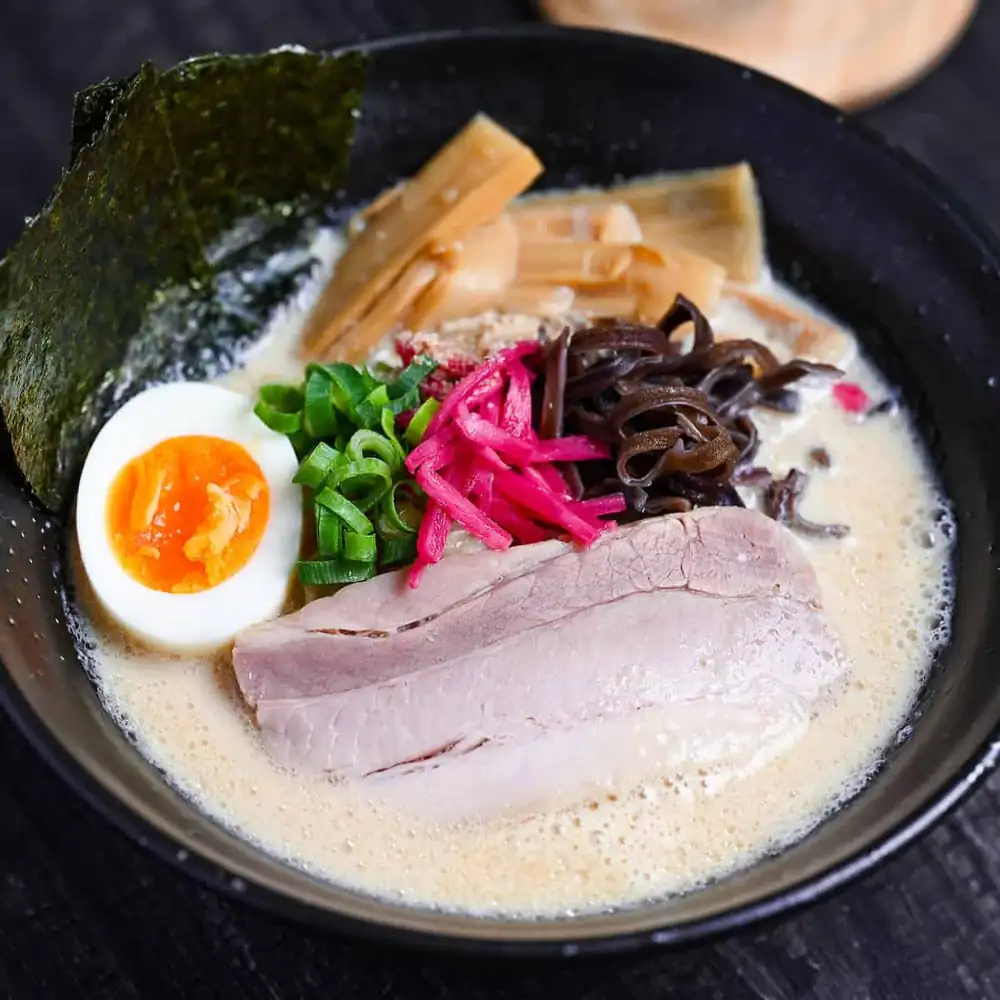
- 320 ml water
- 320 ml unsweetened soy milk (unsweetened)
- 2 tbsp Chinese-style chicken bouillon powder (based on 1 tsp = 200ml soup ratio, scale to your brand's strength)
- 1 tbsp lard
- 2 tsp garlic paste (or grated garlic)
- 2 tsp oyster sauce
- 2 tsp Japanese soy sauce (koikuchi shoyu)
- 1 tsp dashi granules
- 2 portions ramen noodles
- pork chashu
- boiled wood ear mushrooms (thinly sliced)
- red pickled ginger (benishoga)
- finely chopped green onions
- ground sesame seeds
- seasoned bamboo shoots (menma)
- ramen eggs
- roasted seaweed for sushi (nori)
- Add all of the broth ingredients to a saucepan and heat on low until it reaches your preferred serving temperature. Stir occasionally and be careful not to let it boil. While it heats, boil a pot of water and cook your ramen noodles according to the package instructions.
- Pour hot water into the serving bowls to warm them, then pour it out. Drain the noodles and divide them evenly between the bowls.
- Pour the soup over the noodles and add your desired toppings. Enjoy!
Featured Comment:
“This was fantastic, thank you for the recipe. My family and I lived in Kyushu so we are very familiar with authentic tonkotsu ramen.
I made the recipe for a casual dinner party and everyone asked for the recipe. Will be making it over and over again.”
- Joyce
Have you ever wanted to try the rich Tonkotsu Ramen but felt intimidated by the traditional cooking process? While I’ve successfully made homemade miso, Shoyu (soy sauce), and Shio (salt) ramen, Tonkotsu always seemed like a challenge too big to take on. Authentic Tonkotsu Ramen, with its signature milky broth, is notoriously labor-intensive.
The traditional method involves simmering pork bones for 8 hours or more. This method tests the limits of your patience, but it also has a powerful downside: the pungent aroma of simmering bones can permeate your entire neighborhood!
True story: Back when I was in England, there was this new tonkotsu ramen shop in my neighborhood. They instantly received smell complaints from the store next door. But don’t worry!
I’ve got a game-changing solution that will let you enjoy the essence of Tonkotsu Ramen without the hassle (or smell!). I’ll show you how to make a tonkotsu-style broth with “a secret hack ingredient” you can find at any grocery store.
It’ll have that creamy richness you crave. Curious about our secret ingredients and techniques? Keep reading to discover more!
Tonkotsu ramen (とんこつラーメン) is a unique type of ramen that’s known for its rich, milky broth. The star of the show is the pork bones.
These bones are simmered for a long time, often with chicken bones, vegetables, and other ingredients that add depth and complexity to the broth. One of the most distinctive things about Tonkotsu Ramen is its cloudy, creamy appearance.
But what’s the secret behind this soup? The secret’s in the collagen.
As the bones simmer, the collagen breaks down and transforms into gelatin, creating that signature milky look and silky texture. Tonkotsu Ramen is believed to have been born at “Nankyo Senryo (南京千両),” a ramen shop in Kurume City, Fukuoka Prefecture.
This historical tidbit explains why Tonkotsu Ramen is still strongly associated with Fukuoka to this day. In fact, when many Japanese people think of Tonkotsu Ramen, Fukuoka is often the first place that comes to mind!
The recipe we’re about to explore is inspired by Hakata-style soup too! I have to be honest with you.
This mock recipe wasn’t my original plan. I was all set to make real Tonkotsu Ramen with pork bones.
But then reality hit me. Just picture this: hunting down a butcher for custom-ordered pork bones, simmering them for 8 whole hours, and turning your entire neighborhood into a pork-scented scene.
Not exactly practical, is it? Don’t get me wrong, I do want to share authentic Japanese recipes on my website.
But I also believe in recipes you’ll actually want to make with ease at home. So, I put on my thinking cap and came up with this alternative. When I tasted the result, I was blown away.
Is it exactly the same as real Tonkotsu? Of course not. But it’s so close in taste and texture that it was incredible.
Ask yourself: 8 hours of simmering and a house that smells for a few days, or 10 minutes and a normal-smelling kitchen? The choice should be clear.
- Ramen noodles: Thin fresh noodles are the best! Making them at home is my favorite – it’s easier than you might think! I wrote a whole guide called “Ramen Noodles 101” if you want to learn how. But if you’re short on time, there are some good store-bought options too. Just promise me one thing: don’t use those instant cup noodles for this!
- Soy milk: Yes, soy milk is the magic ingredient in this mock recipe! Use plain, unsweetened soy milk. It really helps create that creamy texture we’re after.
- Chinese-style chicken stock powder: This adds a savory depth that you just can’t get from soy milk alone. I prefer the Chinese style, but Western bouillon powder also works in a pinch.
- Lard: Lard is key to pork flavor that you need in tonkotsu soup. It makes a big difference!
- Other seasonings: To round out the flavors, use oyster sauce, soy sauce, and dashi granules. Each one brings something special to the broth.
- Toppings that I used: Here’s where you can get creative! I like to top my ramen with pork chashu, thinly sliced boiled wood ear mushrooms, beni shoga (red pickled ginger), chopped green onions, ground sesame seeds, menma, ramen eggs, and a couple of sheets of nori seaweed.
- Alternative topping suggestions: Easy cheat oven-roasted pork chashu, seasoned bean sprouts, spicy leek, garlic chips, sesame seeds, blanched spinach.
Here are my step-by-step instructions for how to make Cheat’s Tonkotsu Ramen at home. For ingredient quantities and simplified instructions, scroll down for the Printable Recipe Card below. If you prefer to watch the process in action, check out my YouTube video of this recipe for a complete visual walkthrough!
Combine all broth ingredients in a pot. Place over low heat, stirring occasionally.
Keep a close eye on it and remove from the heat once warmed through. Keep the heat low and don’t let it boil!
This prevents the soy milk from curdling. This is a vital step to achieve the soup texture. While the broth heats, prepare ramen noodles in a separate pot according to package instructions.
Once cooked, drain the noodles in a colander. Here are answers to frequently asked questions I have received across all platforms, including here, YouTube, Instagram, and Pinterest.
If you have any questions, feel free to send them to me anytime! It will be a big help for everyone in this community! If we don’t have lard available can we substitute with anything else or omit it?
This recipe is designed to replicate pork broth and lard is one of the most important ingredients in the recipe so I don’t recommend omitting it or swapping it for anything. I hope you enjoy this Cheat’s Tonkotsu Ramen recipe! If you try it out, I’d really appreciate it if you could spare a moment to let me know what you thought by giving a review and star rating in the comments below.
It’s also helpful to share any adjustments you made to the recipe with our other readers. Thank you!
- Shoyu Ramen Noodles (Soy Sauce Flavored Chuka Soba)
- Abura Soba (Soupless Ramen)
- Tantanmen (Tan Tan Ramen) in 15 Minutes
- Taiwan Ramen (Spicy Nagoya Style Ramen)
Want more inspiration? Explore my Ramen Recipe Roundup for a carefully selected collection of tasty recipe ideas to spark your next meal! The ingredient brands and tools I trust are in my Japanese pantry guide and my cooking tools guide.
Can’t find certain Japanese ingredients? See my substitution guide here.