Black Olive Tapenade and Crostini
What better way to help Summer linger than embracing every chance left to sit outside with a chilled drink and, of course, some delectable nibbles on the side?
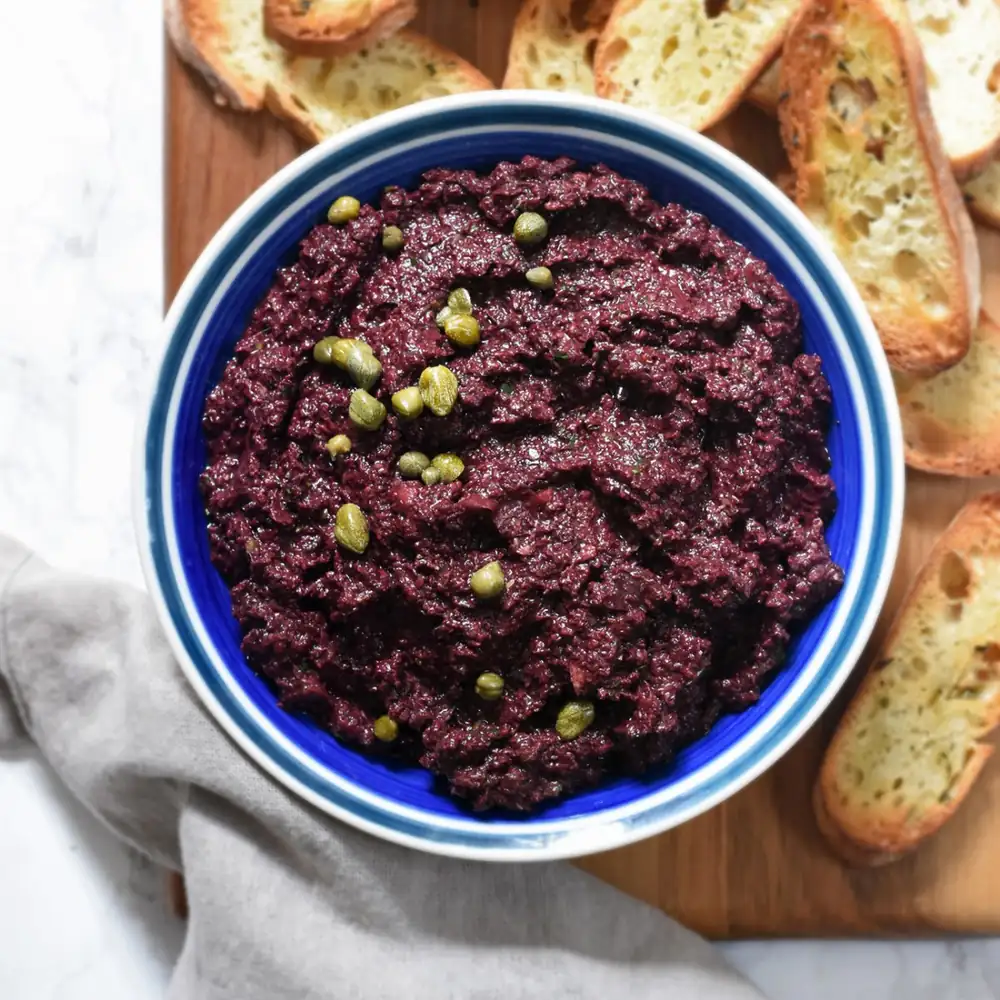
And for that, the Provençal people undoubtedly have it all nailed down, with their utterly beloved and popular Black Olive Tapenade. This spread of black olives and capers is a culinary icon in the region and a perfect drinking companion – as all salty snacks are. This tapenade is packed with salty flavors and a concentrated of the Mediterranean.
It’s such a beloved spread (not only in Provence but all throughout France) that you can find it in most markets across the country. In fact, I am pretty sure I have never visited a market in France that did not have an olive stall with giant vasts of tapenade (be it in Brittany, Paris, Alsace or elsewhere). People like to buy little containers of this spread, but I feel this is too simple of a recipe to not make at home.
Its name comes from the Provencal word for capers, “tapenas”. Capers are certainly part of the recipe, but it is the olives that are the star of the show here. Nowadays, you’ll find many variations of this recipe: with green olives, hot peppers, dried fruits, tuna, nuts, different herbs, etc… But this black olive tapenade is the simplest, most original take (and the best, in my humble opinion).
Some classic recipes call for anchovies too, but I feel they are not essential here – neither for the texture nor the taste. The black olives and capers alone provide a very, very generous amount of saltiness (that needs to be cut with the juice of a whole lemon).
As an appetizer, it’s best enjoyed with simple crostini (it’s so flavourfull that you don’t need anything else here). But then again, it also makes a wonderful condiment to bring amazing flavours to any entrée (ie. rub it under the skin of a chicken before roasting it or use it as a pasta sauce).
The olives
The olives you’ll want to use for a classic tapenade are the small, almost purplish Nicoise olives, which can be found in most grocery stores (usually at the deli counter). As a substitute, kalamata olives work great too.
The equipment
As per tradition, a tapenade should be made by hand in a mortar and pestle.
I grant the fact this is probably the best way to control the pounding and mashing of the ingredients, to obtain the exact consistency you want. But in our busy lives, I’d say that using a food processor or blender is perfectly acceptable (just be careful not to over-blend the tapenade).
This black olive tapenade is even better the next day, as the flavours have more time to meld and further develop…It’s an ideal dip for preparing ahead, as you can simply pop it out of the fridge before serving (but do allow at least 30 minutes for it to warm up to room temperature before eating). If you try this black olive tapenade, let me know!
Leave a comment or share a photo on Instagram. Bon Appetit!
- Who: Ingredients For · Crostini · Tapenade · Method Preheat