Fig Salad With Rosemary Vinaigrette
Fresh figs, sour mizithra and toasted walnuts over beet greens, with a rosemary balsamic vinaigrette — fifteen minutes and no cooking at all.
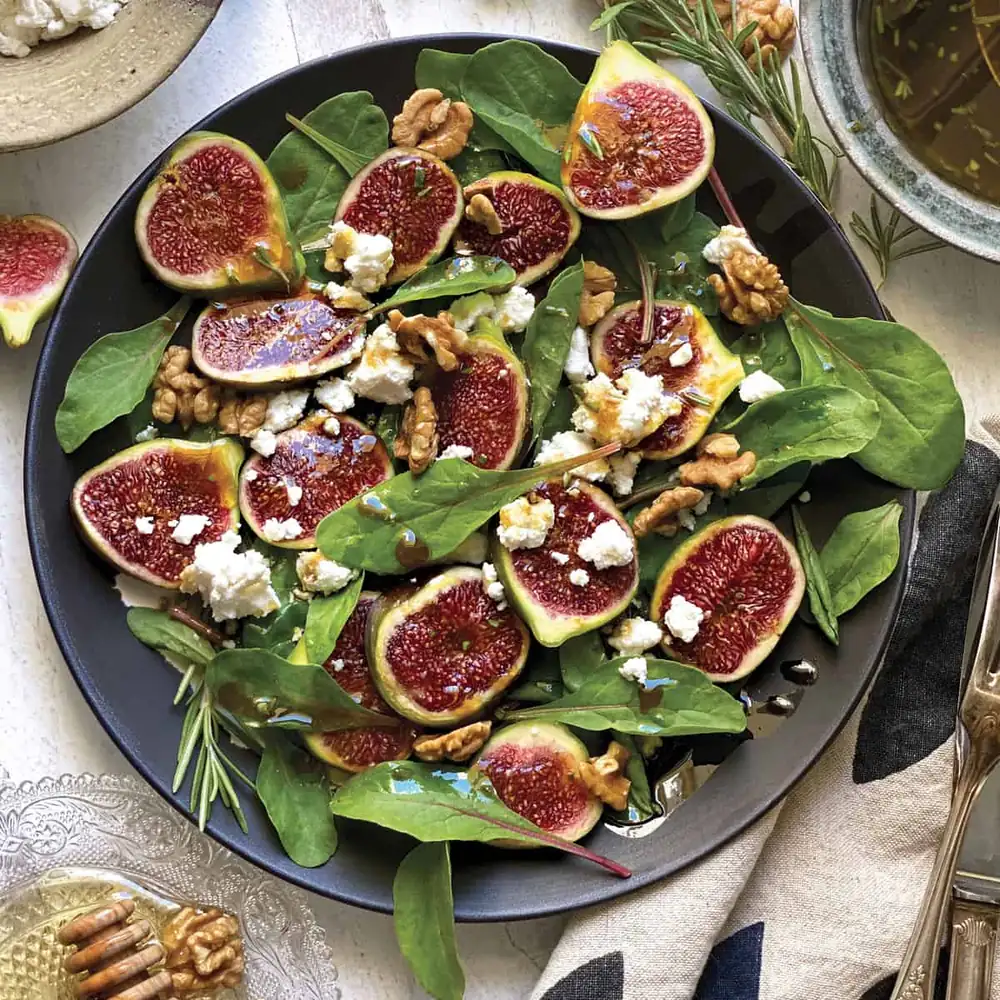
- 4 cups beet greens (about 1 large bunch, tender leaves only)
- 8 large ripe figs
- ½ cup soft sour mizythra cheese
- ½ cup walnut halves
- flaky sea salt
- freshly ground pepper (to finish)
- ½ cup extra virgin olive oil
- 2 teaspoons fresh rosemary leaves (finely chopped)
- 3 tablespoons balsamic vinegar
- 2 teaspoon honey
- 1 teaspoon mild mustard
- ½ teaspoon sea salt
- ½ teaspoon freshly ground pepper
- Toast the walnuts. Put the walnuts in a dry skillet over medium heat. Toast for about 5 minutes, shaking the pan often, until they smell nutty and have darkened a shade. Tip them straight out onto a plate — they'll keep cooking and burn in the hot pan. Chop coarsely once cool.
- Warm the rosemary into the oil. Combine the olive oil and chopped rosemary in a small saucepan over low heat. Warm for about 2 minutes, just until fragrant — it should barely whisper, never sizzle. Take it off the heat and leave it to steep for 10 minutes. This step is what keeps the dressing from tasting sharp and piney. Don't skip it.
- Wash and dry the greens while the oil steeps. Beet greens hold grit, so swish them in a big bowl of water and lift them out rather than pouring the water off. Dry them thoroughly in a salad spinner — wet leaves won't hold dressing.
- Prepare the figs. Trim the stems. If your figs are ripe but still firm, slice each one into 4–5 rounds. If they're very ripe and soft, quarter them instead — thin slices will collapse. Leave them at room temperature.
- Make the vinaigrette. In a pint jar, combine the balsamic vinegar, honey, mustard, sea salt and pepper. Cover and shake until the salt dissolves. Add the rosemary oil, rosemary leaves and all, cover again and shake hard until it comes together. Taste it — it should be bright but not sharp. If it makes you wince, add another tablespoon of olive oil.
- Assemble. Toss the greens with about 2 tablespoons of the vinaigrette, just enough to coat lightly, and divide between four plates. Arrange the figs on top. Scatter over the mizythra and toasted walnuts. Drizzle about a teaspoon more dressing over each plate and finish with flaky salt and freshly ground pepper.
- Serve immediately, with the remaining vinaigrette in the jar on the table.
I spent my childhood summers in Kalamaki, near Chania, at my uncle’s house by the sea. It sat right at the edge of the fields, olive trees and fig trees running off in every direction, and my cousins and I spent most of August out in them. We’d eat the first few where we found them — sitting on a rock, or halfway up a tree — and carry the rest home in our T-shirts, holding the hems out like baskets.
We always arrived sticky and itchy from the white milk that runs out of a fig when you pull it off the branch. It never once occurred to any of us to stop.
So figs have never been a delicacy to me. They’re the thing there is suddenly far too much of. This is what I make when I’ve had enough of eating them plain.
The sour mizithra is what makes it Greek, it does what goat cheese does, but tangier and creamier, and it stands up to sweet fruit instead of disappearing into it. I’ve rebalanced the vinaigrette since I first shared this recipe.
Readers with fig trees told me the dressing was fighting their fruit instead of flattering it, and they were right. It’s gentler now, the rosemary is warmed in the oil first, and there’s a whole section below on adjusting it to how ripe your figs actually are.
For the salad
- Beet leaves. I first ate these in Chania, Crete, and loved their mild, slightly sweet, earthy flavor. In US markets look for them as beet greens, usually still attached to the beets. Use the young tender ones; save the big tough leaves for sautéing. Substitutes: arugula, baby spinach, or a mix.
- Fresh figs. Any variety — Black Mission, Brown Turkey, Calimyrna, Kadota. What matters is ripeness, not type. See the section below.
- Mizithra cheese. Soft sour mizithra, not the sweet or the hard grating kind. It’s a fresh Cretan cheese, close to ricotta but tangy. Substitutes: goat cheese, or equal parts ricotta and goat cheese. If you use feta, cut the salt in the dressing to ¼ teaspoon, feta is much saltier than mizithra.
- Walnuts. Toast them. Five minutes in a dry pan over medium heat, shaking, until they smell nutty. Untoasted walnuts taste faintly of cardboard.
For the rosemary vinaigrette
- Extra virgin olive oil. Use one you’d happily dip bread in. It’s half the dressing.
- Balsamic vinegar. A decent aged one, syrupy rather than thin and sharp.
- Mild mustard. For emulsion more than flavor.
- Honey. Any kind. Greek thyme honey is lovely here. Leave it out entirely if your figs are very sweet.
- Fresh rosemary. Chop it fine, and warm it in the oil. This is not optional, see the tips. Substitute: dried rosemary, ground in a mortar and pestle, same amount.
- Sea salt and freshly ground pepper.
The ideal fig for this salad is ripe but still holding its shape. Soft when you press it, skin smooth and intact, no weeping at the stem.
A fig at that stage slices cleanly and keeps its edges on the plate. If your figs are very ripe — the ones off your own tree usually are — nothing is wrong.
You just need three small adjustments:
- Quarter them instead of slicing. Thin slices from a very ripe fig collapse into jam the moment they meet dressing. Quarters hold their shape.
- Leave the honey out of the vinaigrette and add an extra teaspoon of balsamic. Your fruit is already supplying the sugar; the dressing’s job is now purely to cut it.
- Don’t toss. Dress the greens on their own, arrange the figs on top, drizzle lightly, and finish with flaky salt directly on the cut faces.
The rescue move for figs that are almost too far gone: halve them and lay them cut-side down in a dry, hot pan for about two minutes. Don’t move them.
The cut face caramelizes and firms up, the sweetness concentrates instead of running out, and a fig that was about to fall apart becomes the best thing on the plate. Let them cool slightly before they go on the greens.
And if your figs are underripe, firm, not much perfume, go the other way: keep the honey, slice them thin so more surface meets the dressing, and let them sit in a spoonful of vinaigrette for five minutes before plating. Taste one fig before you make the dressing. It tells you everything.
- 1. Toast the walnuts. Dry pan, medium heat, 5 minutes, shaking often, until fragrant. Tip onto a plate — they’ll burn in the hot pan otherwise. Chop roughly once cool.
- 2. Warm the rosemary in the oil. Combine the olive oil and chopped rosemary in a small pan over low heat. Two minutes, just until it smells fragrant — you’re steeping, not frying. Take it off the heat and leave it 10 minutes.
- 3. Wash and dry the greens. Beet greens hold grit, so wash them in plenty of water and lift them out rather than pouring off. Dry thoroughly in a salad spinner — wet leaves won’t hold dressing.
- 4. Make the vinaigrette. In a jar, combine the balsamic, honey, mustard, salt and pepper. Shake to dissolve the salt. Add the rosemary oil, rosemary and all, and shake hard until it comes together. Taste it. It should be bright but not sharp. If it makes you wince, add another tablespoon of olive oil.
- 5. Assemble. Toss the greens with just enough dressing to coat lightly, then divide between four plates. Slice or quarter the figs and arrange on top. Scatter over the mizithra and toasted walnuts. Drizzle another teaspoon of dressing over each plate and finish with flaky salt and pepper.
Serve immediately, with the rest of the dressing in the jar on the table. Roasting turns this from a late-summer salad into an autumn one.
The figs go jammy and concentrated, the edges caramelize, and the warm fruit against cold greens is a genuinely different dish. Heat the oven to 400°F (200°C).
Halve the figs and set them cut-side up on a lined baking sheet. Drizzle with a little honey and olive oil, add a pinch of salt, and roast for 10–12 minutes, until they’ve slumped slightly and the honey is bubbling at the edges. Let them cool for five minutes, straight from the oven they’ll wilt the greens, then arrange on the dressed leaves with the mizithra and walnuts.
Spoon any syrup from the pan over the top; it’s the best part. This is also the answer for figs that aren’t sweet enough.
Roasting concentrates what’s there. An underripe, watery fig comes out of the oven tasting like a much better fig.
- The white sap is normal. When you pick a fig or trim the stem, a little milky liquid runs out. It’s harmless on the fruit, but it can leave your hands sticky and itchy, mildly irritating to skin, and more so in sunlight. Rinse your hands after you trim a big batch. Every Greek child who has ever raided a fig tree knows this feeling and none of us have ever let it stop us.
- Warm the rosemary in the oil. Raw chopped rosemary is piney and harsh and it will take over the plate. Two minutes in warm oil turns it savory and round. This single step is the difference between a dressing people ask about and one they push aside.
- Dress the greens, not the salad. Everything on top gets a light drizzle at the end. Figs in a puddle of vinaigrette are a sad thing.
- You’ll have dressing left. The recipe makes about ¾ cup and you’ll use roughly half. That’s on purpose , it keeps two weeks and it’s excellent elsewhere.
- Salt last, on the fruit. A few flakes directly on the cut figs does more than any amount stirred into the dressing.
- Bring the figs to room temperature. Cold figs taste of almost nothing.
- Assemble at the last minute. This salad does not sit. Ten minutes on the counter and the greens are limp.
- No figs? Ripe pears, peaches, or halved black grapes all work with this dressing.
- Make it a meal. Add grilled chicken, or prosciutto if you’re not keeping it vegetarian.
- Different cheese. Goat cheese, ricotta-and-goat-cheese, or shaved graviera. Feta works but cut the dressing’s salt to ¼ teaspoon.
- Different nut. Toasted almonds or pistachios. Pistachios look beautiful against dark figs.
- A little sharpness. A few paper-thin slices of red onion, soaked in cold water for ten minutes first.
- Roasted figs. Halve, drizzle with honey, roast at 400°F for 10 minutes. Turns it into an autumn salad.
- The vinaigrette keeps 2 weeks in a sealed jar in the fridge. The olive oil will solidify — leave it at room temperature 15 minutes and shake before using.
- The walnuts can be toasted up to a week ahead, stored airtight at room temperature.
- The greens can be washed and dried a day ahead, rolled in a clean kitchen towel in the fridge.
- The assembled salad doesn’t keep. Dressed greens collapse and cut figs weep. Assemble at the table.
- Whole fresh figs keep 2–3 days in the fridge in a single layer, uncovered. Don’t stack them.
As a starter before lamb chops, grilled fish, or Greek lemon chicken and potatoes. As part of a meze spread. Or as a light lunch with good bread and a glass of cold Assyrtiko.
Equipment
- Small saucepan
- small skillet
- salad spinner
- pint jar with a lid