The BEST Way to Cook Sticky Rice
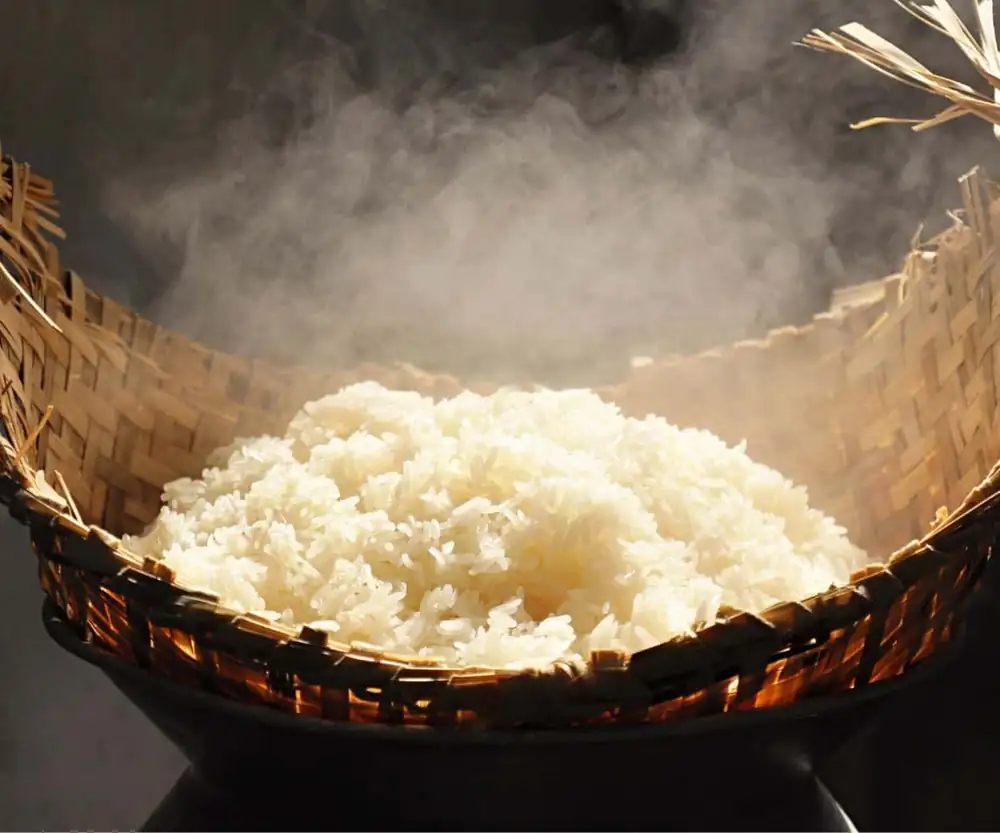
This is my favourite way to cook sticky rice and what I believe is the best way to cook sticky rice at home.
- 1 cup water to 1.5 cups rice
- 4.39 from 18 votes
- A Thai friend of mine uses this method, and her rice was always perfect
- Pour off the water and repeat the washing at least 3-4 times until the water runs mostly clear.
- Drain the rice well and then put the rice in a heatproof bowl.
- Bring water for soaking your rice to a full boil; you'll need enough water to submerge the rice by an inch.
- Meanwhile, wash the sticky rice by swishing it around in room temp water with your hands until the water is very cloudy.
- Pour off the cloudy water.
- Repeat the washing 3-4 times with fresh water until the water is mostly clear (like in the picture above), drain the rice well and then put it in a heat proof bowl.
- Once the water comes to a FULL rolling boil (not a simmer!
- Stir to break up any lumps, and let it soak for 20 minutes (set a timer, do not over soak).
- Meanwhile, preheat your steamer on high heat, and if using a bamboo cone steamer, soak the bottom part of the cone in water to prevent the rice from sticking to the cone.
- Drain the soaked rice, and you can steam it right away or if you're not ready to cook it yet, it can sit and wait.
- Place the rice into it and use your finger to make a hole in the center for faster and more even steaming.
- Fold the cloth over the rice, leaving space around the edges for steam to come up.
- Cover and steam over rapidly boiling water for 25-30 minutes until cooked through.
- Cover with a lid (any lid) and steam for 25-30 minutes.
- Add enough water so it comes up about 1 inch above the rice, and while you don't need to get out your ruler, you don't want to add a ton of extra water.
- Bring water for soaking rice to a FULL rolling boil; you need enough water to submerge your rice by about an inch.
- Meanwhile wash your sticky rice by placing the rice into a large mixing bowl, adding plenty of room temp water and swishing the rice around until the water is cloudy.
- Pour the boiling water over the rice until it comes up about 1 inch above the rice.
- Meanwhile, set up your steamer and bring your steaming water to a boil.
- Once the rice is done soaking, rinse the rice with cool tap water to remove any starch that might have come out during the soaking, then drain.
Sticky rice, aka glutinous rice, is an essential part of Thai cuisine. Many of Thailand's most popular dishes such as laab, BBQ chicken, and papaya salad, are meant to be served with sticky rice, and it's just not the same without it.
With this method, you will have perfectly cooked sticky rice without having to soak for hours!
Quick Summary
This method involves soaking washed Thai sticky rice in hot-off-the-boil water for 20 minutes. The rice is then rinsed, drained, and steamed for 25-30 minutes.
This produces sticky rice that is perfectly cooked and slightly softer than the traditional cold-water-soak method. In the article and video tutorial I discuss why this is my preferred method, as well as caveats and tips important for you to know to ensure success. The problems with other methods and why I looked for an alternative.
A bit of context, there are many ways to cook sticky rice, and I have previously shared 7 different ways which you can check out. But none of those methods are perfect.
Four of those 7 ways is some variation of the soak-and-steam method, which is the traditional way that every Thai is taught to do it growing up. You soak the rice in room temp water for a minimum of 3 hours and upto overnight.
Then you drain the rice and steam it in some kind of a steamer. It's easy and requires no precision; it's basically foolproof. The downside is that several hours of advance planning is required AND the rice made from this method dries out quite quickly once it's cool.
To solve the advance planning issue, Thais have devised various ways to cook sticky rice without soaking. With the no-soak methods, the sticky rice is cooked directly in water either in a steamer, microwave, or rice cooker. And while it is fast, the resulting rice texture is not as good, and it can easily go wrong as you need to be very precise with the amount of water and timing.
(P.S. If you're wondering why you can't just cook it in a pot on the stove like regular rice, I explain in the 7 ways to cook sticky rice article why this is not done.)
This new method I’m sharing - "the hot soak" - takes the best of both worlds. It still falls under the soak-and-steam methods, but it uses hot water so the soak happens in only 20 minutes.
The result? I think it is even better than the traditional method!
How To Cook Sticky Rice Using The Hot Soak Method
Here are the steps involved. If this is your first time I recommend watching the video tutorial to ensure success.
Later I will also discuss why this works, troubleshoot possible issues, and give you some tips for success!
- Bring water for soaking your rice to a full boil; you'll need enough water to submerge the rice by an inch. Meanwhile, wash the sticky rice by swishing it around in room temp water with your hands until the water is very cloudy. Pour off the cloudy water.
- Once the water comes to a FULL rolling boil (not a simmer!) pour it over the rice until it comes up about 1 inch above the rice. Stir to break up any lumps, and let it soak for 20 minutes (set a timer, do not over soak).
Meanwhile, preheat your steamer on high heat, and if using a bamboo cone steamer, soak the bottom part of the cone in water to prevent the rice from sticking to the cone. Tip: If cooking a very small or very large amount of rice, see caveats and tip below for some important adjustments.
- After soaking, rinse the rice with cold tap water to remove any starch that has come out. Be gentle with the rice now as soaked rice grains can break if you are aggressive with it.
- Drain the soaked rice, and you can steam it right away or if you're not ready to cook it yet, it can sit and wait. No need to rush!
- If using a steamer rack, line the rack with a DAMP thin cloth, such as a muslin or a tea towel. Place the rice into it and use your finger to make a hole in the center for faster and more even steaming. If using a traditional bamboo cone steamer, see steps 8-9.
- Fold the cloth over the rice, leaving space around the edges for steam to come up. Cover and steam over rapidly boiling water for 25-30 minutes until cooked through.
- If using a bamboo cone steamer (affiliate), place the rice into the soaked cone and use your finger to create a hole in the middle for more even and faster cooking. Cover with a lid (any lid) and steam for 25-30 minutes.
- After about 15 mins, flip the rice ball by tossing the basket so that the pointy end of the rice ball is upward (best to see the video tutorial if you've never done it.) Use a spatula to breakup the rice ball a bit, then cover and continue steaming for another 10-15 minutes until the rice is fully cooked.
- Plop the rice onto a plate. If the rice turned out a little too soft for your liking, spread it out and let the excess steam air out. If it's perfect, great, enjoy it warm, and cover it quickly when you're done to prevent it from drying out!
Why This Method Works
In the traditional method, the rice soaks up water slowly at room temperature. By using hot water, we speed up that soaking time AND the higher temperature forces the rice to absorb MORE water than it normally can at room temp, so the result is not only a much faster soak, but also a slightly softer rice.
And this is the reason why I actually prefer the hot soaked rice, because it stays soft even after it has cooled down. By contrast, cold soaked sticky rice hardens and dries out quite quickly once it cools.
Troubleshooting
My sticky rice is undercooked. If after steaming, you still have rice that has opaque centers and is crunchy in the middle, your rice did not absorb enough water and steaming for longer time is not going to fix it.
In this case, remove the steamer basket from the heat and pour cold water over the rice, stirring it so that the additional water coats every grain. Then put it back on the steamer for another 10-15 minutes.
The water that gets poured on top will cling onto the rice and gets absorbed during the steaming. Repeat this if necessary.
My sticky rice is too soft. This means that the rice soaked for too long, or there was too much water for the amount of rice so there was too much retained heat during the soak.
Note this and adjust it next time. There isn't really a way to fix rice that is too soft, but I would spread it out on a plate and let excess steam air out immediately to prevent any more moisture from collecting. After the rice cools, it should firm up a bit.
Worst case scenario, turn it into tasty coconut rice pudding!
Caveats and Tips for Success
With this method, you don't need to be super precise, but here are some things to keep in mind:
- Don't add an excessive amount of water. Add enough water so it comes up about 1 inch above the rice, and while you don't need to get out your ruler, you don't want to add a ton of extra water. The larger the amount of water, the hotter it stays, and if it's too hot, the 20-min soak might be too long, causing the rice to be too soft.
- If you're cooking a large amount of rice, consider cutting down soaking time. I have tried this method successfully for up to 3 cups of uncooked rice. If you're cooking more, you may need to cut down soaking time by a few minutes for the same reason as above - a larger amount of rice stays hotter for longer. I don't imagine 4 cups would present an issue, but 5+ cups might start to make a significant difference.
- If you're cooking a very small amount of rice, 1 cup or less, you want to increase the water a bit as a small amount of water will cool down faster. So add water to it is 1.5 inches above the rice, and consider using a glass or ceramic bowl instead of a metal bowl so it can retain more heat.
- Adjust according to your preference! The beauty of this method is that once you know how it works, it can be manipulated to produce the texture you prefer! If you prefer softer rice, add more hot water or extend soaking time. If you like it firmer, reduce the soaking time.
For the Food Nerds: Searching for the perfect rice If you like to get nerdy with food, as I like to, you might wonder what would happen if you start tweaking variables.
This is what I did when testing out this method, and here's what I tried:
- I tried soaking the rice for 30 minutes. The rice was a bit too soft when hot, but was okay after it has cooled down. The "too soft" was still edible though, so FYI, it's not the end of the world if you over soak it by a few minutes.
- I tried soaking the rice for 10 minutes. This was not acceptable. The rice did not absorb enough water during the soak and was undercooked. So right around 20 minutes is the sweet spot here, plus/minus a few minutes is probably okay.
- I tried a "super hot soak" by using a larger amount of water, and then covered the bowl to keep it as hot as possible. After only a 10 minute soak, the rice came out too soft, so too-high temp is not good even with a short time. (BTW I turned it into rice pudding which was super delish.)
- I tried stopping the soak mid-way and doing it again the next day. This was a total accident that was quite informative. I had to soak some rice in order to take a photo for the video's thumbnail, but after the photo was done, I wasn't ready to eat it.
So I rinsed it in cold water, drained it, and put it away in the fridge. The next day, I soaked it again in hot water for 15 minutes (guessing that the initial soak was about 5 mins).
After steaming, the rice was perfect as if the soak had happened in 1 session. TAKEAWAY: My experimentation informed me that there are dials you can turn with this method.
The important thing is that you need a certain amount of water to be absorbed into the rice, but you can tinker with the timing and temperature quite a bit to make it work with your situation and preference.
What to Serve with Thai Sticky Rice
Here are some of my favourite recipes to go with sticky rice!
- The Ultimate Thai BBQ Chicken - Gai Yang
- Laab Moo - Northeastern Thai salad with ground pork.
- Thai Marinated Grilled Steak
- Green Papaya Salad - Som Tum
Make it a feast and serve all of the above together. This combo is a very common Thai northeastern meal!
Equipment
- Steamer see note 1
Ingredients
- 1½ cup Thai white glutinous rice, or however much you are cooking, see note 2
Notes
- If using a regular steamer rack, line it with a muslin or tea towel to prevent the rice from falling through the holes. Make sure the cloth is wet, which will prevent the rice from sticking to the cloth. You can also use a traditional bamboo cone steamer. See the video tutorial for what this looks like.
- Thai sticky rice is often labeled as "glutinous rice" or "sweet rice." Look for long grain rice that is opaque, and it should be a product of Thailand.
FULL VIDEO TUTORIAL
All my recipes come with step-by-step video tutorials with extra tips not mentioned in the blog post, so make sure you watch the video to ensure success. Thank you!
Instructions
- Meanwhile wash your sticky rice by placing the rice into a large mixing bowl, adding plenty of room temp water and swishing the rice around until the water is cloudy. Pour off the water and repeat the washing at least 3-4 times until the water runs mostly clear. Drain the rice well and then put the rice in a heatproof bowl.
- Pour the boiling water over the rice until it comes up about 1 inch above the rice. (You don't need to be precise, but don't add an excessive amount of water.) Give the rice a stir to break up any lumps, then let it soak for 20 minutes. Do not over soak.
- Meanwhile, set up your steamer and bring your steaming water to a boil. If using a cloth-lined steamer rack, make sure the cloth is damp so the rice won't stick to it. If using the bamboo cone steamer, soak the steaming basket beforehand to prevent the rice from sticking to the cone. (See the video tutorial above to see the correct set up if this is your first time steaming sticky rice.)
- Place the drained rice into your steamer, and use your finger to make a hole in the center to eliminate the "thick middle" that would take a longer time to cook. Steam over boiling water for 25-30 minutes depending on the amount of rice. Check the middle part of the rice, and if there are no more opaque centers, it's done and ready to serve!If using a bamboo cone steamer: After steaming for 15 minutes, you want to flip the rice ball by tossing the basket so the pointy bottom points upward. Then use a spatula to break the rice ball up a bit, then continue steaming until cooked. See video tutorial if you don't know how to flip the rice.
- Serving tip: Keep the rice covered with a tea towel while it's on the table so it will stay warm and moist.