A New Reason for Restaurants to Use the Whole Watermelon
Watermelon’s often-overlooked rind is getting its due.
“We’ve long encouraged the use of the whole watermelon, from the sweet flesh to the versatile rind,”
The fruit’s outer layer now has an official nutrition profile in USDA FoodData Central, giving registered dietitians, researchers, method developers, and other food professionals access to standardized nutrition data for a part of the fruit that has long been underutilized. The new listing makes it easier to evaluate watermelon rind in recipes, nutrition education and meal planning while encouraging greater use of the whole watermelon.
Going to the new USDA nutrient profile, a 1/3-cup serving (50 grams) of diced raw watermelon rind contains just 10 calories and provides 1 gram of dietary fiber, along with 140 mg of potassium and 4 mg of vitamin C. While the rind isn’t intended to replace the nutrient-rich flesh, the new data demonstrates how it can complement watermelon’s nutritional value while providing another delicious way to enjoy more of the whole fruit.
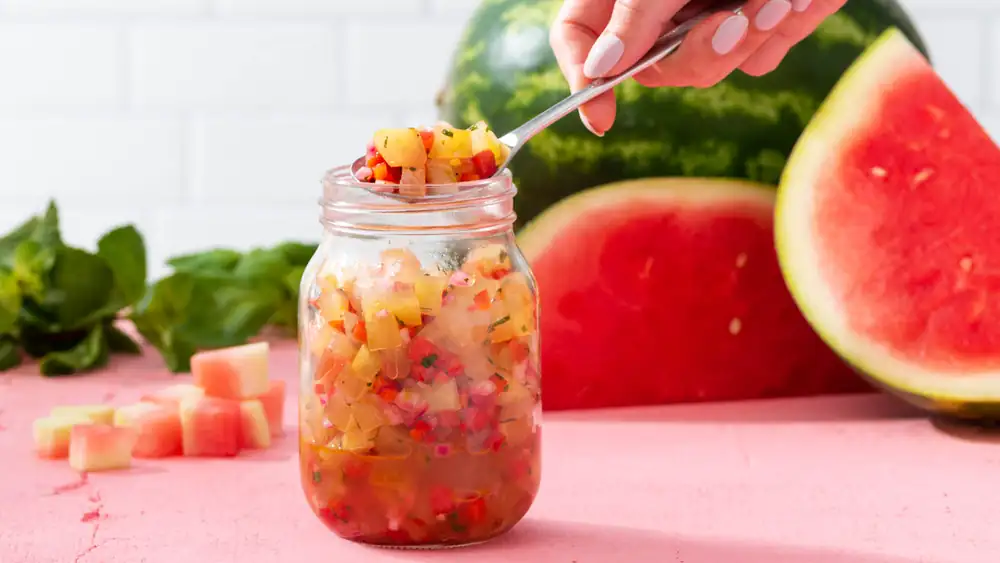
Whether blended into smoothies and juices, shredded into slaws, quick-pickled, or added to stir-fries. Relishes, watermelon rind offers a simple way to reduce food waste while making the most of every watermelon. Watermelon flesh is an excellent source of vitamin C (25% DV), a good source of vitamin B5 (10% DV), and also provides vitamin A (8% DV), vitamin B6 (8% DV) and potassium (6% DV), along with naturally occurring lycopene.
At about 92% water and just 80 calories per two-cup serving, watermelon is a refreshing, nutrient-dense fruit that supports healthy eating patterns. “We’ve long encouraged the use of the whole watermelon, from the sweet flesh to the versatile rind,” explained Megan McKenna, Sr. Director of Marketing & Foodservice at the National Watermelon Promotion Board. “The new USDA nutrient profile, from long-awaited research, provides the standardized data to confidently incorporate watermelon rind into recipes and nutrition guidance, helping foodservice and consumers get even more value from every watermelon they bring into their kitchens.”
The new USDA listing builds on a growing body of investigation highlighting watermelon’s role in a healthy diet. An analysis of NHANES data published in Nutrients found that children and adults who consume watermelon have higher overall diet quality. Greater intakes of dietary fiber, magnesium, potassium, vitamins A and C, lycopene, and other carotenoids than non-consumers, while as well consuming less added sugar and saturated fat. Although these results are promising, further investigation is needed, and the findings cannot be translated across all populations.
- Who: Watermelon · USDA FoodData Central · Megan McKenna
- Percentages: 25% · 10% · 8% · 6%
- Figures: 25% · 10% · 8% · 6%