Rare Variety Unites Bosnia and Herzegovina in Olive Grove of Hope
Olive farming in Herzegovina, the southern region of Bosnia and Herzegovina is developing by leaps and bounds.
“The olive tree is not only an agricultural crop but a symbol of hope and endurance. Planting an olive tree means investing in the future,”
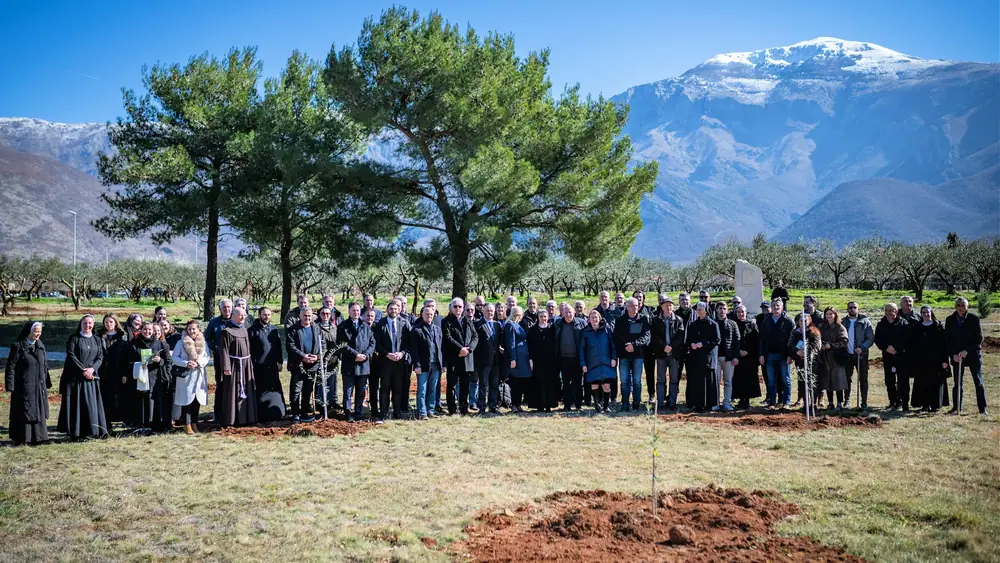
About ten years ago, there were only 80 olive trees, and today, 116,000 olive trees are cultivated on 520 hectares. New plantations continue to be established, including an unusual one at the Convent of the Franciscan Sisters of Christ the King in Bijelo Polje, Potoci, north of Mostar, Herzegovina’s largest city.
An opportunity to reflect on peace, connection and love, everything that unites us. Makes us equal. – Dajana Dujmović, Convent of the Franciscan Sisters of Christ the King “This is the Olive Grove of Hope,” said nun Dajana Dujmović, director of the company Paxa Dola (translated as Valley of Peace), which manages the monastery’s olive groves. During a research trip to Italy, organized by the Herzegovina Association of Olive Growers. Oil Producers (HUUM), a spontaneous conversation arose about the rarity of white olive seedlings, as well known as Leucolea.
Religion played a marked role in the bloody Bosnian War , which saw Muslim-majority Bosniaks. Catholic-majority Bosnian Croats fight Orthodox Bosnian Serbs to maintain the independence of Bosnia and Herzegovina from Yugoslavia from 1992 to 1995. The search for the first 15 trees ended successfully on the trip to Italy.
The well-known agronomist and olive grower Božo Mustapić from Neum took on the challenge of outcome donors for the remaining 18 trees. “No matter how many more trees need to be purchased, I will find people who want it,” Mustapić said. Per to From the beginning, he, it was clear that this project went beyond planting the olive trees.
Everyone who decided to participate took on the obligation to finance the purchase of the white olive trees and plant them. In addition to nuns, priests, and olive planters from Herzegovina, diplomats, foreign ambassadors. Politicians participated in the unusual event, including the country’s president and agriculture minister, who planted a tree. Going to Planting an olive tree means investing in the future,”, minister of Agriculture, Water Management and Forestry Kemal Hrnjić. “This olive grove should be a witness to the hope that we can build a better future.” “I hope this project will inspire others to dedicate themselves to agriculture and olive growing,” President Lidija Bradara added.
Lidija Bradara, President of the Federation of Bosnia and Herzegovina Miljan Grgić-Porfirije, vice president of HUUM. Hieromonk (a title in the Orthodox Church similar to a monk and priest) at the Tvrdoš Monastery near Trebinje, a town about 30 kilometers north of the Croatian city of Dubrovnik, in addition planted his olive tree. The monastery is known for its top-quality wines and award-winning extra virgin olive oil . “This year, for the first time, we will also participate in the NYIOOC World Olive Oil Competition ,” Grgić-Porfirije told reporters.
He stated Tvrdoš is one of the most visited monasteries in the Serbian Orthodox Church, with 350,000 visitors of different religions. Nationalities passing through it annually. “It brings people from all over the world together through spirituality and hospitality,” he told reporters. The firm cultivated 15,000 olive trees, wild roses, figs and lavender on 140 hectares on a hill above the town of Gabela. “Everything is organic. Holistic, for which we are the only one in Bosnia and Herzegovina to have the Demeter certificate,” stated Zajmović, a Muslim.
The average oil yield was also slightly lower than in previous years, amounting to about 10 percent, below the typical 12 to 15 percent range. That said, as usual, the nuns carried out the harvest from October 10th to 20th and yielded high-quality olive oil with more than 250 milligrams of polyphenols per liter. Regulation 432/2012 permits olive oil growers to claim that polyphenols help protect blood lipids from oxidative stress, provided the oil contains at least five milligrams of hydroxytyrosol and its derivatives per 20 grams.
Given its established olive oil production and rising quotation charges by the usual miller, the convent plans to purchase an olive mill later this year or in 2026 and plant more olive trees. Franciscan nuns planting the Olive Tree of Hope Dujmović added that they will in addition open a tasting room and shop later in the year in one of the old convent buildings, renovated in 2024. That said, national unity in a country still recovering from the Bosnian War remains the primary goal of the Olive Grove of Hope, bringing together Christians and Muslims “better than the Dayton Accords,” the 1995 agreement that ended the conflict.
- Who: Herzegovina · Hope · Bosnia · Olive Grove
- Percentages: 50 percent · 10 percent · 15 percent
- Figures: 520 hectares · 14 hectares · 30 kilo · 140 hectares