Why It’s Time to Stop Cutting Your Salmon Into Fillets
If cookery fish for dinner was a guaranteed home run every time, we’d probably all be doing it a lot more often.
Though finding a good place to buy high-quality fish—which can be half the battle—is arguably easier than ever today, seafood does come at an increasingly higher price tag than ever, too. What arrives at the dinner table needs to be worth the spend, and sometimes—if you don’t fully know what you’re doing—it isn’t. In turn, are overall less confident about preparation fish in general, this may factor into why Americans are still around 30 times more likely to acquire and eat chicken than fish , and.
The reasons are many, and aesthetic is a small but key one: Just like serving a bone-in roast or a whole chicken —as opposed to meat or poultry cut up into parts—a heftier cut of salmon presents more impressively every time and as well seems more special occasion-worthy for dinner parties. More importantly, salmon cooked in larger, family-style pieces benefits the cook in ease and the eater in savor and texture. Using a broader piece protects the interior of the fish, keeping it from drying out in the oven, or on the stovetop or grill, and the hands-off method of preparation I’ve outlined below means less chance of broken or torn skin come serving time.
In other words, if you buy in bulkier pieces, you’d be instantly better at preparation fish, and probably cook a lot more of it. It calls for grilling the salmon skin-side down and waiting to flip until the very last moment, which gently heats the fish through to medium doneness while imparting char and crispiness to the skin.
At the end, the chefs merely tip the salmon onto the skinless side for a moment, just to give it a light kiss of heat. Pick up From the Fish Counter It is a lot easier to find wild fish sold in large pieces at the fish counter than it is in the freezer section of the grocery store.
Choose a Hefty Piece of Skin-On Fillet If the salmon available at the fish counter is on the petite side, a whole side will only come out to about 3 pounds total, which is a manageable size to cook, flip, and serve. If it’s a very large fish, a half or even a third of a side will be enough to serve a few people.
But if you are forced to do it yourself, use a sturdy, broad-sided bone tweezer and a steady hand to pluck the bones from the skinless side of the fillet. Season the Flesh Side As this preparation method involves preparation the fish mostly on its skin side, I prefer to leave it plain or season lightly with salt—spices applied to the skin may burn, and most people won’t be eating the skin anyway. Season the skinless part and the sides of the salmon lightly with salt, then savor with anything from a dry spice rub to pesto to finely chopped herbs.
Cook Using Moderate Heat You may have heard of albumin, the white coagulated proteins that are prone to quietly oozing out of salmon fillets if the heat is too high or the fish is overcooked. You’ll have the best results with moderate heat: no higher than 375°F in the oven, and medium on the grill.
This can cause breakage of the skin or flesh, especially if the fish is jostled before the skin is well cooked or seared. You’ll know the salmon is ready when the top looks just cooked and no longer glossy. A paring knife or metal skewer inserted into a thick part of the fish feels just slightly warm to the touch—a sign that it’s been cooked to a medium doneness.
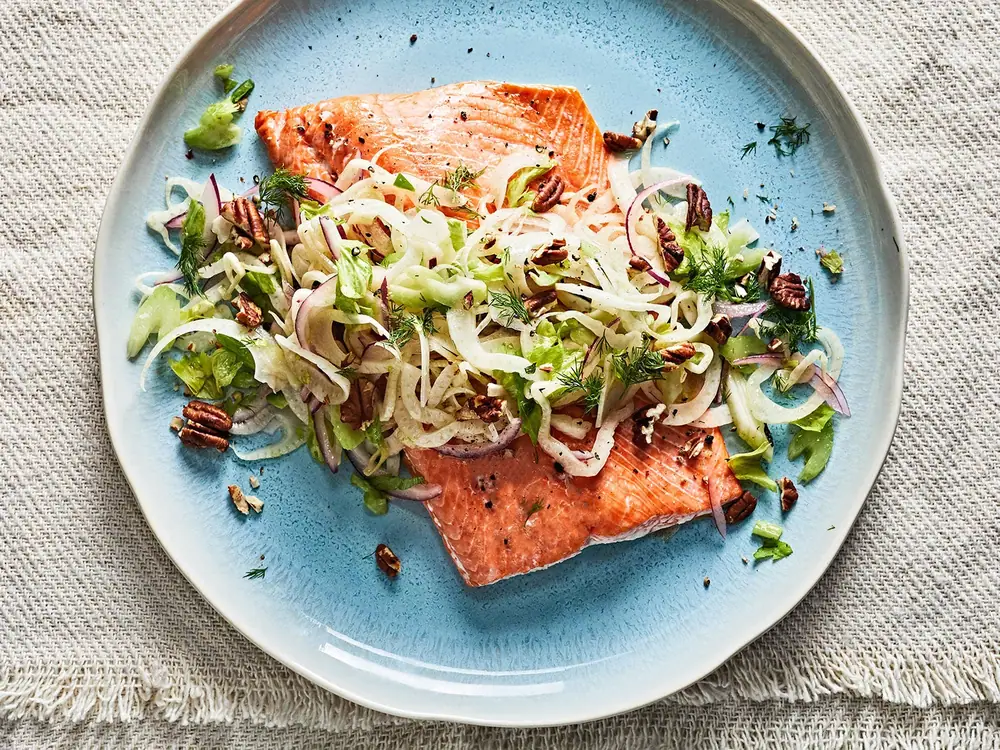
Roast until the outside appears fully cooked and the inside is cooked to medium-rare or medium doneness (it should be just heated through, no longer raw-looking in the center but still juicy and soft inside), about 15 minutes. Scatter the salad crosswise across the center of the salmon, top with some of the reserved fennel fronds, and serve immediately.
- Figures: 3 pounds · 1 lb