How to Make Farinata—Italy’s Savory Chickpea Pancake
Allow the farinata to cool slightly in the pan—it will continue to cook and solidify as it rests.
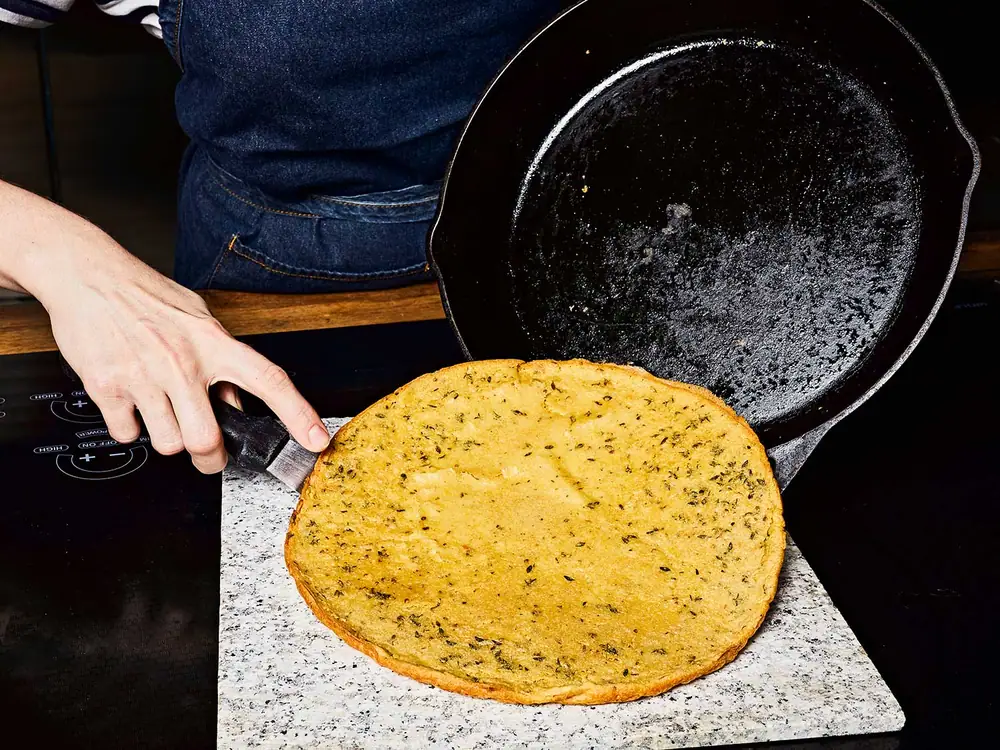
Run a thin offset metal spatula along the edge of the pancake, then tilt the skillet and use the spatula to gently slide it onto a large, flat platter or cutting board. While the pancake bakes to a thin, crispy layer in a hot cast-iron skillet, I like to roast a sheet pan of fresh summer produce at the same time—there’s plenty of room in the oven for both. To retain its freshness, store in a non-absorbent, airtight container in a cool, dry place for up to 6 months, or in the freezer for up to a year.
Make the Batter in Advance At least half an hour before you plan to cook the farinata, make the simple batter. This will allow the grains of chickpea flour to fully hydrate, resulting in a creamy, slightly fudgy texture at the pancake’s center. The batter can be stored at room temperature for up to 12 hours, so consider mixing it before work in the morning for a quick and easy dinner.
Keep the Summer Squash Chunky While the batter rests, prepare the vegetables for roasting. Summer squash can turn watery if permitted to cook slowly; to prevent this, cut into chunks, oil liberally, and spread out on a large baking sheet with plenty of space in between each piece. Preheat Your Cast-Iron Skillet Place a large, well-seasoned cast-iron skillet in a cold oven and allow them to preheat to 425°F together.
Preheat the Oil Once the skillet and oven are very hot, add a thin layer of olive oil and swirl it around to coat. Return to the oven, close the door, and allow the oil to heat for a few minutes.
When the oil is very hot and just beginning to smoke, carefully pour in the batter. The hot skillet may sizzle as you pour; avoid burning yourself by keeping it on the rack or setting it on the oven door.
Swirl the Batter to an Even Layer Before closing the oven door to bake, firmly grasp the handle of the skillet and tilt gently to swirl the batter into an even layer, allowing it to come up the edges slightly. When the farinata is unmolded, this step will create a slight lip around the perimeter of the crust, making the pancake more tart-like and helping to prevent any juices from spilling over the edges. Roast the Vegetables as the Farinata Bakes Cut into ½-inch chunks, the squash will cook perfectly in the time it takes the pancake to set and crisp.
You can use the same method for eggplant or heirloom tomatoes, though depending on ripeness, the tomatoes will cook down to a sweet and jammy topping in about half the time. Unmold the Farinata Allow the farinata to cool slightly in the pan—it will continue to cook and solidify as it rests.
Run a thin offset metal spatula along the edge of the pancake, then tilt the skillet and use the spatula to gently slide it onto a large, flat platter or cutting board. Top the Farinata You can add the toppings while the crust is still warm or wait until it has cooled completely and serve at room temperature.
If you bake the farinata more than an hour ahead of time, wrap the pancake tightly in plastic wrap to prevent it from drying out and recrisp in a hot skillet on the stovetop before topping.
- Who: Jenny Huang Farinatas · Jenny Huang Start