Ganjang Gejang: A Dish You Only Make for Someone You Love
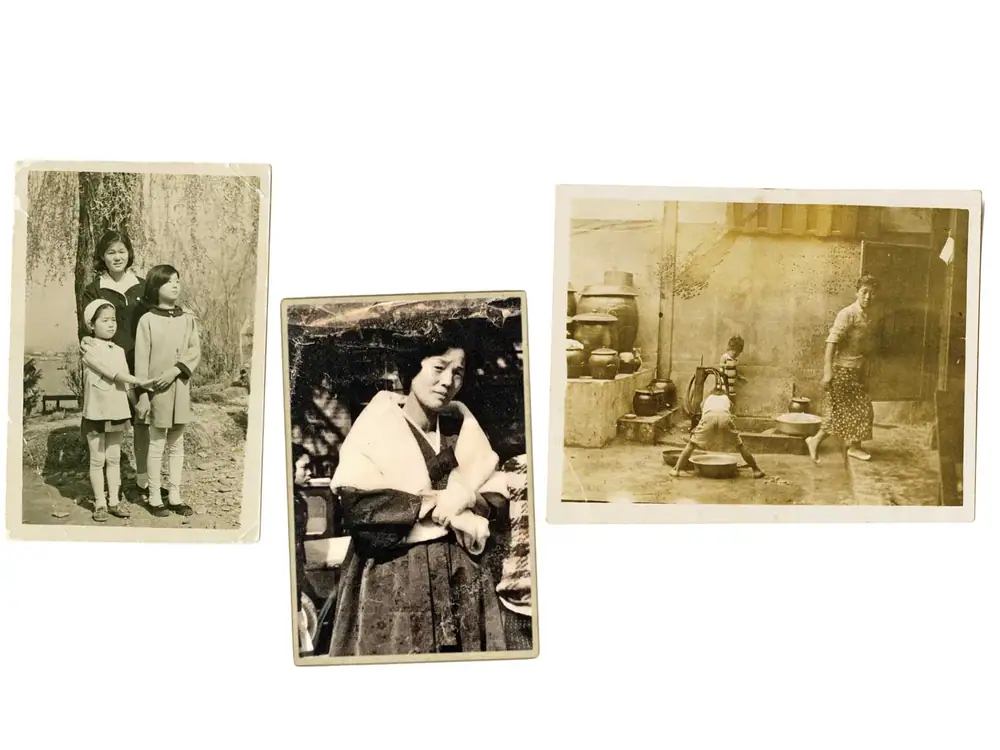
From Left: Author Eric Kim’s mother, Jean (left) with her two older sisters in Jeonju, Korea, in the 1960s; Jean’s mother, Gesun Kim, photographed around the same time; Kim’s father, Ki ( in striped shirt ), outside his family’s Seoul home in the late 1950s. Courtesy Eric Kim I’ve officially outlived my mom,” my mother…
“it wasn’t very big, so you left perishables outside in the cold. Ice was a rare commodity, purchased in huge slabs, and chipped away at with a hammer and knife.”
The few things my mom, Jean, does withdrawal about Grandma Gesun are vibrant fulgurations, akin to old Polaroids that somehow remain vivid. “My puppy, my puppy,” Grandma Gesun called out to an 8-year-old Jean from the bottom of the stairs, holding an aluminum lunch box of barley rice and kimchi. Eventually, their little legs would stop moving, and their plush flesh would cure. “I remember how they felt in my mouth,” Mom states, “how their soft insides gushed out.” Much later, she’d go on to make this dish, albeit with different crabs , for her own children. Get the recipe for Ganjang Gejang » Maura McEvoy Koreans have feasted upon gejang (roughly translated as “crab” plus “condiment”) since at least the 17th century, when live crabs were placed in earthenware crocks with raw beef—intended to plump up the crustaceans before their deaths by briny marinade.
Even during my mother’s time in Seoul, nearly everyone she knew had to preserve food in salt. “If you had a refrigerator at all,” she explains, “it wasn’t very big, so you left perishables outside in the cold. Meanwhile, on the other side of Seoul, my father, Ki, was doing close to the exact same thing, dredging rice in the tomalley of soy-marinated river crabs, coal-black and hairy. Then, in 1985, Jean and Ki went on a blind date set up by mutual friends.
Soon thereafter, the Kims emigrated to Atlanta, where they sired two sons, one of whom would mature into a word-obsessed crab-lover who gets a kick out of his parents’ nickname for gejang: “rice killer” (since the dish is so simultaneously salty and nectarean, it’ll make you kill a bowl of rice in one sitting). At their Atlanta home in 1992, author Eric Kim ( left ) with his mother, Jean. Courtesy Eric Kim The place and time in which my parents raised me—landlocked suburban Georgia in the ’90s—didn’t allow for many authentic Korean restaurants serving raw seafood, so my mother prepared gejang at home, using fresh Maryland blue crabs we caught on fishing trips up north. “You have to use fresh crabs,” she insists, “or else your stomach will hurt.” She’s serious.
So serious, in fact, that whenever she plans to serve the delicacy to guests, she’ll whip it up a day in advance, then eat a single crab to ensure there’s nothing “off” about the batch. But I save the ritual of gejang—also referred to as ganjang (or “soy sauce”) gejang, to differentiate it from another variation of the dish—for trips back to Georgia.
On my most recent drive down, following 13 hours on the road, I pulled into my parents’ driveway at midnight and attempted to sneak upstairs to my room. But there they were, Jean and Ki, waiting in the foyer, sleepy‑eyed in their pajamas. Meanwhile, clean the crabs: Turn each crab over on its back and, with a sharp chef’s knife, pierce the center of the abdomen, slicing downward without cutting through to the top shell.
Place all the cleaned crab pieces in a gallon-size jar or plastic tub (with a lid), and add the remaining onions and jalapeños. Cover tightly and refrigerate, allowing the crabs to marinate for at least 24 hours and up to 2 days. Remove the crab pieces from the marinade and, if desired, use kitchen shears to cut the bottom sections in half for easier eating.
Arrange the pieces on a platter, spoon 1-2 tablespoons of the marinade over each, then top with a few of the marinated onions and jalapeños. Serve with warm white rice, which can be rubbed into the shells to get at all of the roe and flesh.
- Who: Grandma Gesun
- Figures: 2 lb