Plant Protein Shift Offers UK Retailers Cheapest Route to 2030 Climate Targets, Eunomia Report Finds
A new analysis prepared by UK sustainability consultancy Eunomia for food advocacy group Madre Brava concludes that British supermarkets cannot meet their 2030 climate obligations without rebalancing protein turnover toward plant-based sources, and that doing so would deliver a financial benefit rather than a cost burd…
“While reducing food waste and improving agricultural practices remain important, they won’t be enough on their own to meet short-term targets.”
Combined with food waste reduction in line with the Food and Drink Pact and farm-level efficiency measures, this approach would close all but around 15% of the 2030 gap. Agricultural improvements alone would deliver just 13% of the FLAG target by 2030 and require an put at £150 million in capital investment from retailers, the report finds.
Sara Ayech, UK Director at Madre Brava, stated, “Supermarkets have made some inroads on climate, with things like transport and electricity in stores. But when it comes to food, by far the biggest source of emissions, they’re struggling.
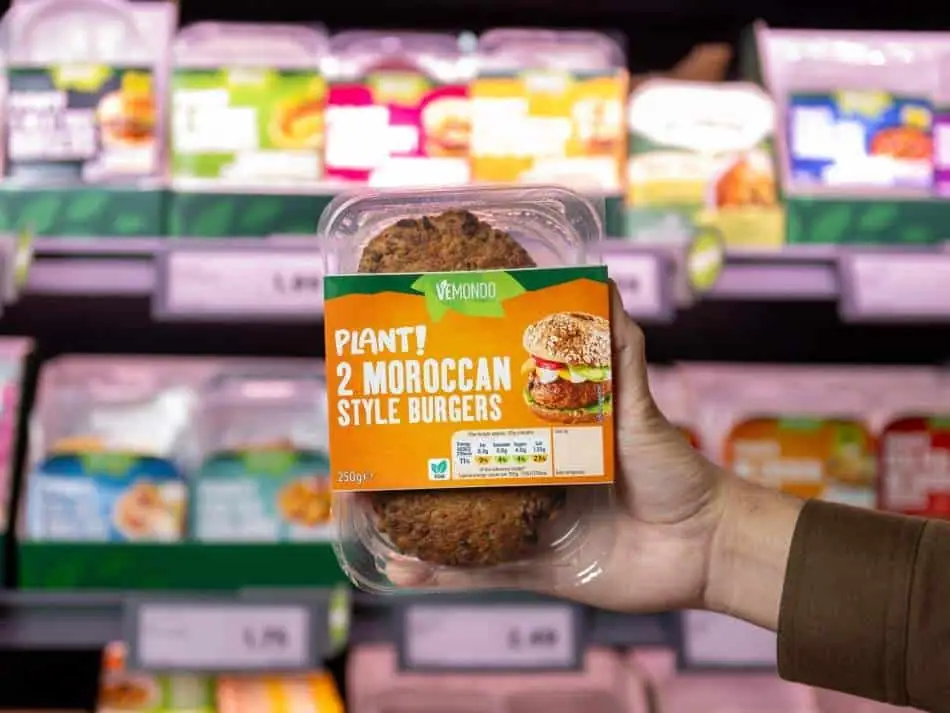
This new research gives them a cheat sheet on how to hit their climate targets. It will be impossible to do without selling a bigger proportion of healthy protein like beans, pulses, veg and plant-based meat .” © Lidl A gap between commitments and current turnover The report draws a stark contrast in retailer performance.
Plant-based items account for just 9% of Tesco’s protein-rich food takings and 7% of its dairy takings, despite a commitment to cut FLAG emissions by 39.4% by 2032. Going to Madre Brava, the supermarket in recent weeks dropped a target to triple plant-based meat alternative turnover against a 2018 baseline. By contrast, Lidl GB, which in October 2024 became the first UK retailer to set a quantified plant protein target of 25% of total protein takings by 2030, has since reported a near 700% rise in own-brand meat-free and plant-based milk takings, exceeding its prior 400% goal.
The report recommends five actions for UK retailers: set a protein shift target, improve transparency on protein sales data, advocate collectively for policy reform, support sector-wide food waste initiatives, and deepen supplier partnerships on regenerative agriculture. Star Molteno, Principal Consultant at Eunomia, explained, “The analysis shows that shifting consumption to lower carbon diets is essential.
More interestingly, the research points to this does not imply a cost burden to retailers, but could potentially save money which is vital at a time when cost of living is of utmost concern and supply chains are under pressure. “While reducing food waste and improving agricultural practices remain important, they won’t be enough on their own to meet short-term targets.”
- Who: Eunomia · Madre Brava
- Money: £150 million
- Percentages: 30% · 79% · 35% · 50%
- Figures: 30% · 79% · 35% · 50%