What Ever Happened to Sun-Dried Tomatoes?
To some, they are flavor firecrackers and a beloved relic of the past.
“They weren’t too outlandish. You could use them in everything from salad to garnishing a chicken breast. And people loved the way they tasted,”
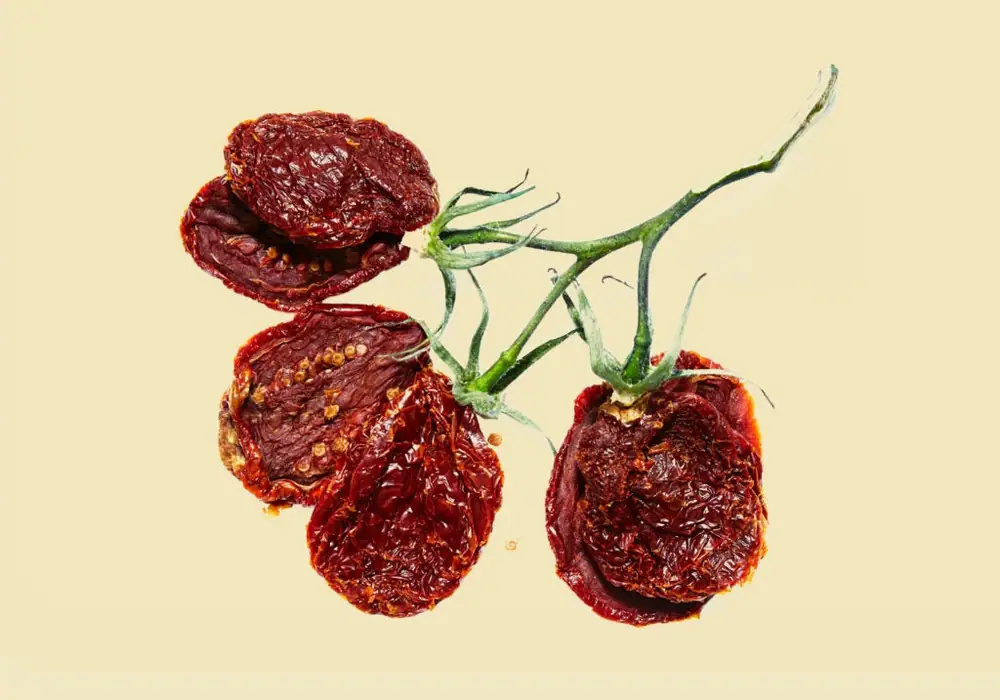
To others ( cough Ruth Reichl) they are “an example of all the worst qualities of tomatoes.” For nearly a decade, sun-dried tomatoes—the wrinkly, umami-packed fruit made by laying tomatoes out to bathe in the sun for an extended period of time—were ubiquitous in American cookery. Tomatoes came to the boot from South America via Spanish explorers in the mid 1500s, and as it turned out, they widened exceptionally well in the Mediterranean’s sunny, temperate climate.
Many chefs and writers I interviewed withdrawal first seeing sun-dried tomatoes in the 1980s as an imported product from Europe in specialty food stores. In 1975, scientists Ancel Keys and Margaret Keys published How to Eat Well and Stay Well the Mediterranean Way. In 1993, the Harvard School of Public Health introduced the Mediterranean Diet Pyramid, declaring the heavily plant- and grain-based cuisine one of the healthiest in the world. But what made sun-dried tomatoes the most popular of these Mediterranean offerings, he adds, is that they were versatile and simple, and people already knew what dried fruit was. “They weren’t too outlandish.
The 1995 cookbook Sun-Dried Tomatoes , which author and stylist Ethel Brennan cowrote with her mother, Georgeanne Brennan, was part of a series of single-subject cookbooks on trending elements, like goat cheese or herbes de Provence. The restaurant Barbetta, in New York, claims to have served sun-dried tomatoes as early as 1968, when owner Laura Maioglio brought them back from her family’s house in Italy—though Maioglio notes that sun-dried tomatoes weren’t yet available in American stores at the time.
More likely trendsetters were places like Square One, one of the very first pan-Mediterranean restaurants in America, which opened in 1984; chef Joyce Goldstein used sun-dried tomatoes in a chicken pasta and as a stuffing for Cornish game hen. Zabar’s in New York was doing a salad with mozzarella, asparagus, and sun-dried tomatoes in 1985.
In a 1988 D Magazine write-up of trendy new spots in Dallas, sun-dried tomatoes are mentioned in descriptions of seven different restaurants: as a component of a red bell pepper soup at the Riviera, as a topping for a veal pizza at Sfuzzi, and in countless pastas across the city. Sun-dried tomatoes were so widespread that the Los Angeles Times wrote in 1990, “It has become so common to open an Italian menu. Find a listing for angel hair pasta with sun-dried tomatoes, virgin olive oil and fresh basil that it comes almost as a shock to scan a list and read a mention of spaghetti with meatballs.” But then things began to get out of hand. Starting in the ’90s, American tomato producers, seeing the popularity of sun-dried tomatoes, started to take part of their planting and dry them out not in the sun, but in commercial dehydrators.
That’s the path to mediocrity.” Kamp recalls having squid ink pasta with scallops and sun-dried tomatoes and distinctly feeling like the trend had gone too far. “People were going aspirational-ingredient crazy,” he explains. “It wasn’t the ingredient that was the problem. People were just using it in these inappropriate contexts.” Not only was this oversaturation happening in restaurants, but thanks to the new affordability of sun-dried tomatoes, commercial items like sun-dried – tomato-flavored bagels emerged in the ’90s, along with sun-dried-tomato-and-basil-flavored Wheat Thins, and pinkish-hued sun-dried tomato tortillas.
This is what happens, Brennan recalls. “Once anything moves out of an exclusive domain. Into the public, and people are using it gratuitously and not in a way that is sophisticated with flavor,” she explains, “high-end restaurants weren’t going to touch them at all.” By the late ’90s and early 2000s, the initial novelty of sun-dried tomatoes had long since worn off. Sun-dried tomatoes had moved into the realm of the passé, along with items like raspberry vinaigrette, cold pasta salad, and red velvet cupcakes. “They used to be a chef’s way of stating, ‘I am hip!
We were discovering all sorts of other components, and sun-dried tomatoes just didn’t have that same kind of cachet.” To this day, the sun-dried tomato’s reputation as outmoded persists. And in the ultimate mash-up of ’90s and 2000s trends: the newly began trading Wow Donuts and Drips in Dallas is serving a sun-dried tomato basil doughnut.
Others, like Reichl, insist that sun-dried tomatoes ought to stay obsolete. “They are an example of all the worst qualities of tomatoes,” she states, firmly. “Hard, chewy, not sweet, and without any of the lusciousness you want in a tomato.” But whether or not sun-dried tomatoes are poised for a comeback is almost beside the point. Make the White Bean Spread In the bowl of a food processor, combine the beans, mascarpone, salt, and lemon zest, and process for 30 seconds, until pureed.
Arrange a few arugula leaves on the spread and top with 2 tablespoons of the tuna salad and a drizzle of olive oil.
- Who: Sun-dried · New York