La Seu d'Urgell installs the fifth vending machine for surplus food in Catalonia
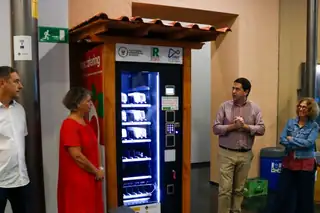
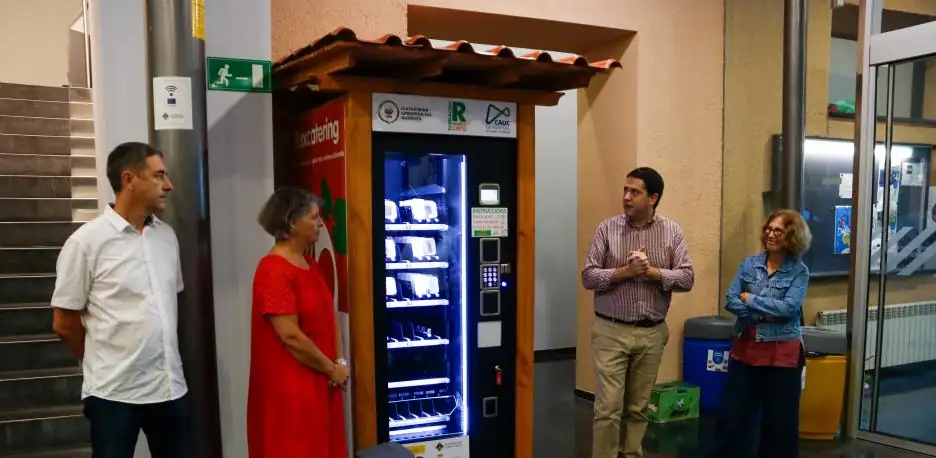
This Friday, La Seu d'Urgell unveiled a vending machine in the lobby of the Les Monges building where portions of food prepared in the kitchen of the Institut Joan Brudieu will be deposited.
This Friday, La Seu d'Urgell unveiled a vending machine in the lobby of the Les Monges building where portions of food prepared in the kitchen of the Institut Joan Brudieu will be deposited.
This initiative is part of the Rexcatèring project, whose objective is to prevent food waste from surpluses generated in school cafeterias and to facilitate citizens' access to quality food.
This is a system imported from the Basque Country, where it is already in operation in about forty collective dining halls.
The one installed in La Seu d'Urgell is the fifth machine of this type to be activated in Catalonia, after another one was put into operation last year in the Pyrenees, at the Escola Bellver Institute in Cerdanya.
The project has been funded through the Department of Agriculture, Livestock, Fisheries and Food, with the collaboration of the Zero Waste Foundation (FRC) and the Aprovechem els Aliments platform, with a budget of around 11,000 euros.
The device includes a blast chiller, which allows food to be cooled quickly from 65 to 4 degrees, a thermal sealer to close the containers and a thermal printer to label the portions, all of them with compostable edible elements.
The service is linked to a computer platform that records the surplus generated and the portions removed, which should allow adjustments to be made in the future to the quantities of food prepared in the kitchen of the Joan Brudieu Institute.
Lentils and tortilla
On its first day, the vending machine dispensed about thirty portions of lentils and Spanish omelet left over from the previous day. It will be restocked daily mid-morning, and portions can be collected during the opening hours of the Les Monges cultural center, from 8:00 a.m. to 10:00 p.m., Monday to Friday. They will be free for the first year; after that, they will have a nominal price yet to be determined.
The mayor of La Seu d'Urgell, Joan Barrera, justified the choice of location to prevent the device from being exposed to the elements and vandalism, and because it is a space with a large influx of people.
Gaby Susana, from the platform "We Make the Most of Food," explained that the initiative originated in the Basque Country and that Catalonia is leading its implementation with a comprehensive food waste management service for institutional kitchens, which could be expanded to nursing homes and hospitals in the future. Gaby emphasized that the underlying computer system allows them to identify which dishes are wasted the most and adjust their quantities accordingly. She also highlighted its social aspect, since, instead of distributing surplus food irregularly to a vulnerable group, the project dignifies access to food, making it accessible to everyone.
For her part, the president of the Alt Urgell county council, Josefina Lladós, framed the initiative within the ongoing work to reduce food waste in the region's school cafeterias, which are managed by Yausa and use local products. Lladós assured that those who use the vending machine will always find a meal prepared the previous day at the Joan Brudieu Institute, thus guaranteeing a high-quality and well-prepared product.