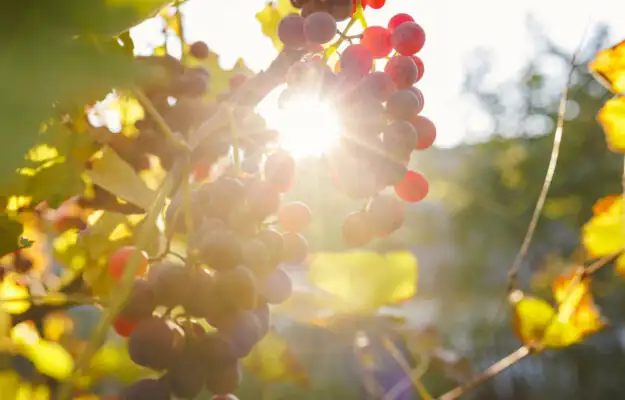
Climate change and wine: “The real challenge will be to change without losing our identity.”
Global warming, which is evident to all, has for years been requiring winemakers to adapt and manage a relatively new and constantly evolving situation.
"Compared to a few decades ago, vines increasingly find themselves completing ripening during periods of high temperatures," Dora Marchi begins. "This phenomenon alters the conditions under which the physiological processes occur, which determine the composition of the grape and, consequently, the characteristics of the wine. Furthermore, the greater variability of vintages, with frequent alternations between periods of intense heat, drought, heavy rainfall, often hailstorms, and extreme events, represents a visible sign of a more profound transformation in environmental conditions, which affects the vine's sensitivity."
"Prolonged droughts, for example, can cause water stress and limit the plant's photosynthetic activity. Heat waves during ripening, on the other hand, can accelerate certain physiological processes, promote acidity loss, and alter the grape's aromatic and phenolic profile," continues Patrizia Cascio. "On the other hand, very intense rainfall concentrated in just a few days can create soil erosion problems, waterlogging, and conditions favorable to the development of diseases. Finally, hailstorms, late frosts, and sudden temperature changes can affect the vine at particularly delicate times in its cycle."
"Furthermore, intense heat and strong sunlight can significantly alter the physiology of the grape and, consequently, its composition. However, not all grape components react in the same way," Marchi emphasizes, "or at the same speed. Under high temperatures, especially during ripening, sugar accumulation can occur more rapidly, while malic acid degradation increases, resulting in a reduction in acidity and a sensation of freshness. The aromatic component can also be affected, as the synthesis, accumulation, and preservation of certain aromatic compounds and their precursors can be altered."
In red grapes, the picture is even more complex. "Anthocyanins and tannins, which contribute to the color and structure of the wine respectively, have different ripening kinetics," Marchi explains. "Therefore, a situation can arise in which the grape rapidly reaches a high sugar concentration, while the phenolic component has not yet reached the desired level of ripeness."
In short, vineyard management will need to become increasingly dynamic and adapt to the vintage's conditions. "It's necessary to tailor interventions to the various elements that determine the microclimate of the plant and the bunches," Cascio continues. "In this sense, canopy management takes on particular importance. In the past, efforts were often made to maximize the bunches' exposure to light to improve ripening; today, however, excessive exposure can be counterproductive. It's necessary to find a balance between light and shade, maintaining adequate leaf surface and partial natural shading of the bunches."
Water management also becomes strategic. "Where irrigation is possible, it must be used rationally, avoiding both excessive water stress and unnecessary inputs, especially during the most sensitive phenological phases."
Furthermore, Enosis adds, the winery shouldn't seek to erase, but rather enhance, what has happened in the vineyard. "Crucial are: temperature control, proper oxygen management, the choice of yeasts and fermentation conditions, as well as all the practices that allow us to preserve the freshness, aromas, and natural balance of the grapes," Marchi emphasizes. "In white wines, for example, it's particularly important to protect the aromatic profile and maintain the freshness, which contributes to the wine's finesse. In red wines, however, great attention must be paid to managing the phenolic component, avoiding excessive extraction when the grapes come from conditions of severe thermal stress."
Winemaking technology should be considered a tool at the service of the raw material, not a means of standardizing vintages. "The winemaker must know how to interpret and accompany the vintage, seeking to express, in the wine, the terroir and the best of what the vineyard has managed to produce," Marchi explains. "Research and innovation can provide new tools to protect and enhance the identity of our wines, even in a progressively changing climate. The viticulture of the future will, therefore, be increasingly based on observation and monitoring. The real challenge will not only be protecting the vines from the heat, but also making the viticultural system more resilient to increasingly variable and extreme weather conditions."
"Adapting means, first and foremost, understanding what is changing and using research, knowledge, and innovation to preserve the fundamental components of balance, quality, and recognizability," Marchi and Cascio conclude in unison. "Integrated strategies will be necessary, involving the vineyard, the choice of genetic materials, water management, winemaking techniques, and, more generally, a greater ability to read and anticipate environmental changes. The wine of the future will be a new wine, with characteristics that may be different from those we know today, but it must continue to reflect the terroir that gives it its origins. The real challenge will be to change without losing its identity."