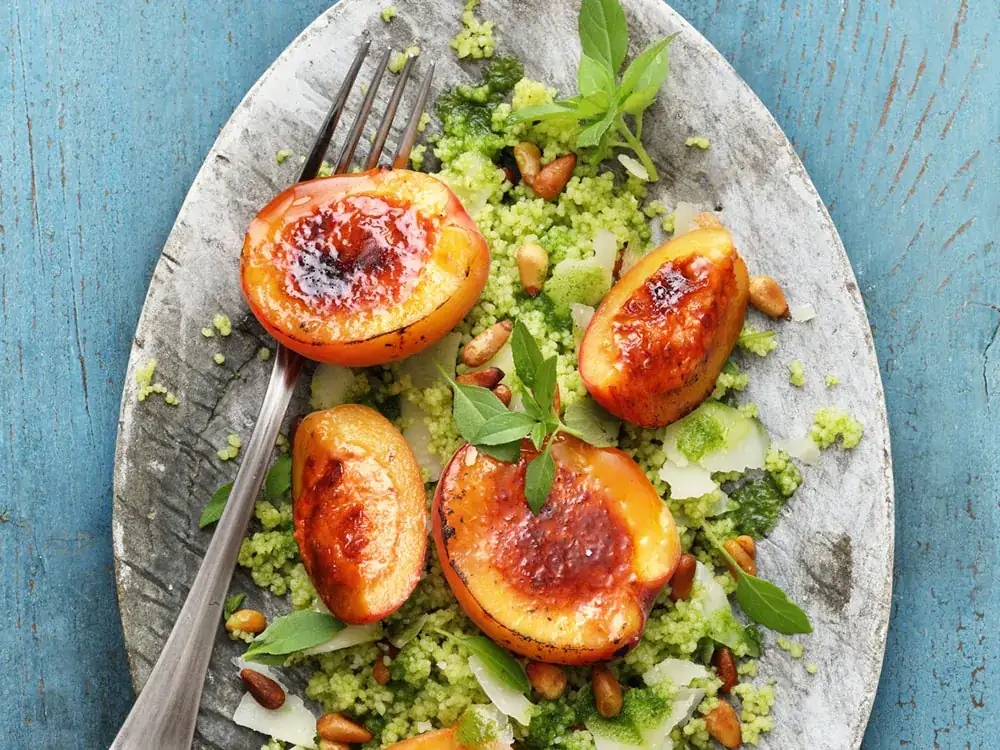
Recipe: Caramelized apricots on pesto couscous
Wine recommendation from Kilian Skalet (restaurant manager at "Jan", Munich) and the sommelier team
Ingredients · Servings 4
- 50g of dried tomatoes preserved in oil
- 125 g fresh goat cheese
- 2–3 tsp tomato paste
- 6–8 larger, preferably ripe apricots
- 125 g Couscous
- 1 bunch of basil
- 1-2 cloves of garlic
- 6–7 tablespoons olive oil
- Juice of ½ lemon
- 50 g pine nuts
- 30 g Parmesan
- 2–3 tablespoons brown sugar
- small basil leaves for sprinkling
- melon baller
- Bunsenbrenner
Method · 40 min
- Drain the dried tomatoes, dice them finely and purée them with goat cheese and tomato paste.
- Wash the apricots, halve them, and remove the pits. Scoop out some of the flesh from the apricot halves using a melon baller. Finely chop the scooped-out apricot flesh and mix it with the cream cheese and tomato mixture. Fill the apricot halves with the mixture and smooth the surface. Refrigerate the apricots for 1 hour.
- Cook the couscous according to package directions, then let it cool and fluff it with a fork. Pick the basil leaves and peel the garlic. Roughly chop both, place them in a tall container with olive oil and lemon juice, and purée with an immersion blender until smooth.
- Toast pine nuts in a dry pan until golden brown. Shave Parmesan into thin slivers. Combine both with couscous and garlic-basil oil in a bowl, season to taste, and divide among plates.
- Sprinkle the stuffed apricot halves evenly with brown sugar and lightly caramelize them with a blowtorch. Arrange 3-4 caramelized apricot halves per serving on the couscous and sprinkle generously with small, freshly picked basil leaves.
Sunny, with yellow fruit aromas, ripe gooseberry, pink grapefruit, and kiwi on the nose. On the palate, a fine, salty minerality and a hint of green spice. The long finish is complemented by the present and harmoniously integrated acidity.