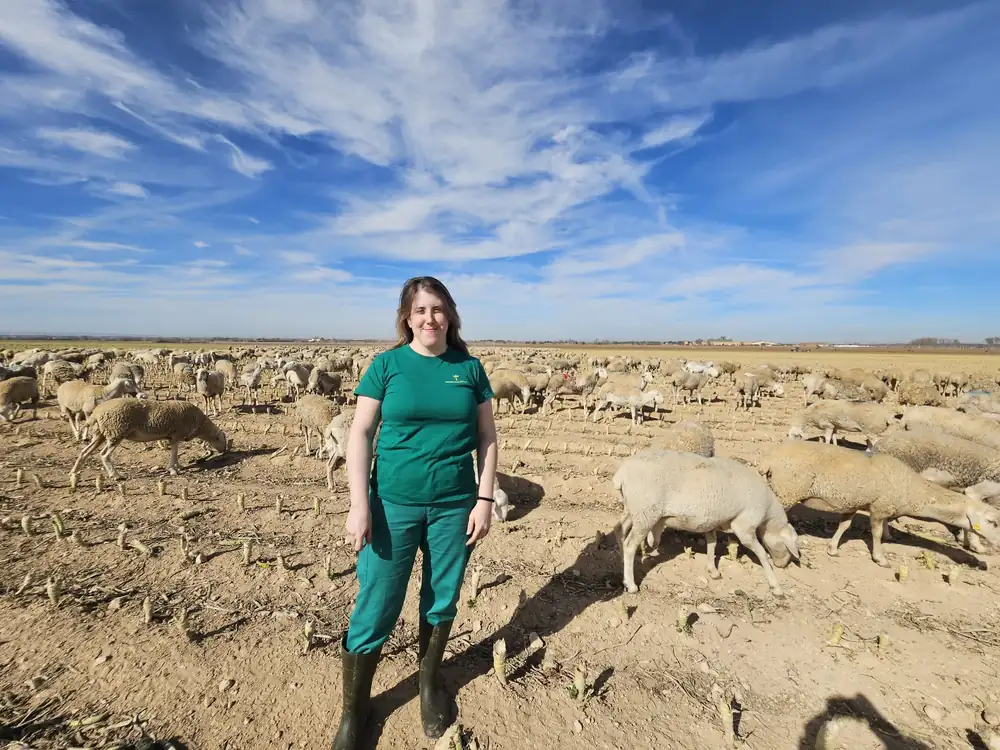
Erika García, a livestock farmer in Dehesa de los Llanos, milks Manchega sheep near Albacete
Erika García, 28, has been milking sheep for two years on a ten thousand hectare farm whose milk is used for an award-winning Manchego cheese.
Erika García lives in Albacete and gets up at five in the morning to be at the farm by seven. The Dehesa de los Llanos estate, about five kilometers from Albacete, covers ten thousand hectares and is dedicated, among other things, to sheep farming.
The raw milk from the flock is used to make an award-winning Manchego cheese with the La Mancha Protected Designation of Origin. Master cheesemaker Paqui Cruz oversees the technical aspects. There are 5,500 Manchega sheep, and about 2,500 are milked daily with the help of Erika and her four colleagues. The farm also produces wines from the Tierra de Castilla region, extra virgin olive oil, rosemary or lavender honey, walnuts, and red-legged partridge preserves.
Erika was a cook, but the hospitality sector is very poorly paid. Her initial plan was to study Business Administration and prepare for civil service exams, but family circumstances forced her to work. She started picking walnuts on the farm and, after a 15-day trial period, stayed on to work on the livestock farm.
The work is hard. "You need strength to handle the sheep, and a certain amount of skill too. You have to know the animals, know how to treat them. Not all sheep are the same; some move around a lot, and I've already taken a few kicks," she says jokingly. She milks every day, morning and afternoon, including Sundays and holidays, and also cleans the milking parlor and collects the manure. For her, it's a job like any other.
Erika believes that many people don't like working in the countryside or find it too hard. "It's a job like any other; if you don't want to study, you have to earn a living. But people don't like getting their hands dirty. We wear gloves and there's straw, but people are very dramatic." Twenty-five women work on the farm, and a third of them are involved in livestock farming. None of her friends work in the sector.
For now, she's not considering changing jobs. She has free time for the gym, drawing, and cooking. She'd like to have her own flock, perhaps through a cooperative: "I'd like to, but it's very difficult. You need land, a farm to raise the sheep, and feeding the animals is very expensive. But if I could, I wouldn't mind." She doesn't drink sheep's milk, but clarifies: "I do like cheese."