Alto Adige combines altitude and microclimates for more than twenty grape varieties
Between 200 and 1000 meters above sea level, the vineyards of this region on the northern border of Italy cultivate more than twenty varieties of grapes.
In Italian it's called Alto Adige, in German Südtirol, and in English South Tyrol. It's a hidden gem of the wine world: protected from the Alpine cold by the Dolomite mountains and tempered by the last vestiges of Mediterranean warmth.
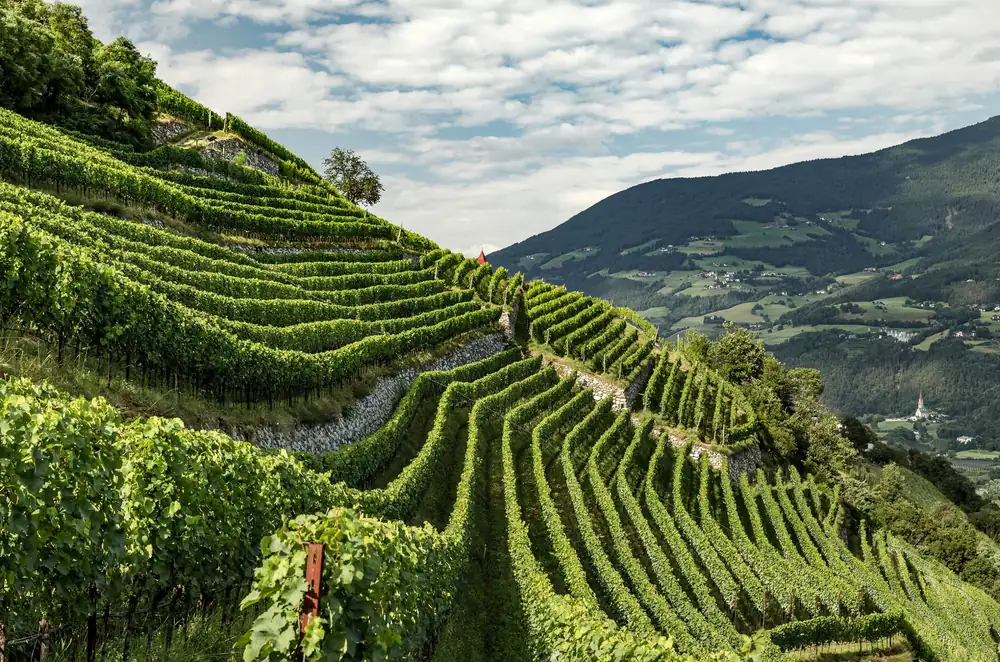
This climatic diversity is reflected in the wine-growing community. Nearly 4,800 farmers cultivate some 5,860 hectares of vineyards, and their family farms form the backbone of a long tradition. The vineyards stretch across slopes ranging from 200 to around 1,000 meters in altitude, making South Tyrol one of the world's leading cool-climate wine regions.
Altitude doesn't explain everything. The landscape creates a mosaic of microclimates that allows for the cultivation of more than 20 grape varieties, and the significant daily temperature range, the difference between day and night, helps the grapes retain their acidity. This results in wines with freshness and elegance, qualities sought after by sommeliers in high-end restaurants worldwide.
Farmers select each variety according to the microclimate. Higher, cooler soils favor Pinot Nero, Pinot Bianco, and Sauvignon Blanc, while lower, warmer soils favor Lagrein, Merlot, and Cabernet Sauvignon.
White wine accounts for two-thirds of production, ranging from Pinot Grigio and Pinot Bianco to Chardonnay and Gewürztraminer. Producers also have extensive experience with reds, using international varieties such as Pinot Nero and indigenous varieties like Lagrein and Schiava, also known as Vernatsch, which makes up around 8% of the regional harvest.
Growing grapes on steep slopes demands enormous effort, as most of the work is done by hand, not with machinery. This effort translates into a strong focus on quality, with wineries dedicated to preserving the characteristics of each grape variety and capturing the identity of the valleys in Italy's northernmost region.