A Curse Turned Pirates Into Dogs at This Shipwreck Bar Downtown
Anyone who has frequented the bars downtown over the past decade or so probably knows Chris “Tater” Gutierrez or, at the very least, has had one of his drinks.
“Our backstory is that these pirates were sailing along and they all got cursed and turned into dogs, but in doing so found their true treasure to be loyalty and camaraderie,”
Gutierrez has helped define the downtown scene — specifically the four blocks that comprise the Fremont East neighborhood. He spent five years building a following of regular customers while bringing the Gold Spike to prominence. He went on to bartend at Corduroy, followed by a stint at Oak & Ivy at Downtown Container Park, and then moved on to Atomic Liquors. Along the way, he developed standout signature drinks and helped shape the cocktail menus at each location.
At his newest bar, Stray Pirate (1321 South Commerce Street), visitors can find classic cocktails like the mai tai and a punch-drunk Zombie. But Gutierrez also makes signature cocktails, incorporating ingredients like a ginger beer, which he brews daily, and flavors not always seen in tropical drinks — like cardamom and lime kaffir. A Stray Dog Grog combines rum, lime, grapefruit, and Demerara sugar. He gets more playful with drinks like the reposado, watermelon, and jalapeno-based Robbing the Gulf. And the Swig and Berries is surprisingly complex and almost savory, with Hera the Dog vodka, Svöl Aquavit gin, strawberries, rhubarb, and lemon.
Gutierrez is also working on a complete mocktail menu that will mimic the flavors found in the alcohol-heavy versions. Next year, he will develop an expanded cocktail menu with drinks like a Dry Tai, a non-alcoholic take on the tiki classic. “It’s an underserved market. I think people are going to respond very strongly,” he says.
Stray Pirate opened in October and flirts with the tiki genre. But despite the tropical decor and punchy drinks he’s slinging across the bar, Gutierrez isn’t positioning Stray Pirate as a traditional tiki bar. Tiki bar culture has garnered criticism in recent years for its colonialist roots — how Americans created and sold a made-up version of Polynesia and the Caribbean through cocktails and kitsch. Instead, Gutierrez is calling Stray Pirate a “tropical bar with an escapist vibe.”
“We’re not actually a tiki bar. There are no tikis in here,” he says. “I’d say, we’re very careful about doing that. We’re looking for this place to age well.”
So what is Stray Pirate? Blurring the lines between an island-themed lounge, a haven for expertly crafted cocktails, and an immersive performance art piece, Stray Pirate effectively whisks visitors off of Commerce Street and into the swashbuckling interior of a sunken and doggy-ridden pirate ship. (“Our backstory is that these pirates were sailing along and they all got cursed and turned into dogs, but in doing so found their true treasure to be loyalty and camaraderie,” Gutierrez says.)
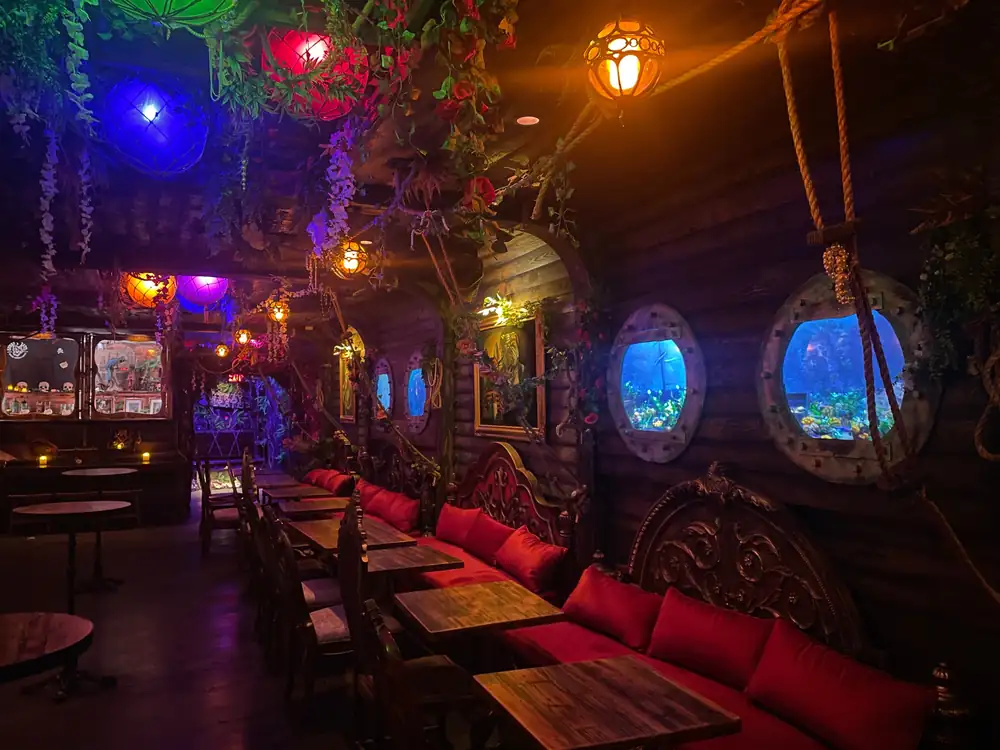
The dark room adheres closely to a bottom-of-the-ocean theme. Thousands of feet of stained wood run from floor to wall to ceiling; hundreds of feet of rope loosely hang throughout. Old-timey glass lanterns float delicately above tables and televisions behind the bar act as portholes — with convincing footage of sharks, stingrays, and anglerfish swimming by.
To create this scene, Gutierrez enlisted the help of legendary tiki bar designer Ben Bassham, known in tiki circle as “Bamboo Ben.” Bassham has built more than two dozen tropical-themed bars all across the country. His expertise lies in repurposing existing furnishings into props — like turning wooden bedposts into the columns of the bar — and creating elaborately detailed set pieces, like a hallway filled with skulls that leads to a sparkling pirate treasure tucked beneath a bench by the bathrooms. “Ben’s looking to help you bring your vision to life, not his,” Gutierrez says. For Bassham, the small details make the biggest impact. Wood isn’t stained perfectly. Shelves are purposely crooked (it is a drowned ship after all) and old wooden headboards form the backing of semi-private booths.
As for the dog theme, Gutierrez reached out to California artist Gwen Rosewater and commissioned a half dozen original paintings based on photos of dogs he and his investors own. “They’re literally our dogs,” he says. “We told her what we were doing and she said, ‘I’ve done over 500 dog portraits. I was born to do this!’”
Rosewater personified the dogs in the portraits. Tito, who lived to 17, is pictured with his tongue hanging out because he didn’t have any teeth late in life. Sarge, the ship’s schnauzer captain and bar’s logo, is seen holding a pistol and bottle of rum while smirking as a ship burns behind him.
Since the bar opened, Gutierrez says it has steadily drawn a reliable customer base. The wood and rope-covered facade often has a small tangle of people waiting to gain entry in the minutes before the doors open at 4 p.m. And after dark, Stray Pirate benefits from its location nestled between Liquid Diet and the Servehzah Bottle Shop and Tap Room in the burgeoning bar-hopping stretch of the Gateway District. “I want you to be able to step outside of your world for a minute,” Gutierrez says. “You come inside the door and forget what’s happening on the other side.”