What's The Difference Between Tuna Tartare And Carpaccio?
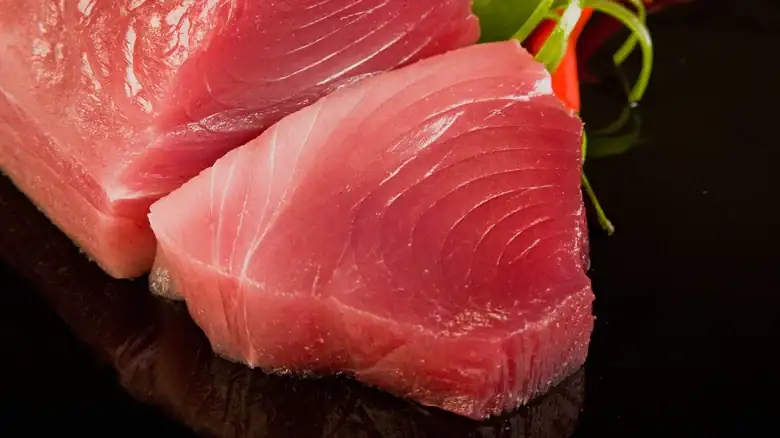
As humans with fragile immune systems, we're taught that some raw food is bad food. However, there are numerous dishes that prove, when prepared correctly, that raw ingredients can deliver a delicious and unique dining experience. For example, tuna carpaccio and tuna tartare both use raw tuna as their main ingredient.
The terms tartare and carpaccio don't just apply to tuna — they are cutting methods used to prepare a wide variety of meat and fish (you may have heard of steak tartare, a staple of fine dining). In order to enjoy these recipes safely, it's imperative chefs start with high-quality ingredients; in this case tuna that is classified as sushi grade. Raw meat doesn't inherently make you sick, bacteria does, so cooks work to handle the fish as sanitarily as possible to reduce any risk of contamination.
Tuna tartare focuses on flavor
Tuna tartare is typically composed of diced fresh tuna and complementary ingredients like soy sauce, sesame oil, lime juice, avocado, and chives. As opposed to carpaccio, the flavor of tuna tartare is not just about the fish. Its focus is on how different flavors can blend together to create something heavenly — sort of like an upscale tuna salad. Still, since the recipe calls for high-quality fish, the tuna should have a pleasant, mild, buttery flavor. The texture of tuna tartare is soft yet substantial, and can be almost creamy depending on how finely it has been chopped.
Presentation plays a big role in giving tartare its luxurious appeal. Tartares, regardless of the meat, are molded into a mound or a quenelle (a fancy name for a smooth, round scoop of food). They're also typically garnished with ingredients like chives, sesame seeds, or microgreens. The creamy tartare pairs well with crispy foods like crackers or cucumber slices. Tartare is usually eaten as a spread or dip, which makes dishes like tuna tartare popular appetizers.
Carpaccio is simpler yet no less sensational
Tartare requires a lot of other ingredients to make, but with carpaccio, tuna is the star of the show. The preparation is simple, but each step takes a lot of care. First, fresh tuna is sliced into paper thin, almost translucent layers that are then delicately arranged on a plate. It's typically then dressed with a light drizzle of olive oil and lemon juice, and sometimes topped with a few capers, arugula, or sea salt. Carpaccio is about appreciating the tuna's purity, with a focus on bringing out its natural sweetness. The texture of tuna carpaccio is smooth and delicate. Since it is sliced so thinly, it can practically melt in your mouth.
Both carpaccio and tartare can be an acquired taste for those who are used to cooked meat. But as long as you trust the chef making them, each dish makes for a show stopping appetizer. Generally, if you want a scrumptious spread that's easy to enjoy, go for the tuna tartare. Or, if you want to try the taste of tuna in its truest form with distractions like a chewy texture or other ingredients, tuna carpaccio is for you.