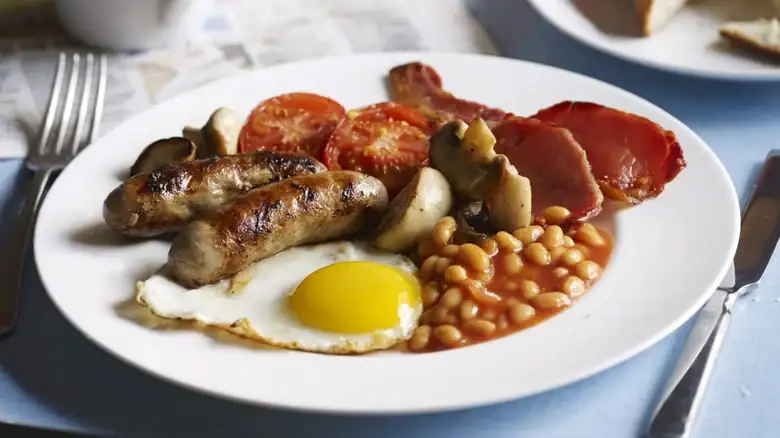
¿Qué incluye un desayuno inglés completo? Explicado
A veces, Gran Bretaña tiene mala fama por su comida y, francamente, es inmerecida. El Reino Unido tiene una brillante tradición culinaria que va mucho más allá del rosbif y los pasteles de cerdo, que, por cierto, también son maravillosos.
Britain sometimes gets a bad rap for its food and, frankly, it's undeserved. The UK actually has a brilliant culinary tradition stretching far beyond just roast beef and pork pies — both of which are also wonderful, for the record. Plus, the Brits invented the world's greatest hangover cure: the Full English breakfast. That particular dish is sometimes subject to some confusion, so we're here to set the record straight on what it entails.
The Full English breakfast has a long and complex origin story, but a standard recipe typically is as follows: sausage (Lincolnshire or Cumberland, preferably), bacon, baked beans, eggs (usually fried), grilled tomatoes, and fried mushrooms. Most often, you'll also find the meal served with buttered toast. Many like their meal with black pudding — a type of spiced blood sausage that's sliced and fried until crispy. You'll often find hash browns, or even thick-cut chips in the mix, too, even though it's contentious, especially among purists.
Sounds glorious, doesn't it? A shimmering altar to all things fatty and salty, there's sweetness and tang, too, from the ketchup or brown sauce. Plus, a good amount of textural complexity comes from the snap of a sausage and a soft, molten egg yolk. It's the ultimate comfort food, eaten by just about everyone — from bus drivers to Kings — and beloved by just about everyone in old Blighty.
The history of the full English breakfast
The origin of the meal has beginnings in the 14th century, when England's newly minted gentry would serve lavish breakfasts of fish, potted game (and of course, sausages) to friends, passersby, and visitors to show off their cooks' skill (and their bountiful estates). By the Victorian era, though, they were a distant memory. Instead, they'd been replaced by a new class of industrial tycoons, who had made fortunes trading across the British empire. They continued the tradition of a Full English breakfast, though these meals were far from what we'd recognize today — often showcasing exotic ingredients and dishes like kedgeree, which is a dish of curry-spiced rice, eggs, and fish originating from the newly developed Anglo-Indian cuisine.
In the 1900s, what would come to be known as the modern Full English would begin to be served in hotels, on trains, and in cafés, and a standardized recipe would soon emerge. At the same time, the rapid advancement of industrialization brought with it more accessible ingredients, thanks to the advent of mass production. Beans, for example, were now available cheap and canned; enter the iconic beans on toast. By 1950, half the adult population of Britain started their day with a Full English, and that once inaccessible luxury had become an everyday icon. Today, it's most often a treat, saved for a lazy Sunday morning or a rainy day trip to a greasy spoon, but it's still one of Britain's best loved dishes.