La pregunta importante que hay que hacerse al almacenar alimentos para una emergencia
Aunque esperamos que nunca sea necesario, una reserva de alimentos de emergencia puede salvar vidas en caso de un desastre natural.
While we hope it will never be necessary, an emergency food supply can save lives in the event of a natural disaster. However, while most people focus on essential canned goods, there's an even more important question to ask yourself when creating a supply: Will it keep me hydrated?
While it's possible to go weeks without food, water is far more crucial, and most people would only survive three to five days without it. While many might think stockpiling cases of water is the best solution in an emergency, surprisingly, water alone isn't the best way to stay hydrated. This is because it lacks electrolytes, vital minerals like potassium, sodium, and calcium, which other sources do provide. Drinking too much water can lower sodium levels in the body, causing hyponatremia. However, consuming electrolyte-rich foods or beverages can prevent this and promote proper hydration.
In emergencies, it's essential to have readily available foods that are not only nutritious and filling but also hydrating. For example, broths and soups that don't require refrigeration are rich in water and electrolytes, as are many fruits and vegetables that don't need refrigeration, such as oranges, watermelon, and cucumbers. As for beverages, you should always have plain water on hand: one gallon per person per day for at least three days, preferably a week. However, this can be supplemented with sports drinks or coconut water, both of which are rich in electrolytes, especially during the summer. Most sports drinks have a shelf life of over 12 months, while coconut water lasts between nine and twelve months.
Being prepared doesn't have to be difficult.
Even if you know what to stock up on, preparing food for an emergency requires more work than simply buying the necessary items and storing them in the pantry. For example, there are places you should avoid storing bottled water to prevent contamination. Likewise, even non-perishable foods should be checked regularly to ensure they haven't expired, spoiled, or leaked. While it may be safe to eat from dented cans, large dents could compromise the airtight seal and allow bacteria to enter.
Depending on your location, where you store your emergency food supplies will be crucial. For example, if you live in a flood-prone area, it's advisable to store them outside the basement or ground floor (if possible). FEMA recommends storing food in a cool, dry place and consuming it before it spoils, putting the newest items in first. While fresh, hydrating fruits and vegetables don't keep for very long, you can stockpile them if you have advance warning, such as in the event of a storm or hurricane.
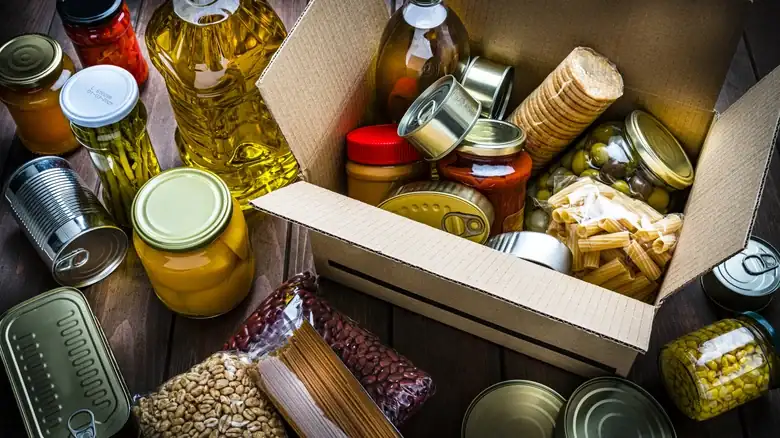
Of course, you should also stock up on many other non-perishable foods, such as peanut butter, crackers, instant oatmeal, canned meat and fish, protein bars, nuts, and cereals. While hydration is essential, you'll also need other foods that will provide you with energy during an emergency.