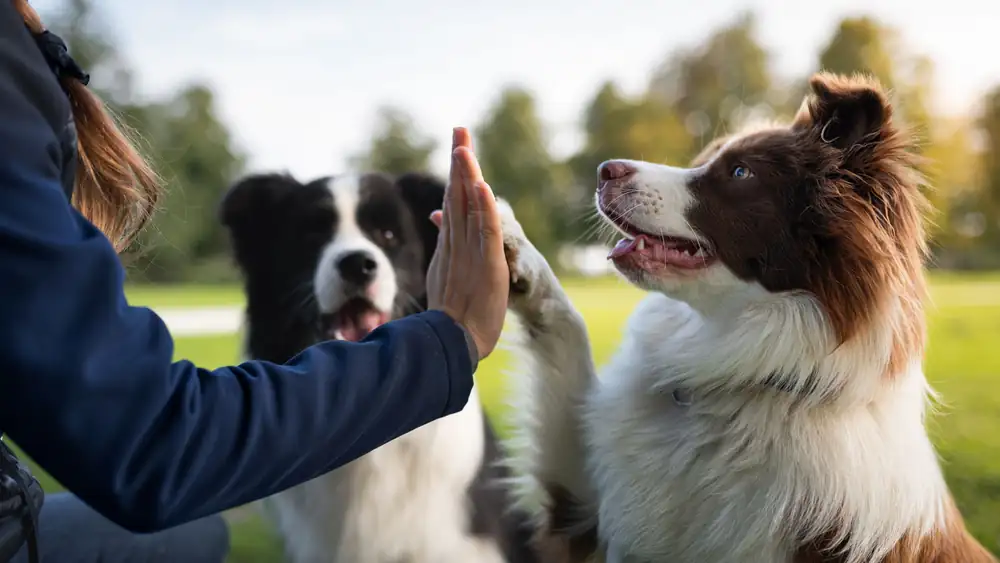
Dogs and humans also share the secret to longevity
The secret to longevity is the same for dogs and humans
We share many things with our dogs, even the secret to longevity. This is suggested by a new American study published in The Journals of Gerontology, which investigated the functioning of certain biological characteristics, identifying several similarities between us humans and our four-legged friends. These similarities could help us understand how the mechanisms of aging work, and how to regulate them.
What does canine biology have to do with us?
The starting point for the study is that we already know a lot about how molecular mechanisms change with age and chronic diseases that lead to mortality, but there's no reference model to which we humans can compare ourselves. Hence the idea of companion dogs, who, like us, have a genetically variable system, are affected by diseases, and, above all, share the same lifestyle as their owners, especially regarding exercise and the environment in which they live. This, however, is not the case with cats, who are decidedly more independent.
The American study
The researchers studied 937 dogs from the Dog Aging Project (DAP), a long-term longitudinal study of aging in companion dogs. They analyzed their blood samples, focusing on their metabolic patterns (chemical reactions occurring in cells) and biomarkers (measurable indicators of biological or pathological processes). Then, to verify similarities, they compared the dog results with five large, previously published studies on human mortality that used comparable metabolite-based methods. In all five studies, the patterns associated with early or late mortality were similar—with a correlation, they write in the abstract, that was "highly significant." This provides evidence that the biology of aging in dogs and humans works very similarly: to put it simply, the mechanisms of aging and those that lead to disease are comparable.
Dogs and humans age at similar rates.
"The molecules that pose a risk to dogs or protect against premature death are very similar to those found in people, demonstrating that we share important features of the biology of aging, which is really exciting and rewarding," Dr. Kate Creevy, veterinary lead of the Dog Aging Project and a professor in the School of Veterinary Medicine and Biomedical Sciences at Texas A&M, told SciTechDaily. "Our findings also underscore the value of companion dogs as a model for studying long-term health and lifespan," she continued.
Why it makes sense to study dogs and humans in parallel
The perspectives this study opens are indeed important: knowing that there are common patterns between dogs and humans is an advantage for research, especially since dogs live much shorter than humans, and therefore the time frame needed to study the biological mechanisms of aging is shorter. "It's a starting point," said Dr. Creevy. "We've identified these metabolites, and now we know where to start looking."
Meanwhile, thanks to this study, we certainly know more that can help us become better owners, as it also demonstrates that, just like for us humans, lifestyle is crucial for a healthy life for dogs. "We should ensure they have a healthy diet and a healthy weight, while maintaining mobility and cognitive health: just as we would for ourselves. What's good for us is probably good for them too," Creevy commented.