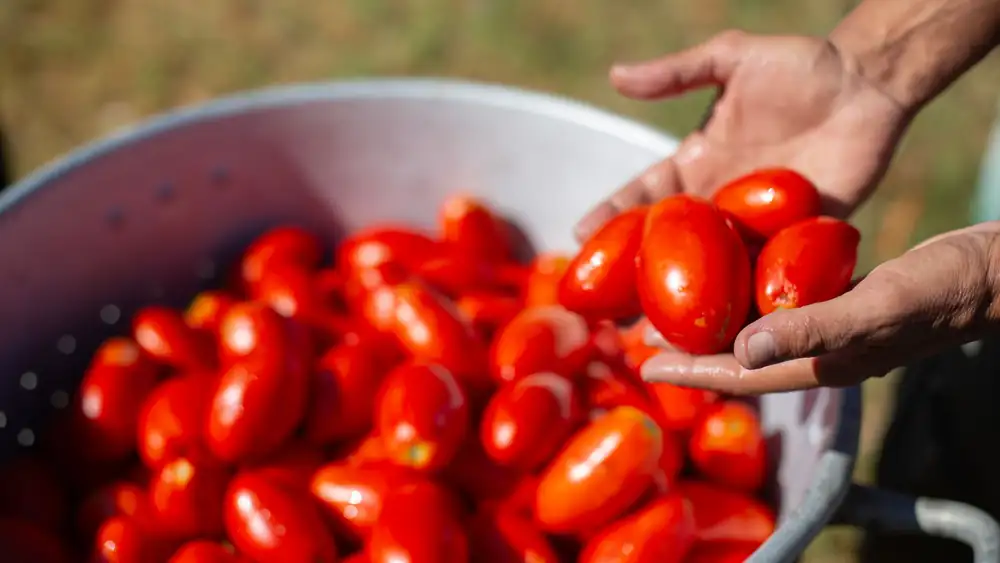
These fruits, eaten daily, also keep the liver healthy. Science says so
Tomatoes are also good for the liver
The Mediterranean diet remains the best for primary prevention and maintaining good health. The latest confirmation comes from an Italian study published in Nutrients that investigated the effects of tomatoes on fatty liver disease, or the abnormal accumulation of triglycerides in the liver. This condition is often associated with metabolic dysfunction, causing metabolic hepatic steatosis.
Nutrition and Metabolic Hepatic Steady State
A true global epidemic, affecting 30% of the world's population, metabolic fatty liver disease is closely linked to poor nutrition and an unhealthy lifestyle: excessive fat, too much sugar, resulting in overweight and obesity, as well as excessive alcohol consumption. It's a chronic condition that can lead to cancer, cirrhosis, or fibrosis. The first rule for those who suffer from it, in addition to taking medications, is to adhere to specific low-calorie diets that follow the principles of the Mediterranean diet.
The effect of food on disease
But what is the effect of individual foods, independent of the overall weight loss that can result from a restrictive diet? The Italian researchers started with this question, considering tomatoes as a symbol of the Mediterranean diet, already known for their antioxidant properties, as they are rich in bioactive compounds such as lycopene (both raw and cooked, as they are not lost during cooking). This is where the research began.
Tomatoes and liver fat: the Italian study
The study involved 79 participants with an average age of 58, 70% of whom were male, with clearly defined characteristics in common: all had metabolic fatty liver disease, all had a body mass index (BMI) below 30 kg/m² (which is the level of first-degree obesity), all were non-habitual drinkers, and all had no other liver diseases. They were then divided into two groups, an intervention and a control. The first group (42 people) was asked to consume 200 grams of raw tomatoes and 50 grams of tomato sauce every day for six weeks (all from the same manufacturer to ensure uniform results); the second group (37 people) was asked to consume none at all. In both cases, participants were asked not to change their lifestyle.
The effect of tomatoes on fatty liver
Comparing the parameters at the beginning and end of the experiment with the CAP scores (Controlled Attenuation Parameter, obtained with a diagnostic tool called Fibroscan), the intervention group (the one that had consumed tomatoes for six weeks) showed significant improvements compared to the control group: although weight, circumference and total body fat remained stable, metabolic hepatic steatosis had undergone a significant reduction (equal to 35.00 dB/m, i.e. decibels per meter, compared to 18.00 dB/m in the control group).
New research on tomatoes
This is a clue, however, that opens up new avenues for research. Although the results are significant, the study is very small, was short-lived, did not specifically consider lycopene and carotenoids in tomatoes in this mechanism of liver fat reduction, and most importantly, did not include obese people, who are the most likely to suffer from metabolic fatty liver disease. Therefore, the Italian researchers say, we need to start from here. Meanwhile, for those of us reading this, it's an invitation to continue eating healthily: further proof that a plant-based diet, as the Mediterranean diet originally was, is the best way to live happily and healthily.