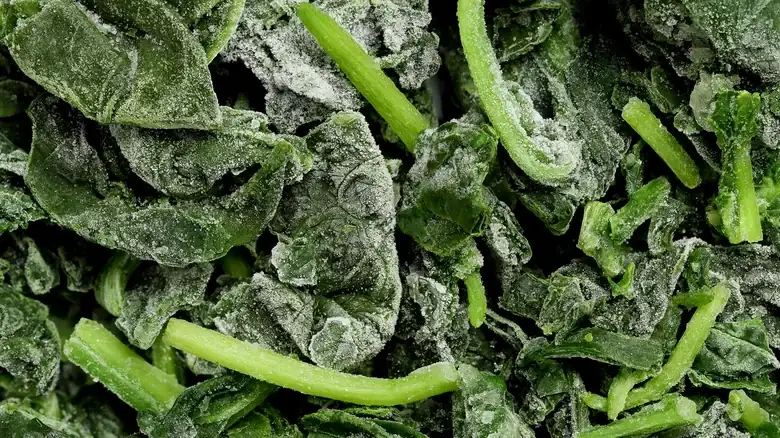
In Some Ways, Frozen Spinach Is Actually Superior To Fresh
The fresh produce department is often the first stop when you start grocery shopping. This is actually no accident because grocery stores are designed to show you the fresh produce first to get you inspired to fill your cart with healthy food. Don't let all those piles of strawberries and squash dazzle you, however.
Fresh spinach is one of the biggest offenders when it comes to food waste because it goes bad in less than a week. Spinach also loses a lot of vitamins within just a few days of harvest, so fresh isn't healthier than frozen. Frozen spinach is also super handy because you can keep a bag in the freezer and grab a handful or two anytime. In fact, unless you need your spinach in fresh form for the texture, like in a salad, a bag of frozen spinach will save you money and time and always be ready when you need it.
Fresh isn't always best
You might have heard that fresh produce is healthier than frozen, but that's actually not true. When fruits and vegetables are harvested, some of them are designated to be sold fresh and the rest are either frozen or canned within a day or two. Because they're processed so quickly, their vitamins and minerals are locked in. Fresh produce, on the other hand, sometimes takes a long time to get from the field to your local produce department; and, depending on how well your leafy greens are stored en route, your spinach has probably lost most of its nutrients after four or five days according to Pennsylvania State University.
Fresh spinach also notoriously goes bad in the refrigerator in just a few days, and a lot of it gets thrown away, which contributes to the global problem of food waste. The U.S. Environmental Protection Agency says that the average American family of four throws out an average of $1,600 a year just in produce, and perishable greens like lettuce and spinach are major contributors. Even worse, a lot of those leaves get thrown away in their original plastic bag or box packaging, so it doesn't compost or biodegrade.
The good news is that most of the time you don't need to use fresh spinach for a recipe, and using frozen spinach actually saves you a lot of time.
Frozen spinach is a secret weapon
A bag of frozen spinach might not have the same shelf appeal as a container of fresh leaves, but it definitely has some distinct advantages in the kitchen. For starters, frozen spinach is already prepped and cooked (either quickly blanched with boiling water or steamed) before it's flash-frozen, so you don't have to spend time picking the stems and sorting through the bag for perfect leaves when you're making a batch of cheese and spinach manicotti. So unless your recipe calls for uncooked spinach, frozen spinach is a huge time saver. Plus, if you have a bag of frozen spinach around you'll always have an easy way to get some extra veggies into a smoothie, omelet, or a bowl of pasta.
Frozen spinach also has a much longer shelf life than fresh, so you don't have to work against the clock to use it all up before it goes bad — or worse, throw it away before you can eat it. If you keep a bag or two in the freezer you can grab a cup for a recipe without wasting the rest of the package. Fresh spinach is also significantly more expensive than frozen, so you'll save a lot of money on your grocery bill by shopping in the freezer section in addition to saving money by not wasting food.