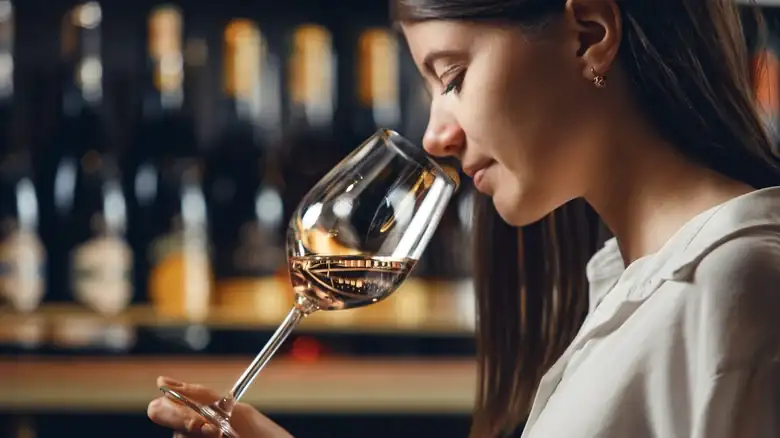
Describing A Wine's Aroma Is Easier Than You Think
It's natural to feel out of your depth when describing a wine's aroma, especially when you read about varieties with notes like tobacco, leather, or even petrol.
“Think about ... fruits, flowers, spices, herbs, vegetables, smoke, tea, mushrooms, and leather. You've probably already tasted or smelled a lot of these, so they should be easy to identify in the wine.”
Winkler makes it clear that you don't have to reach for fancy adjectives when describing a wine's aroma. "The best approach... is to relate it back to flavors in your everyday life and trust your intuition," she said. "These aromas and flavors should be familiar; it can just take a while to identify them." Ditching fancy wine vocabulary can even help you shop for wine, helping you communicate exactly what you want. Bold, light, fruity, or earthy are some common descriptors, and while they're more related to taste, these terms are great starting points to help you articulate the scents you're picking up.
"Don't stress too much about it, follow your instinct and enjoy finding the aromas and flavors," Winkler added. "Think about... fruits, flowers, spices, herbs, vegetables, smoke, tea, mushrooms, and leather. You've probably already tasted or smelled a lot of these, so they should be easy to identify in the wine." If you're still unsure, there are a few tips that may help you access and understand more of your wine's scent.
The best way to smell wine
Taste and smell are inextricably bound together, so appreciating the aroma of your drink only helps you enjoy it more. Don't be afraid to swirl your wine in its glass before taking a sniff. Labeling this as rude is an archaic restaurant etiquette rule that does nothing but limit your enjoyment of your vino. By coating the inside of your glass with wine, it fills up the vessel with the aroma, making it much easier to smell (and describe).
To experience your wine's full bouquet, set the rim of the glass against the skin above your lip and tilt it so your nose is fully inside the cup. If you hover your nose over your glass instead, you won't pick up on the smell as much. Keep your mouth slightly open and take long, slow inhales to get the full effect. It may also help to take a sip of the wine and then inhale, as this brings your sense of taste into play, as well.
When it's finally time to describe the aroma, it helps to start with a broad category and then narrow it down. For example, if you believe a wine smells fruity, what kind of fruit does it smell like? Does it smell like fresh, dried, or even syrupy versions of the fruit? Do you maybe smell an additional ingredient added to it, like spice or herbs? And don't shy away from more unconventional notes or adjectives, like wood, gamey scents, minerals (like the smell of wet rocks), and the aforementioned leather.