What Is A Tripel Beer And Is It Different From Others?
No matter what the tap lineup looks like at your local craft beer bar these days, there are so many more beer styles to drink than IPA. If you like big, strong beers but are looking to break out of the hop overload of many of today's American offerings, a great place to start is Belgian styles like tripels.
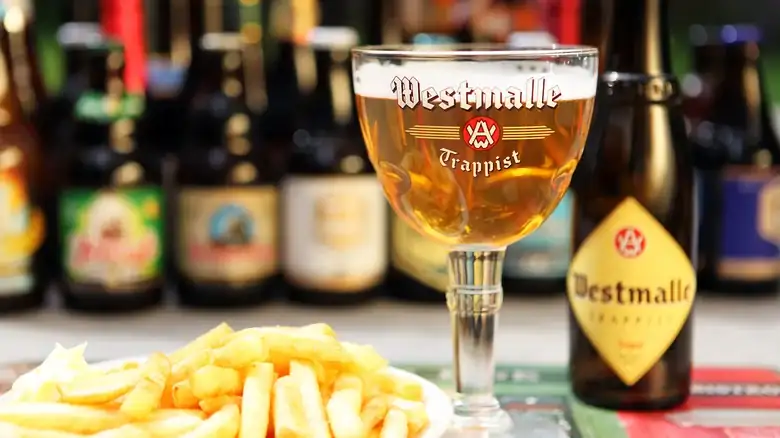
Perhaps the most famous example of a Belgian tripel comes from the Westmalle brewery (brouwerij in Dutch), which is in the northern Belgian province of Antwerp, but there are plenty of American examples to try in the States from breweries like Allagash Brewing Company (Portland, Maine), New Belgium Brewing (Fort Collins, Colorado), and Brewery Ommegang (Cooperstown, New York).
How tripel got its name
Belgian breweries tend to brew only a few classic styles of beer, which might be how tripels got their name (though no one can truly agree on this). Trappist or abbey-style breweries (which are secular breweries that are not owned by Trappist monks) often have a simple lineup of beers known as singel, dubel, tripel, and quadrupel, which are categorized by strength. So while triple IPAs in America are considered triple strength in terms of both hops and alcohol, tripels in Belgian breweries are simply the third strongest beer in the lineup. Indeed, the level of increase between each category varies by monastery.
Tripels are brewed with European Pilsner malt, which is pale and fermented with Trappist-style ale yeast strains (which are different from lager yeasts) that create spicy, tropical flavors like honey, banana, and citrus. Classic European varieties of hops are used to add bitterness and aroma, like Saaz and Styrian Golding, and they clock in at around 9 to 9.5 percent alcohol by volume. Many commercial examples are bottle conditioned, which means that they are carbonated by adding yeast and sugar to the bottle to create the bubbles. This is why you'll often see them packaged in thick glass bottles with a cork wrapped in a wire cage similar to a bottle of Champagne. Brouwerij Westmalle's Trappist Tripel is the benchmark example, but if you can't find it at your local bottle shop, look for Brewery Ommegang's Gnommegang, Allegash's Tripel, or New Belgium's Trippel. Once you get a taste for tripels, it'll open up your tastebuds to a whole new world of Belgian-style beers.