La compleja historia del budae jjigae: el delicioso estofado de base militar de Corea
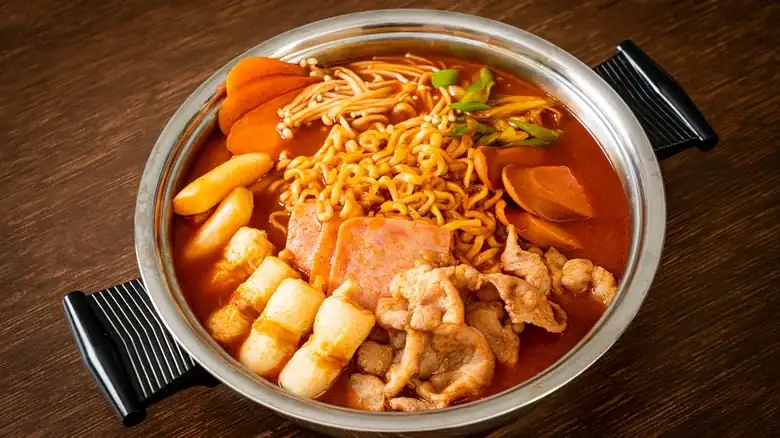
El budae jjigae, o estofado de la base militar, es uno de los platos coreanos modernos más icónicos, con una historia ligada a la escasez de posguerra.
Stew pots, from this dish to the Chinese hot pot, are not new to Asia, but this version has a unique history, with a strong emphasis on the military aspect of its name. Chef Maricel Gentile, author of "Maricel's Simply Asian Cookbook," explains why it has endured as a home staple.
“Food was scarce after the Korean War, and this stew came about out of a need to be creative,” Gentile explains. “Locals used leftover ingredients from the U.S. military, such as SPAM, sausages, and canned beans. These ingredients were combined with traditional Korean seasonings and kimchi.”
The destruction of agricultural areas during the war led to the adoption of many American foods, much like Korean fried chicken was invented on the battlefield. Dried and canned goods were highly valued and readily available, and thus a Korean-American fusion dish was born out of necessity and sustained by love.
“I think what makes it so beloved is its balance of intense flavors: salty, spicy, and slightly smoky,” Gentile continues. From galbi jjim to bulgogi, few cultures are as adept as Korean cuisine at combining sweet and savory, and that culinary expertise has allowed the stew to evolve remarkably.
The following decades brought interesting changes. “Today, you can find everything from cheese to ramen noodles to seafood… in the stew,” says Gentile. “Some people like to add extra gochujang (red chili paste) for a kick, while others add perilla leaves for a herbal note.”
Processed American cheese, a staple for soldiers during the war, is now the ingredient ramen didn't know it needed. The exchange isn't one-way: instant ramen noodles are also used in grilled cheese sandwiches.
Now that scarcity is no longer an issue in Korea, it's common to find traditional ingredients in budae jjigae. Umami-rich seaweed and anchovy broth is a popular base that pairs well with sweet potato starch noodles or glass noodles. Sausages and SPAM remain popular, and higher-quality cuts like pork belly or cheek have also been incorporated. It's a classic example of cultural diffusion: two countries contributing what they value to create something new.