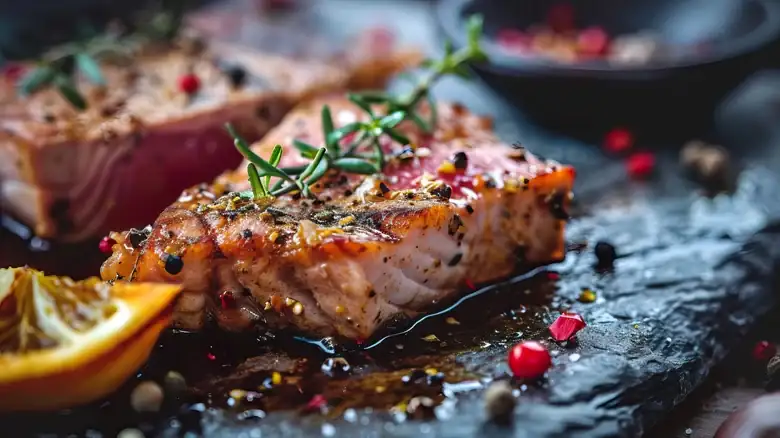
Quizás quieras evitar este tipo de atún en los restaurantes
El atún es un pescado generalmente saludable, magro y rico en ácidos grasos omega-3, excelentes para la salud del corazón. Sin embargo, es de conocimiento general que todos los pescados contienen al menos trazas de mercurio. Muchas especies también sufren de sobrepesca.
Tuna is a generally healthy fish, being lean and filled with omega-3 fatty acids, which are great for heart health. However, it's largely common knowledge at this point that all fish have at least some traces of mercury. Plenty of species also suffer from overfishing, as well. When it comes to both sustainable fishing and the amount of mercury you're possibly about to eat, species from different regions pose separate risks. It's worth asking the server what specific species of tuna is being prepared, if possible, and keep an eye out for bluefin tuna and yellowfin tuna from certain parts of the world. Also, regardless of the type of tuna involved, you may want to avoid buying tuna salad at fast food restaurants in general, because plenty of cheaper restaurants prepare tuna infrequently, and the fish may be well past its best-by date.
Bluefin tuna has lots of mercury compared to other tuna species due to its large size, and they're are also heavily overfished across the world's oceans. This is partly because bluefin is commonly seen in sushi dishes like kuro maguro and hon maguro, and occasionally tuna tartare and tuna ceviche dishes, although it's thankfully a less commonly served tuna species overall. Yellowfin and bigeye tuna are more common restaurant sights, and their populations are healthier. Still, bigeye is high in mercury, and yellowfin caught around North American and European coasts have been found to include a host of other contaminants, such as pesticides.
Larger tuna has more mercury
Mercury levels vary from fish to fish, depending on species and where in the world it was caught. In particular, fish with big bodies and long lifespans have higher amounts of mercury because they've had more time to build it up in their systems. Wild tuna can get fairly large, and the Atlantic bluefin tuna is among the largest. They can live up to 35 years, making them heavy in toxins. Studies have suggested in the past that restaurant tuna may have higher mercury levels than grocery store tuna, although it's difficult to measure across such a wide range. If you're pregnant, it may be best to completely avoid ordering tuna because of the risk of mercury spikes in individual fishes.
With all that said, what sort of tuna should you feel better about ordering? If the menu states the species, then skipjack is a smaller, thriving tuna species that is less contaminated and more sustainably fished (by comparison, at least). Skipjack is among the most commonly caught tuna varieties worldwide, so it's worth asking your server.