Exhibition highlights the presence of Brazilian coffee in Chinese urban culture
The Coffee Museum in Santos (SP), starting April 24th, will host the temporary exhibition "Black Gold and the Dragon" by visual artist Camila Arruda. Featuring 15 new works, the exhibition is the result of the artist's research into China's growth as one of the main importers of Brazilian coffee.
Despite historically being a tea-consuming nation, China has seen a surge in coffee consumption in recent years. According to data from the Brazilian Coffee Exporters Council (Cecafé), shipments of Brazilian coffee to the Asian country have jumped in recent years: from approximately 87,000 bags in 2022 to approximately 420,000 bags in 2024.
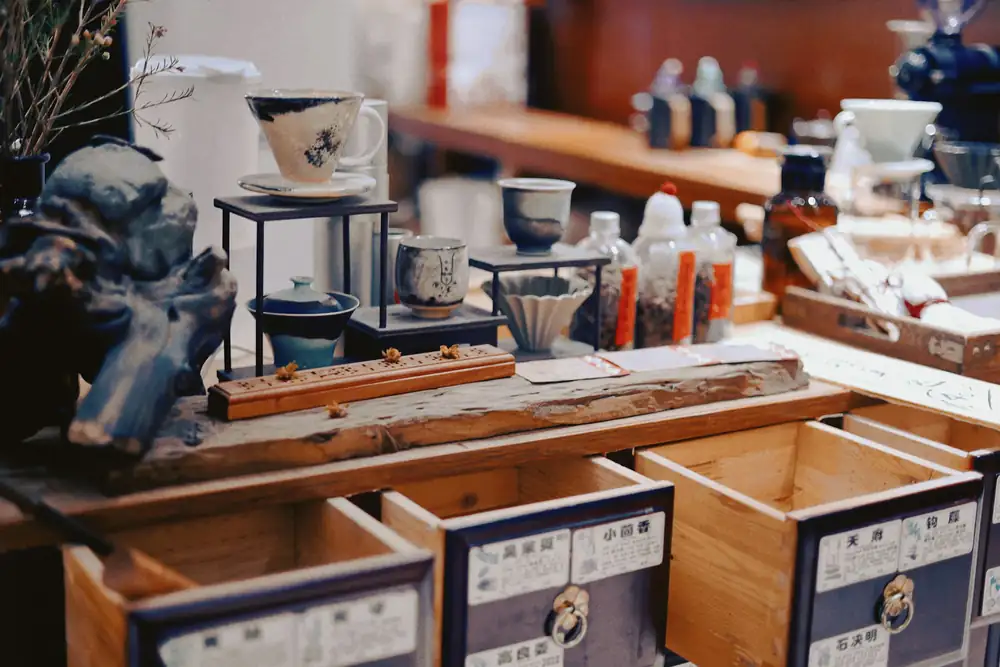
The exhibition brings together paintings, sculptures, installations, and videos organized into three sections that guide the visitor's journey. The first section is based on Chinese cosmology as a foundation for thought and the organization of daily life, with references to philosophical traditions. In the second, coffee appears as a contemporary symbol of status and cosmopolitanism: through visual overlays, the artist brings together past and present by inserting the coffee bean onto references to Ming Dynasty porcelain. The exhibition concludes with a look at recent transformations in China, highlighting technological advancements and situating Brazilian coffee within these dynamics, associated with new patterns of consumption, logistics, and urban life.
The sensory dimension takes center stage in “Sopro,” a sculpture made of approximately 65 kg of roasted coffee beans arranged in a circular structure of gilded brass. The work associates coffee with the idea of wealth and engages the sense of smell as part of the experience, evoking the connection between the port of Santos and the Chinese market. In her studio, the artist also developed paints from coffee and green tea, using natural pigments applied to raw cotton. The pieces explore the concept of Yin-Yang and highlight the coexistence between tea, with its ancient tradition, and coffee, linked to contemporary times.