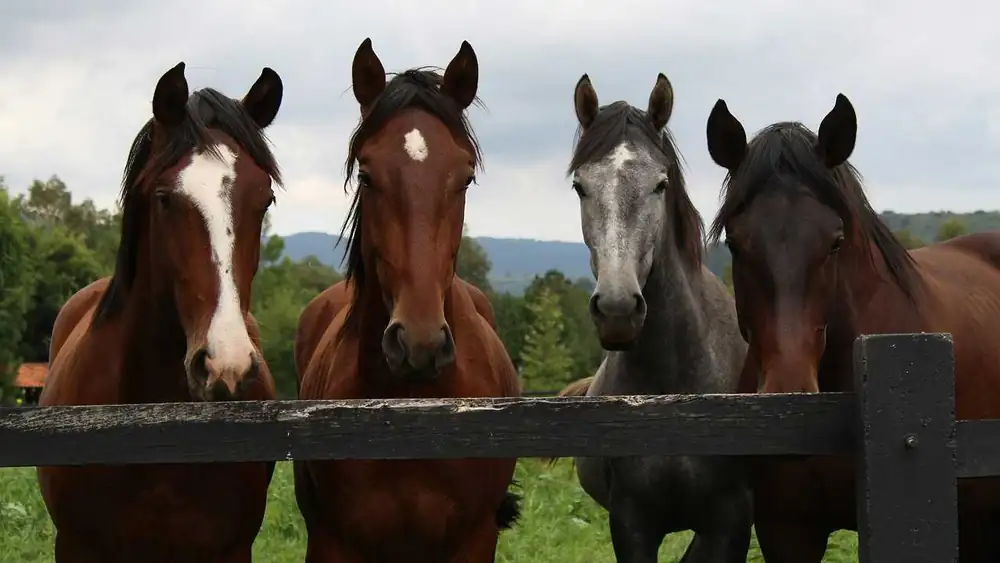
¿Estamos seguros de que queremos renunciar a la carne de caballo?
En general, el especismo me resulta molesto.
In general, I find speciesism annoying. That totally subjective principle that says no to insects but yes to shrimp, coypu, for goodness' sake, but blue crabs are delicious, pork is no problem, but woe betide anyone who touches a horse. Animals are all animals, and even when we decide to continue eating them, they must be respected as living beings, protecting and upholding the rules that regulate their dignified living conditions on farms and their deaths without suffering.
That this isn't always respected is another matter, one that certainly needs to be addressed and denounced, just as the animal rights group Animal Equality did in its video investigation coinciding with the proposed law banning the consumption of horse meat. Once again, however, we're here to reflect on the fact that all animals are beautiful and equal and deserve respect, but ultimately horses are a little more equal than others.
Are we sure we want to give up horse meat?
Italy, according to a report by Animal Equality, is among the top European countries for horse meat consumption, with approximately 17,000 equines slaughtered in 2024 (source: Vetinfo), and holds the world record for imports. This means, between the lines, that sometimes when we think we're eating local horse meat, we're actually eating imported meat, and so—as always—it's best to be careful.
But the point remains: in Italy, horse meat is part of our diet, perhaps not everyone's, but certainly of many families who are convinced – rightly or wrongly – that it is a particularly healthy meat (67%, according to the report data) and of others who eat it because they love it, and because it is part of their regional tradition (43%).
Of course, horse meat – the report further explains – is not central to the Italian diet: only 17% of people who include meat in their diets (92% of those interviewed) say they consume it, and the trend is slightly declining.
In other words, we can easily do without it. But do we really want to?
And the Heritage of Italian Cuisine?
No, because we're there raving about the heritage of Italian cuisine, which—even if we don't quite understand UNESCO's motivations, which have little to do with traditional recipes—must be protected and respected.
We must protect our roots, rooted in spaghetti with tomato sauce, and remember our grandmothers, who kneaded and cooked and taught us how to do it. Politicians tell us so, marketing tells us so, the lady next door repeats it.
Italian cuisine is rich and beautiful; indeed, it's the best in the world, and it deserves respect. And so, Italian cuisine also features horse meat. Perhaps not everywhere, but there are regions and territories that find their strongest gastronomic identity in horse meat. Like Catania, which primarily grills it, in slices and meatballs, and perhaps uses it in sandwiches for the world's best and oldest street food.
Or Piacenza, where Picula 'd Caval is one of the oldest traditional dishes: a stew of braised horse meat, served with polenta. And then there's Puglia, and Salento in particular, where pieces of horse meat and horse chops (and sometimes meatballs) are a key part of the local cuisine, so much so that they have village festivals and fairs celebrating them.
And then there are the Paduan horse meat strips, once served with polenta and now used in various dishes, but generally included by Slow Food in the Ark of Taste as one of those traditional products that are being lost over time, because "today horse meat is very difficult to find, especially because local farmers prefer to keep animals that are easier to raise."
Well, the issue of decreasing consumption is also, quite simply, that horse meat costs more than pork, both for consumers and farmers. And so, less of it is produced. Imagine how much more money can be made from intensive pig or chicken farming? And it's as if, when talking about meat and farming, we were looking at the finger pointing at the horse, without seeing the full moon of overcrowded cages of animals for industrial consumption.
Wouldn't it be better, instead, to focus on the real problems—which exist—related to meat consumption and production? Does the crux of animal welfare really lie in saving horses, while allowing pigs, cows, and chickens to be squeezed into tiny cages, in unsanitary conditions, posing a potential threat to human health and causing pollution levels beyond any reasonable threshold? You decide if the problem is horse meat.