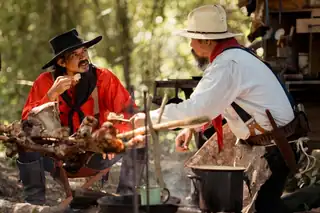
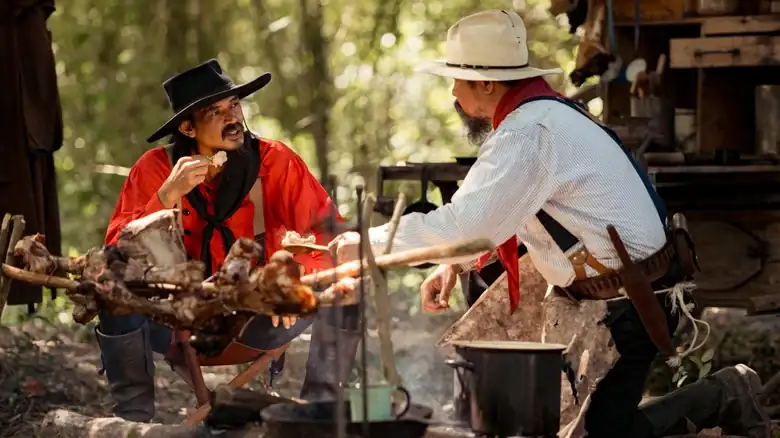
El pan de maíz de antaño que los vaqueros comían en el camino
En el siglo XIX, los vaqueros de las rutas ganaderas comían un bocadillo de pan de maíz conocido como corn dodgers, sencillo y sustancioso.
In the 21st century, the lives of cowboys are often more idealized than realistically portrayed. Thanks to Westerns, like those starring John Wayne, who even gave his co-stars and crew the iconic gold-handled mugs, Americans may not realize how harsh and exhausting life was on the cattle trails of the 19th century, with the arduous task of finding food each day. Although there was some variety in their daily meals, they always consumed at least twelve different foods, including corn dodgers, a traditional cornbread snack.
Corn burgers were easy to make, requiring only four or five basic ingredients: cornmeal, salt, bacon or pork fat, boiling water, and sometimes sugar for a pleasant sweet and sour flavor. The dough was mixed and formed into patties, which were then fried in more bacon or pork fat until golden brown on both sides. They were hearty and flavorful, and cooked quickly, essential for the itinerant cowboys who were always on the move while working.
For those from the South, corn dodgers might sound vaguely familiar: they're often compared to hush puppies, a Carolina classic. In fact, this cowboy snack predates those Southern dishes by almost a century, if the legend is true that Abraham Lincoln, before he developed a taste for Delmonico's potatoes, used to carry one in his pocket as a child.
Corn dodgers are made today with easy-to-find ingredients, so anyone can eat them like a cowboy on the trail. For a special touch, milk can be substituted for boiling water, adding richness and creaminess, and about a teaspoon of baking powder for every 2 cups of cornmeal makes them fluffier.
Since they tend to have a fairly basic flavor, although simplicity has its charm, they could benefit from a little extra seasoning. A touch of garlic or onion powder would enhance their flavor, and chili powder or cayenne pepper would add a spicy kick. You can also increase the heat with chopped fresh jalapeños, or with Fresno or habanero peppers.
If you're cooking bacon to use the fat in the corn fritters, you can also chop the slices and add them. A little cheese wouldn't hurt either, and cheddar or pepper jack would be perfect. Either way, whoever makes them will enjoy a taste of history.