Hermanos Alba, the neighborhood restaurant that attracts chefs and footballers to Malaga
Mid-morning, Juanma Alba, 34, picks up his mobile phone and opens an app to check the daily winds in the Mediterranean. Then, he uses another tool to locate the fishing boats that have set out. He knows their names, the names of their captains, and which ports they dock in.
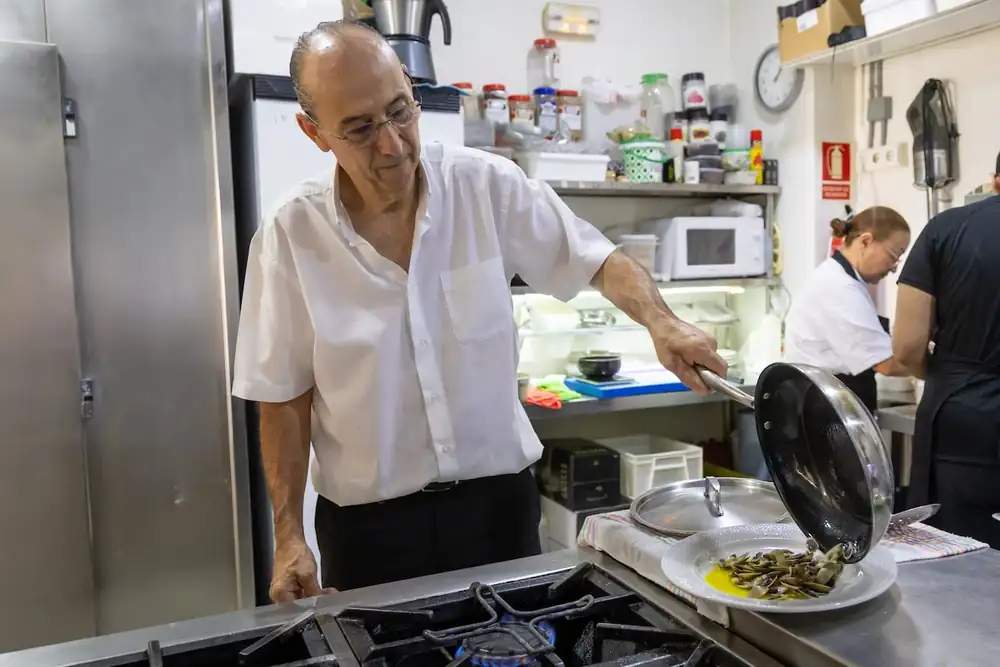
Juanma Alba himself greets diners in the dining room, where he works alongside his wife, Ana Bermúdez, 32. In the kitchen is his father, Manuel Alba, 67, who handles the stoves with the wisdom that comes from experience. It was he who ventured into the hospitality industry in the 1970s, along with his three brothers, in a school bar in Cerrado de Calderón, east of the city of Málaga. They soon decided to take the plunge and open their own business, which they named Hermanos Alba (Alba Brothers). They were so successful that they expanded to the Costa del Sol with two locations: one in Benalmádena and another in Fuengirola. They were aiming high: feeding large crowds and catering events and weddings. The 2008 financial crisis brought them down. In 2011, they had to close. Two years later, a friend asked Manuel to help out in the kitchen at a bar in El Palo, near the La Mosca neighborhood, where the family is from. He agreed. Months later, the friend asked him if he wanted to take over the place. He agreed again. Hermanos Alba was reborn.
He did it differently, though. The project was now led solely by Manuel, without his family. And his son, Juanma, joined the venture. The young man had dropped out of his Economics studies because the hospitality industry appealed to him more. He began taking culinary trips and immersed himself in the world of wine. And he gradually decided to modify the style of the business, which was deeply rooted in the family tradition. He focused on fish and seafood and abandoned meat. He moved away from quantity and towards quality. That's why he now knows the fishermen by name, knows which boat belongs to which fleet, and only needs to look at the fishing grounds to know what product they'll bring back. "I greatly admire their work, the dedication they put into it, the effort they make. And what we do here is respect each product to the fullest so that it comes out with the same perfection with which they treat it," says Alba, the son, who summarizes the establishment's philosophy: "Good fried food, good grilled food, good seafood and fish... And little else," he emphasizes.
Contrary to what it might seem, this isn't a fine-dining restaurant. Or at least, not a typical one. The menu includes Malaga classics like Russian salad (€13), clams (€24), fried anchovies (€14), and a good gazpachuelo, but it also features dishes that show there's something different about this kitchen. They offer marinated anchovies and house-made anchovies (€2.50 each), Motril prawns (€33), langoustines, lobster, and French oysters (€5). When available, they bring in whelks or scallops, local delicacies. The razor clams, almost extinct off the Malaga coast, are served raw or grilled (€4.50) and come from Cadiz. The best fish, like the red porgy, also arrives from the Conil fish market. There's a special section for their signature dish: scarlet prawns, potato, egg, and truffle (€59). "This is very open-ended: you can come and share some dishes with the family, have a fish meal with your partner, or treat yourself to the ultimate indulgence," explains Juanma Alba. There's also a tasting menu (€90) that offers a comprehensive overview of the restaurant's cuisine and culminates in a fish fillet served like a ribeye steak: first brined, then seared on the skin side, and finally seared on the other.
Carte blanche
However, many customers simply choose to give him free rein to decide what they'll eat that day. He's in charge of taking all the orders, and you only have to listen to the conversations to see that diners trust his judgment. "This summer we've had many visits from more foodie types, who ask for a 'delicious' menu and let themselves be guided," says Alba Jr., pointing out, for example, the dish that includes a raw prawn marinated in lime, one boiled, another grilled, and finally one served as tartare. This group includes many anonymous customers, but also public figures like Gerard Piqué, Marcos Llorente, Pablo Alborán, and Andrés Velencoso. "I love that people used to fancy places, to cities like Madrid or Marbella, come to eat in the El Palo neighborhood," the restaurateur remarks.
Everything can be paired with a dazzling variety of wines. There are 700 selections, but the number isn't what matters; it's the quality, with wineries that are hard to find in just any establishment, especially a neighborhood one. Rather than wineries, he prefers to talk about grapes like Trosseau or Poulsard, from the Jura region; however, he does sing the praises of Samuel Párraga, a young winemaker and oenologist whose natural wines he admires. "I really like his project, and in Málaga there's practically nothing like what he does," he says as he finishes setting one of the tables on the terrace and the first lunchtime customers arrive. They first look at the display of the day's catch. And, after sitting down, they search for him with their eyes. When he approaches, they ask, "What are you going to serve us today?"